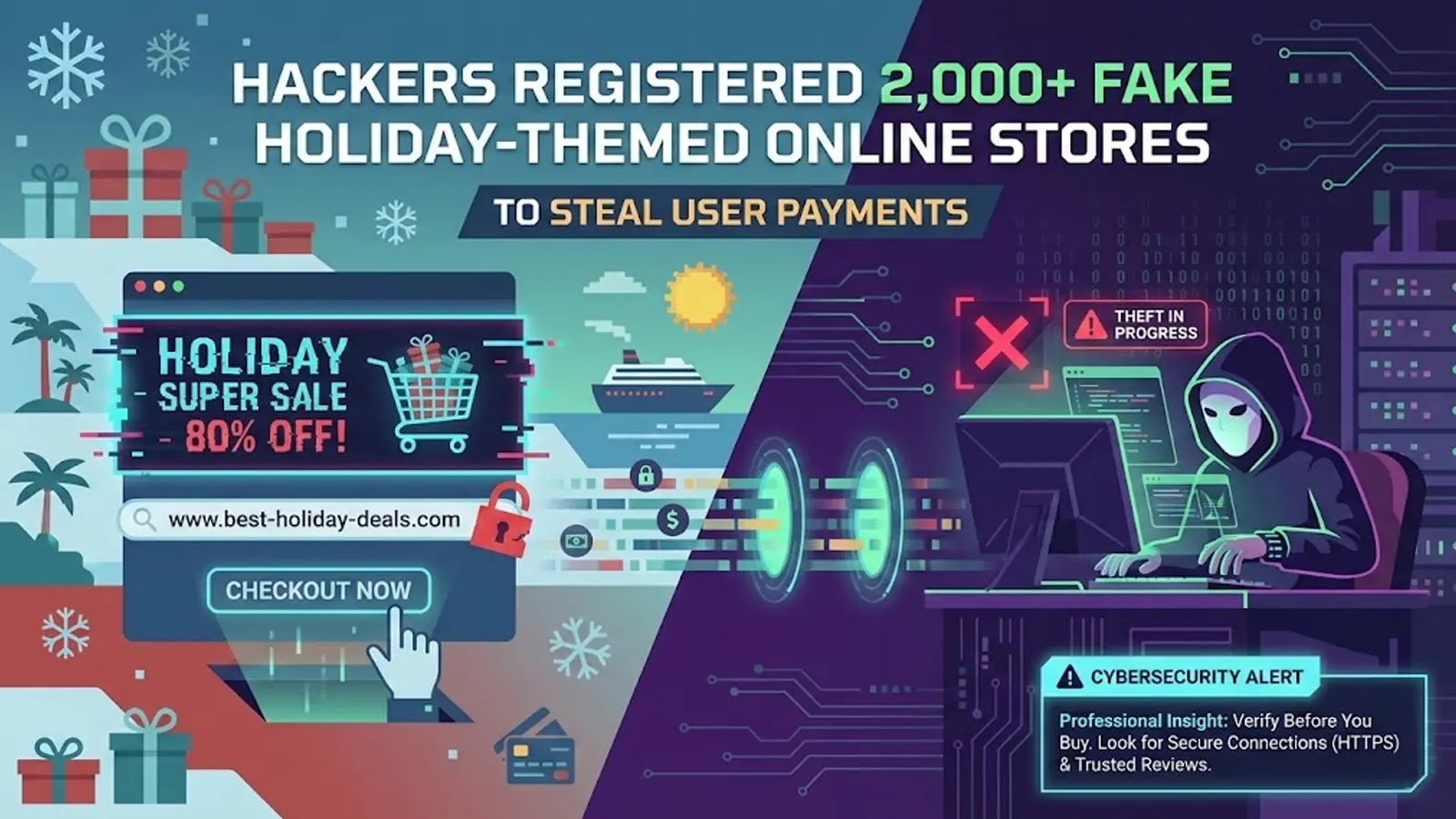
With the vacation procuring season kicking into excessive gear, a large cybersecurity risk has emerged, placing internet buyers at vital danger.
A coordinated marketing campaign has been found, involving the registration of over 2,000 pretend holiday-themed on-line shops.
These malicious websites are designed to lure unsuspecting shoppers with the promise of steep reductions, solely to steal their fee data and private knowledge.
The size of this operation is huge, with two distinct clusters of fraudulent storefronts recognized, each using subtle techniques to look legit and deceive buyers.
The primary cluster primarily consists of typosquatted domains mimicking Amazon, whereas the second spans a big selection of “.store” domains impersonating well-known manufacturers resembling Apple, Samsung, and Ray-Ban.
These pretend shops should not remoted incidents however a part of a large-scale, automated marketing campaign. The risk actors behind this operation have timed their assault to coincide with peak procuring durations like Black Friday and Cyber Monday, when shoppers are actively looking for bargains and could also be much less cautious about unfamiliar web sites.
Faux storefront (Supply – CloudSEK)
CloudSEK safety researchers famous the coordinated nature of those scams, figuring out using equivalent phishing kits, recurring web site templates, and shared infrastructure throughout the community of faux shops.
This stage of coordination suggests a well-organized and resourced operation. The influence on shoppers is extreme, starting from direct monetary losses to the long-term dangers of identification theft.
Moreover, these scams erode belief in legit on-line retailers and the e-commerce ecosystem as a complete.
An infection and Deception Ways
The modus operandi of those pretend shops is each easy and efficient. They leverage a mix of social engineering and technical evasion to trick customers and keep away from detection.
The websites are designed to seem like skilled e-commerce platforms, full with holiday-themed banners, countdown timers making a false sense of urgency, and pretend “belief badges” to construct credibility.
Fabricated “latest buy” pop-ups are additionally used to create social proof and stress guests into making a purchase order.
Faux Touchdown Web page (Supply – CloudSEK)
When a person makes an attempt to purchase a product, they’re redirected to a shell checkout web page designed to reap their billing and fee particulars.
These shell web sites usually use unflagged domains to course of transactions, permitting the attackers to bypass fraud detection methods.
Faux & Impersonating Domains:-
Area ClusterImpersonated BrandFake Area ExamplesCluster A (Amazon-themed)Amazonamaboxhub.com, amawarehousesale.com, amaznshop.comCluster B (.store domains)Xiaomixiaomidea.shopJo MaloneJomalonesafe.shopFujifilmFujifilmsafe.shopSamsungSamsungsafe.shopA common model[brand]protected.store or [brand]quick.store
The investigation additionally revealed {that a} shared Content material Supply Community (CDN), cdn.cloud360.prime, was used to serve belongings to over 750 of the pretend shops, additional highlighting the centralized nature of the marketing campaign.
A recurring JavaScript file, recognized by its distinctive SHA-256 hash, was additionally discovered throughout quite a few malicious .store domains, controlling the fraudulent checkout course of.
Observe us on Google Information, LinkedIn, and X to Get Extra On the spot Updates, Set CSN as a Most popular Supply in Google.