Superior steganography strategies have gotten more and more central to state-sponsored cyber operations.
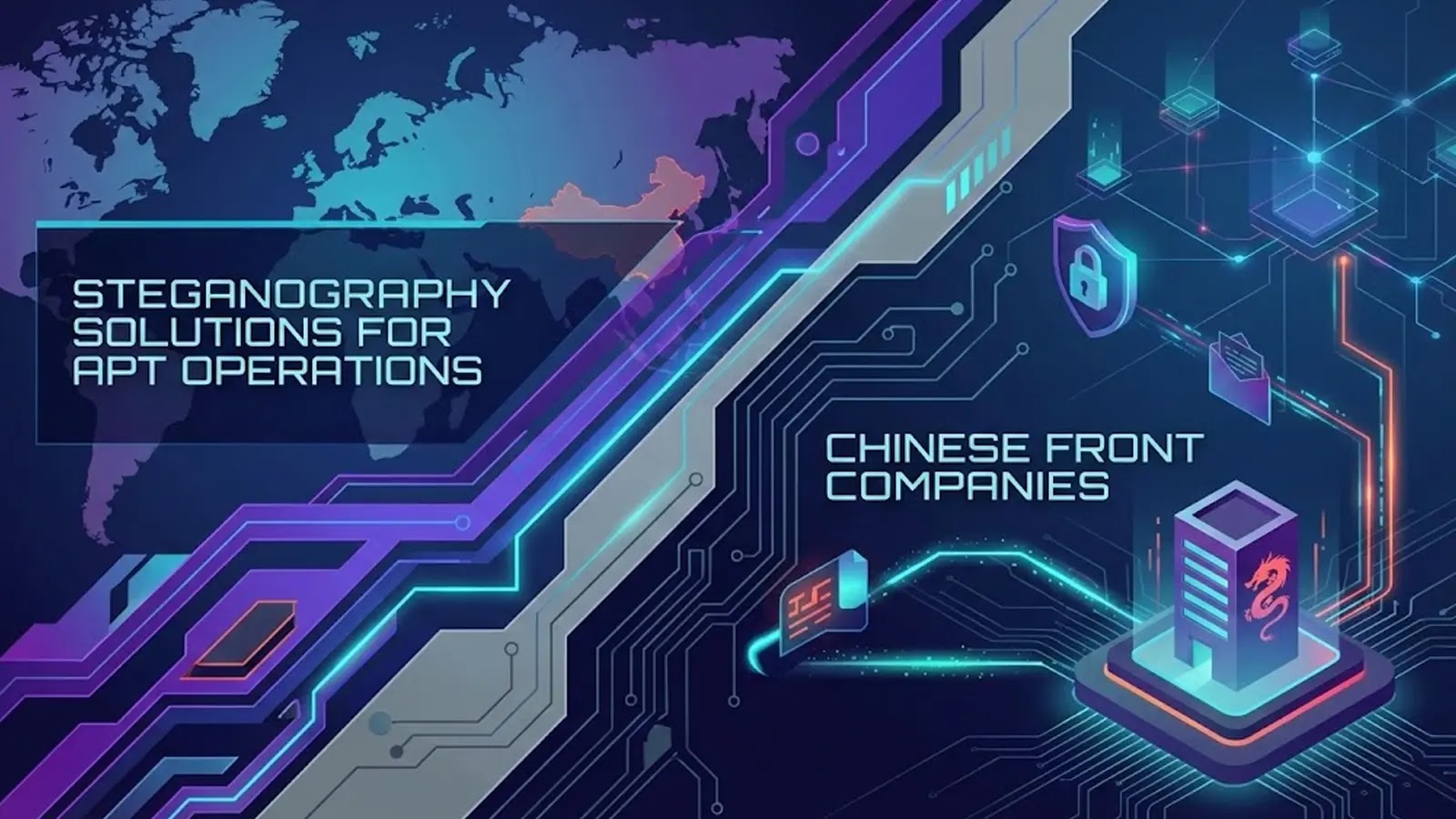
Latest evaluation has uncovered two Chinese language know-how corporations, BIETA and CIII, that allegedly present subtle steganography options to assist superior persistent menace campaigns.
These organizations function as entrance corporations linked to China’s Ministry of State Safety, enjoying a crucial function in modernizing the nation’s intelligence gathering capabilities.
BIETA, formally referred to as the Beijing Institute of Electronics Know-how and Utility, operates from a location adjoining to the MSS headquarters in Beijing.
The corporate maintains shut institutional ties with authorities businesses and universities, together with the College of Worldwide Relations, which features as an MSS subsidiary.
CIII, working as Beijing Sanxin Occasions Know-how Co., Ltd., presents itself as a state-owned enterprise whereas reportedly offering forensic and counterintelligence assist providers.
Each organizations preserve detailed deal with creating superior hiding strategies for malicious payloads.
Safety analysts at Telsy recognized that these corporations have devoted substantial assets to steganographic analysis and growth.
Evaluation of educational publications reveals that roughly 46 p.c of BIETA’s 87 analysis papers revealed between 1991 and 2023 particularly deal with steganography.
The businesses have obtained a number of software program copyrights for strategies together with audiovisual-to-voice conversion methods and JPEG picture forensic differentiation strategies, each registered in 2017.
Steganography implementation methods
The steganography implementation methods employed signify a big technical shift in APT operations.
Moderately than relying solely on conventional encryption, menace actors use Least Important Bit steganography to hide .NET payloads inside picture recordsdata.
BIETA’s analysis extends past normal JPEG codecs to incorporate MP3 audio and MP4 video recordsdata for covert info transmission.
Historic APT teams together with APT1, Mirage, Leviathan, and Pirate Panda have all utilized related strategies to distribute backdoors like TClinet and Stegmap with out triggering standard detection methods.
The technical innovation extends to rising applied sciences, with BIETA researchers exploring Generative Adversarial Networks for steganographic functions.
This development suggests future APT operations could make use of AI-driven strategies to generate undetectable provider recordsdata.
Understanding these strategies stays important for defensive safety groups as state-sponsored actors proceed refining their skill to cover malicious communications inside seemingly innocuous media recordsdata, making detection more and more difficult for conventional safety monitoring instruments and approaches.
Observe us on Google Information, LinkedIn, and X to Get Extra Immediate Updates, Set CSN as a Most well-liked Supply in Google.