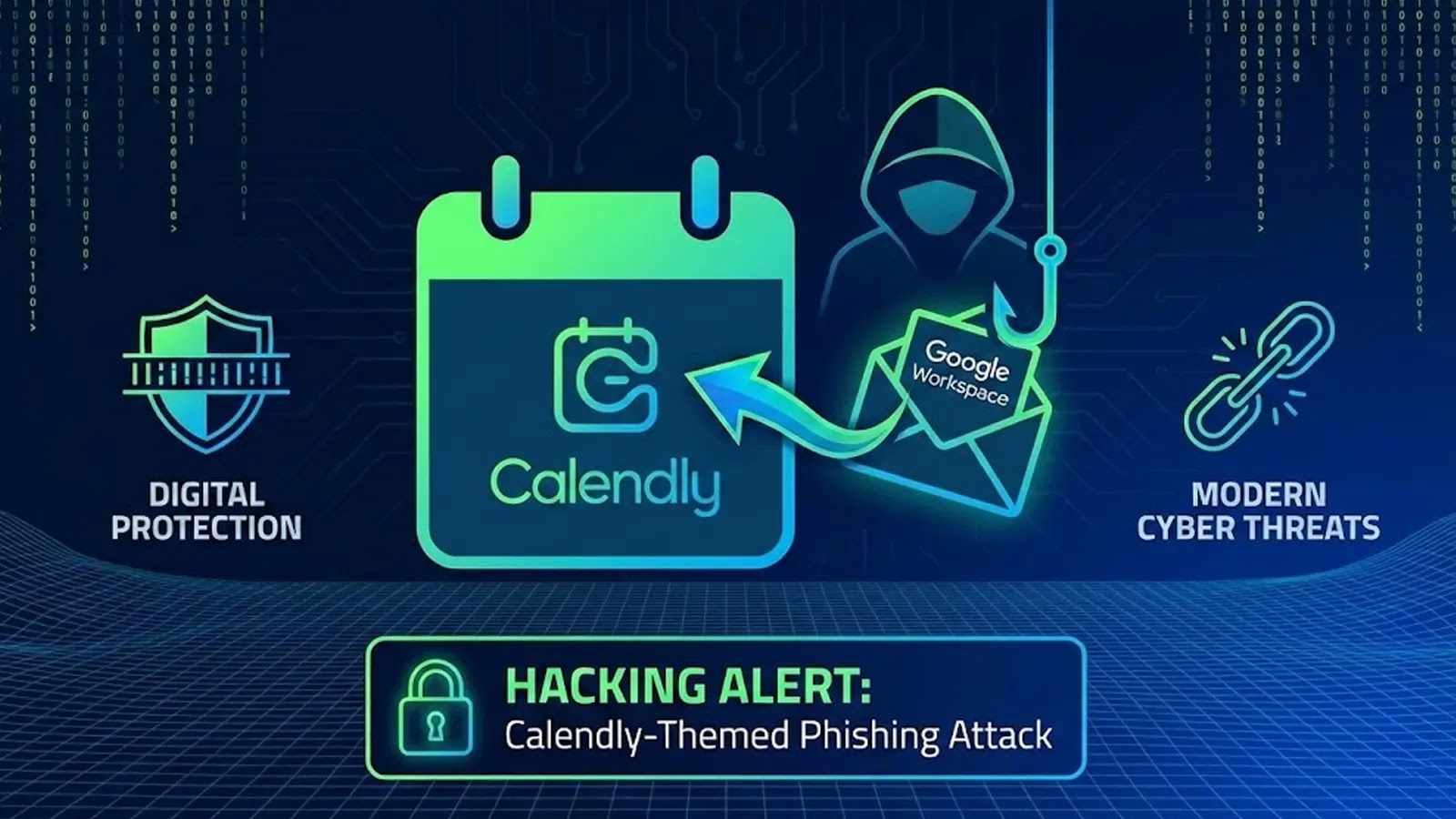
A classy phishing marketing campaign has emerged focusing on enterprise professionals with Calendly-themed emails, combining social engineering with superior credential theft methods.
The assault particularly focuses on Google Workspace and Fb Enterprise accounts, utilizing rigorously crafted job alternative lures to trick customers into sharing their login info.
The marketing campaign started when a buyer acquired a extremely convincing electronic mail impersonating a recruiter from LVMH, the luxurious items conglomerate.
Nicely-crafted, multi-stage, extremely focused phishing electronic mail (Supply – Push Safety)
The e-mail praised the recipient’s skilled achievements and supplied a promising job alternative inside LVMH’s digital efficiency workforce.
The message appeared real as a result of it included private particulars in regards to the sufferer’s work expertise and was signed by somebody claiming to be an HR supervisor on the firm.
The attacker doubtless used synthetic intelligence to collect and personalize this info from publicly obtainable sources like LinkedIn.
Push Safety safety analysts recognized the malware after discovering that the assault was a part of a a lot bigger marketing campaign spanning a number of variants and types.
The researchers famous the delicate social engineering ways and detection evasion methods embedded all through the assault infrastructure.
How the Credential Theft Works
The assault makes use of a multi-stage supply technique designed to bypass electronic mail safety filters.
The preliminary electronic mail asks if the recipient is within the alternative, and solely after responding does the attacker ship a follow-up message containing a malicious hyperlink disguised as a Calendly scheduling hyperlink.
This staged strategy helps the phishing electronic mail evade content material scanning instruments that usually flag messages with suspicious hyperlinks.
When victims click on the hyperlink, they land on a convincing pretend Calendly web page that appears practically an identical to the official service.
After finishing a CAPTCHA verification, clicking “Proceed with Google” redirects customers to an Attacker-in-the-Center (AiTM) phishing web page.
Pretend Calendly touchdown web page (Supply – Push Safety)
This web page mimics Google’s login interface however is particularly branded with Calendly parts to seem official.
The phishing infrastructure contains clever validation mechanisms that block unauthorized electronic mail domains from accessing the web page.
Calendly-themed AiTM phishing web page focusing on Google Workspace accounts (Supply – Push Safety)
Solely emails matching the supposed sufferer’s group area can proceed to the password entry area.
Researchers additionally found superior anti-analysis options, together with IP blocking that forestalls investigation from VPN or proxy connections and entry restrictions triggered when developer instruments are opened.
Webpages with related properties to the assault analysed by Push (Supply – Push Safety)
These protections recommend the attackers are actively working to remain forward of safety researchers and automatic evaluation instruments.
The marketing campaign has developed considerably since its inception over two years in the past, with attackers constantly refining their ways and introducing new detection evasion strategies to take care of operational effectiveness.
Comply with us on Google Information, LinkedIn, and X to Get Extra Instantaneous Updates, Set CSN as a Most popular Supply in Google.