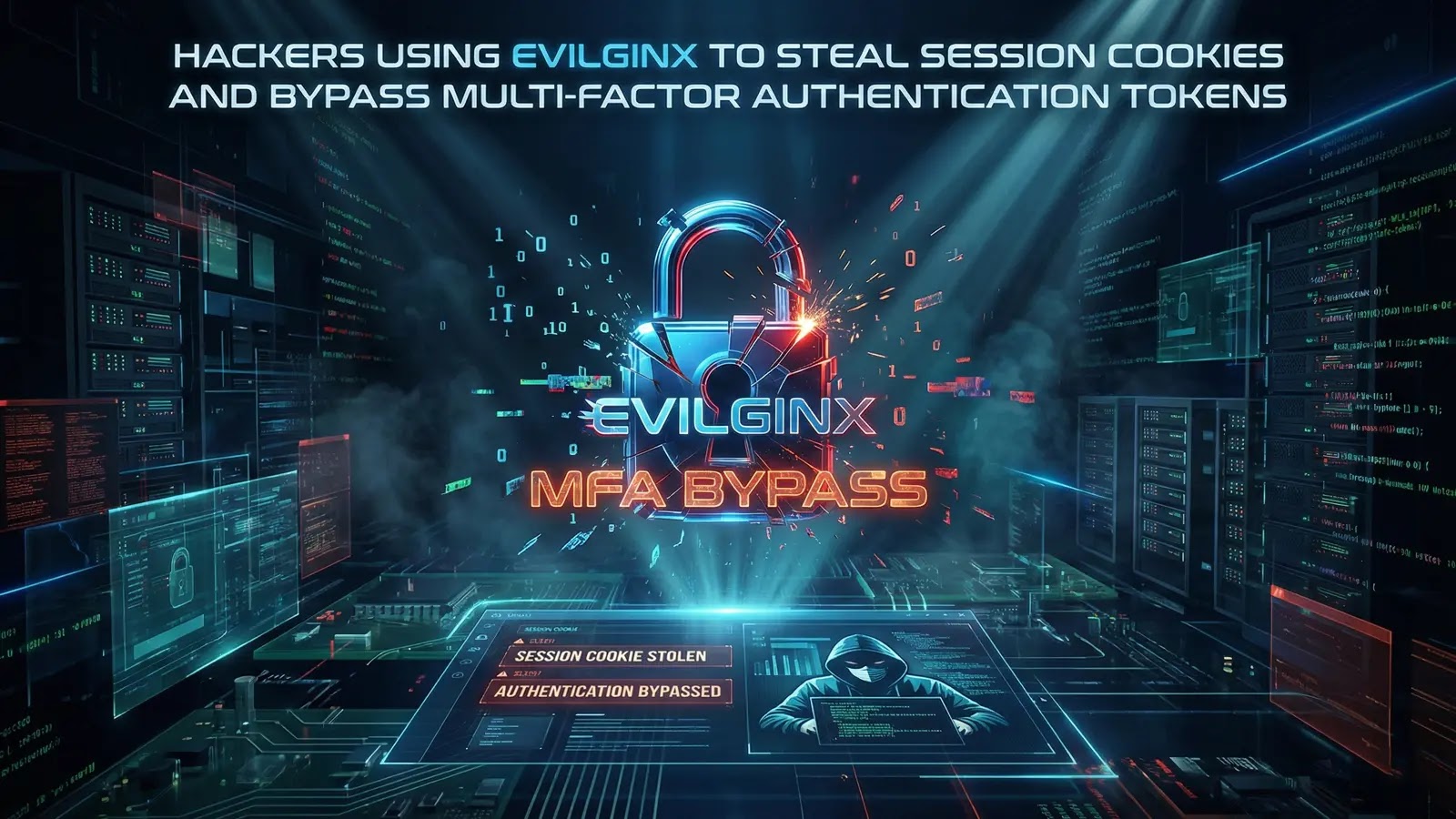
A classy phishing toolkit referred to as Evilginx is empowering attackers to execute superior attacker-in-the-middle (AiTM) campaigns with alarming success.
These assaults are engineered to steal short-term session cookies, permitting menace actors to sidestep the important safety layer supplied by multi-factor authentication (MFA).
A regarding surge on this technique has been noticed, with a notable impression on academic establishments, which at the moment are often within the crosshairs.
The menace’s basis is its capability to hijack a consumer’s authenticated session, successfully neutralizing MFA’s safety after the preliminary login.
Evilginx capabilities by inserting itself as a clear proxy between an unsuspecting consumer and a reliable web site.
After a consumer clicks on a specifically crafted malicious hyperlink, they’re navigated to a phishing web page that flawlessly mirrors the genuine website.
This proxy setup relays the real sign-in course of, capturing the sufferer’s username and password in real-time.
Critically, as soon as the consumer validates their id with an MFA token, the device intercepts the session cookie issued by the service to acknowledge and belief the browser for the continued session.
The implications of this cookie theft are important. By merely replaying the stolen session cookie, an attacker can seamlessly impersonate the authenticated consumer with out ever needing to provide credentials or an MFA code once more.
Malwarebytes safety researchers recognized that this grants the intruder unrestricted entry to the compromised account. This permits them to learn confidential emails, modify important safety settings, or exfiltrate delicate private and monetary knowledge.
For the reason that hijacked session is already verified, the attacker’s malicious actions typically fail to set off additional safety warnings, letting them function covertly.
A Misleading and Evasive Assault Circulate
The success of Evilginx assaults is rooted of their profound deception. The attacker-controlled phishing pages will not be mere static forgeries; they’re lively proxies that serve the true web site’s stay content material, typically full with a sound TLS safety certificates.
This tactic successfully neutralizes frequent safety steerage, reminiscent of checking for the browser’s padlock icon.
To additional evade detection, attackers typically deploy phishing hyperlinks with very quick lifespans, making certain they disappear earlier than they are often cataloged by safety blocklists.
This forces safety instruments to depend on behavioral evaluation, which isn’t at all times enough to catch each assault, inserting a heavy burden on consumer consciousness to identify the preliminary phishing lure.
Observe us on Google Information, LinkedIn, and X to Get Extra Immediate Updates, Set CSN as a Most popular Supply in Google.