Jan 07, 2026The Hacker NewsEnterprise Safety / Synthetic Intelligence
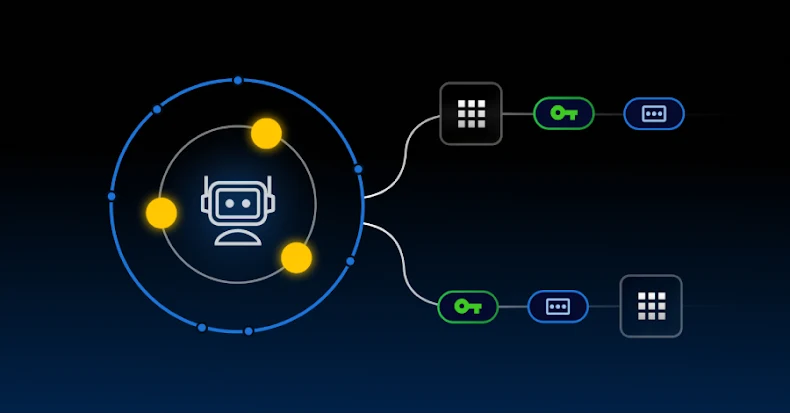
Non-human staff have gotten the way forward for cybersecurity, and enterprises want to arrange accordingly. As organizations scale Synthetic Intelligence (AI) and cloud automation, there’s exponential progress in Non-Human Identities (NHIs), together with bots, AI brokers, service accounts and automation scripts. The truth is, 51% of respondents in ConductorOne’s 2025 Way forward for Identification Safety Report stated the safety of NHIs is now simply as vital as that of human accounts. But, regardless of their presence in fashionable organizations, NHIs usually function exterior the scope of conventional Identification and Entry Administration (IAM) programs.
This rising dependence on non-human customers creates new assault surfaces that organizations should urgently put together for. With out full visibility and correct oversight, NHIs could have over-permissioned standing entry and static credentials, making them worthwhile targets for cybercriminals. To safe NHIs with the identical precision as human identities, organizations should develop fashionable safety methods that incorporate zero-trust safety, least-privilege entry, automated credential rotation and secrets and techniques administration. By modernizing their methods, organizations can work to scale back safety dangers and stop privileged account compromise, no matter whether or not a consumer is human.
Why non-human identities are a rising cybersecurity danger
Not like human customers, NHIs and their exercise usually go unnoticed, despite the fact that they maintain highly effective entry to delicate programs. NHIs are often granted broad, standing entry throughout infrastructure, cloud environments and CI/CD pipelines. As soon as provisioned, NHI entry is never reviewed or revoked, making it a major goal for cybercriminals. The principle safety dangers related to NHIs embody credentials hardcoded into scripts, secrets and techniques embedded in supply code and a scarcity of visibility into how NHIs are used. Usually, there’s little to no logging or monitoring of NHIs, leaving compromised machine credentials weak to exploitation, permitting cybercriminals to go undetected for weeks and even months. In cloud environments, non-human customers considerably outnumber human customers, increasing assault surfaces and introducing many extra safety vulnerabilities. When NHIs are neglected in safety audits or excluded from conventional IAM insurance policies, safety groups danger permitting the comfort of automation to show into a significant blind spot.
Find out how to safe non-human entry with zero-trust rules
To scale back NHI-related safety dangers, organizations should implement zero-trust safety for each identification by treating bots, AI brokers, and repair accounts equally to people. The important thing methods to safe non-human entry with zero-trust safety embody:
Apply zero belief to machine customers: Each NHI have to be authenticated and approved, with solely the minimal essential entry granted. All exercise ought to be logged, monitored, and auditable to make sure compliance with regulatory necessities.
Implement least-privilege entry: Assign Function-Primarily based Entry Controls (RBAC) and set time-based credential expiration insurance policies to make sure NHIs entry solely what they want, once they want it.
Leverage Simply-in-Time (JIT) entry and ephemeral secrets and techniques: Remove standing entry by changing static credentials with short-lived API tokens. Moreover, automate credential rotation after a activity is accomplished or on a set schedule.
Implementing a few of these practices can considerably cut back publicity for NHIs, making them auditable and manageable at scale. For instance, having API tokens auto-expire after deployment minimizes the chance of these secrets and techniques being exploited. The identical goes for service accounts that request entry solely when wanted for a particular activity, reasonably than sustaining standing entry. By operationalizing these practices, organizations can successfully govern NHIs with the identical degree of management as human customers in any zero-trust structure.
Managing secrets and techniques and privileged entry at scale
Secrets and techniques like API keys, tokens and SSH credentials are essential for automation and NHIs, however with out correct administration, they introduce important safety vulnerabilities. To take care of management over secrets and techniques and privileged entry, organizations should know who or what accessed which sources and when. With out such detailed perception, unmanaged secrets and techniques could sprawl throughout environments when hardcoded in scripts, saved insecurely in plaintext or shared with no monitoring or expiration.
Fortunately, organizations can use secrets and techniques administration and Privileged Entry Administration (PAM) options to centralize management over each secrets and techniques and privileged entry. Options like KeeperPAM® present a zero-trust, zero-knowledge structure that secures credentials, displays privileged classes and mechanically rotates credentials throughout cloud infrastructures. As a unified answer, KeeperPAM integrates enterprise password administration, secrets and techniques administration and endpoint administration, serving to shield each human and non-human customers equally.
Identification safety should lengthen past human identities
As enterprise infrastructure grows extra fashionable and automatic, NHIs are actually a everlasting a part of the assault floor. To defend in opposition to extra subtle cyber assaults, organizations should deal with non-human staff as first-class identities — securing and governing them identical to human staff. Each service account, script and AI agent have to be secured and repeatedly monitored to make sure they’re granted applicable entry to essential information and programs. To remain forward of NHI-related cyber threats, organizations ought to embed zero-trust rules throughout all entry layers for each people and machines.
Word: This text was expertly written and contributed by Ashley D’Andrea, Content material Author at Keeper Safety.
Discovered this text fascinating? This text is a contributed piece from one among our valued companions. Comply with us on Google Information, Twitter and LinkedIn to learn extra unique content material we put up.