A brand new wave of web-based malware campaigns is utilizing pretend verification pages to trick customers into putting in harmful software program.
These assaults copy the appear and feel of reliable safety checks that folks see day by day whereas looking the web.
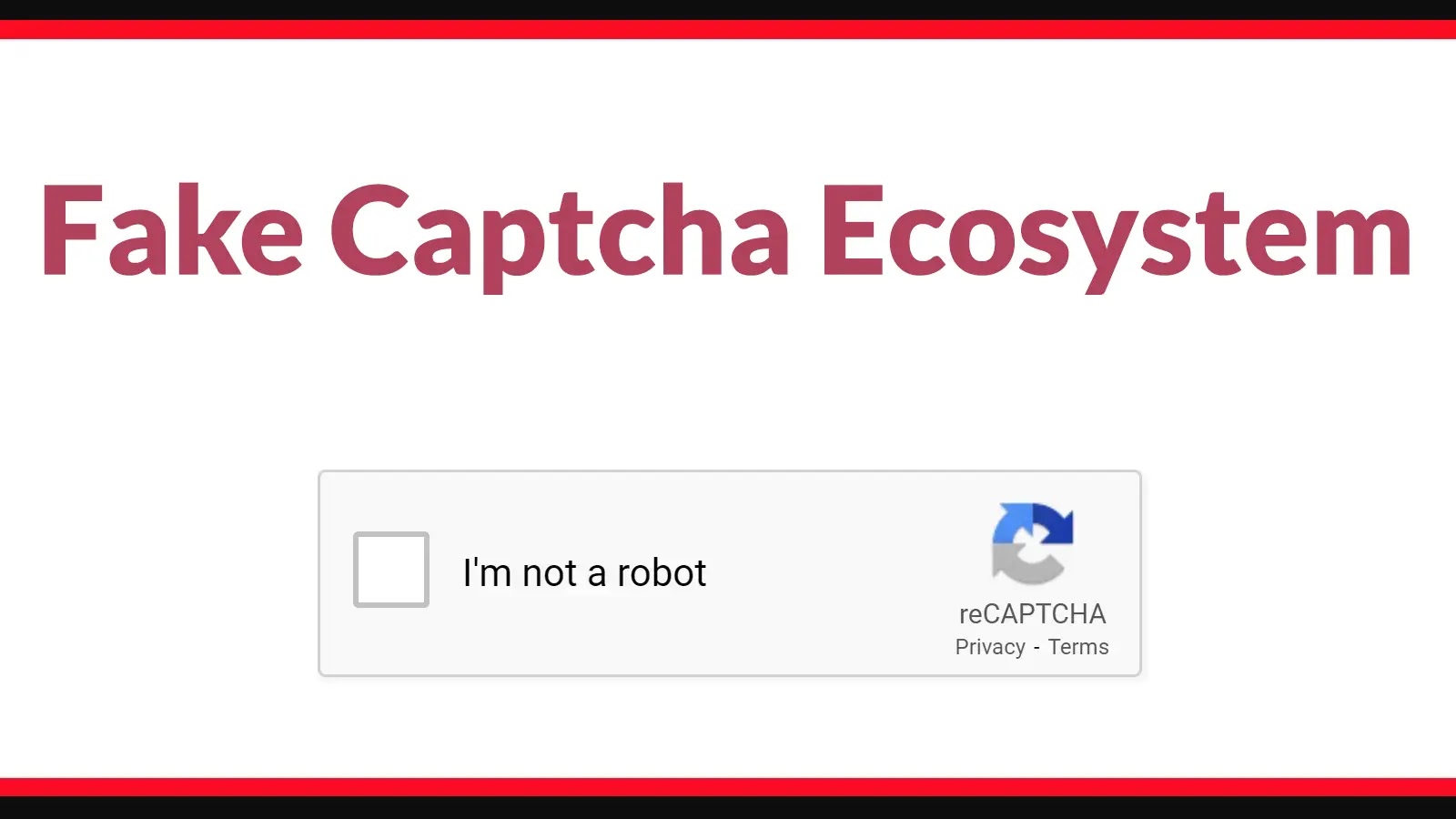
The pretend captcha ecosystem represents a fast-changing risk that makes use of trusted internet interfaces as supply surfaces for malicious payloads.
Over the previous a number of years, pretend captcha pages have grow to be a typical methodology for spreading malware. These pages appear like regular browser verification challenges, much like the safety checks utilized by platforms like Cloudflare.
Customers are instructed to finish steps that look like reliable safety measures however truly set off dangerous scripts or grant harmful browser permissions. The assaults exploit the belief individuals have developed for routine safety interactions on-line.
Censys analysts recognized that this risk panorama entails roughly 9,494 distinct compromised web sites and malicious properties actively internet hosting pretend captcha pages.
An instance of a typical Faux Captcha lure adopted by a ClickFix lure (Supply – Censys)
The researchers tracked these belongings by steady monitoring of uncovered internet infrastructure and located that roughly 70% of all noticed pretend captcha exercise shares a virtually equivalent visible look.
Nonetheless, this visible similarity masks a fragmented ecosystem of various assault strategies working behind the identical interface.
Numerous An infection Mechanisms Behind Uniform Look
Regardless of trying nearly equivalent, pretend captcha pages make use of basically totally different an infection strategies.
Censys researchers famous that throughout the largest visible cluster of pretend captcha websites, a minimum of 32 distinct payload variants had been found throughout a number of incompatible execution fashions.
Some assaults use clipboard manipulation to execute PowerShell or VBScript instructions that obtain malware. Others depend on Home windows Installer packages delivered by MSI information hosted on compromised domains.
A 3rd class makes use of server-driven push notification frameworks that keep away from exposing any seen payload through the preliminary interplay.
The clipboard-driven strategy stays the commonest approach. VBScript downloaders account for about 1,706 noticed belongings, whereas PowerShell-based strategies seem on roughly 1,269 websites.
These assaults copy malicious instructions to the consumer’s clipboard and instruct victims to stick and execute the code by seemingly reliable verification steps.
Nonetheless, installer-based supply by MSIEXEC represents about 1,212 belongings, shifting the assault into totally different safety surfaces totally.
A diagram of the purpose-built pipeline for this evaluation (Supply – Censys)
The Matrix Push C2 framework introduces a very fileless supply mannequin discovered on roughly 1,281 belongings. This method tips customers into granting browser notification permissions moderately than executing speedy payloads.
A chart of noticed Faux Captcha volumes within the Censys Menace Searching Module (Supply – Censys)
As soon as permissions are granted, attackers can push malicious content material later by the browser’s notification channel. Static evaluation of those pages reveals no executable artifacts as a result of supply is deferred and managed totally by distant servers.
This makes conventional payload-centric detection methods ineffective in opposition to this explicit assault vector.
Observe us on Google Information, LinkedIn, and X to Get Extra Prompt Updates, Set CSN as a Most popular Supply in Google.