Skip to content
  • Blog Home
  • Cyber Map
  • About Us – Contact
  • Disclaimer
  • Terms and Rules
  • Privacy Policy
Cyber Web Spider Blog – News

Cyber Web Spider Blog – News

Globe Threat Map provides a real-time, interactive 3D visualization of global cyber threats. Monitor DDoS attacks, malware, and hacking attempts with geo-located arcs on a rotating globe. Stay informed with live logs and archive stats.

  • Home
  • Cyber Map
  • Cyber Security News
  • Security Week News
  • The Hacker News
  • How To?
  • Toggle search form
Malicious Outlook Add-in Exposes 4,000 Accounts

Malicious Outlook Add-in Exposes 4,000 Accounts

Posted on February 12, 2026 By CWS

Malicious Outlook Add-in Compromises Accounts

In a significant cybersecurity breach, researchers have uncovered the first known case of a malicious Microsoft Outlook add-in being used to exploit users in real-world scenarios. This incident involved a compromised meeting scheduler add-in named AgreeTo, which was responsible for stealing over 4,000 Microsoft account credentials, credit card information, and responses to banking security questions.

Origins of the AgreeTo Add-in

Initially launched as a legitimate open-source project in December 2022, AgreeTo was available in the Microsoft Office Add-in Store. The tool, which served as a functional meeting scheduler, garnered positive reviews from users. However, its developer eventually abandoned the project and removed its associated Vercel deployment, leaving the add-in’s hosting URL orphaned and open for registration.

Seizing this opportunity, an attacker claimed the available URL and set up a phishing kit. Because the add-in remained listed in Microsoft’s store, the malicious phishing page was displayed directly in the trusted Outlook sidebar for users who had the add-in installed or downloaded it afresh.

Technical Vulnerabilities Exploited

The attack leveraged a flaw in the architecture of Office add-ins, which differ from traditional software as they are ‘remote dynamic dependencies.’ These are essentially XML manifests that load a URL within an iframe. Microsoft reviewed the manifest during the initial submission but did not continuously verify the live content hosted at the approved URL, allowing the attacker to replace the scheduling tool with a fake Microsoft login page without triggering a security review.

When users accessed AgreeTo, they were prompted to log in, unknowingly sending their credentials and IP addresses to the attacker through a Telegram bot. The attacker also accessed banking details and security answers targeting Canadian institutions.

Implications and Response

Koi Security uncovered the campaign after identifying the attacker’s poorly secured exfiltration channel, recovering the dataset of 4,000 victims. Although the add-in had permissions to read and modify emails, the primary focus of the attack was credential harvesting. Following the report, Microsoft has removed the add-in from its store.

This incident underscores a critical supply chain risk, highlighting how trusted software can silently become malicious if its infrastructure is neglected. It serves as a stark reminder of the importance of continuous security verification in software management.

Stay informed by following us on Google News, LinkedIn, and X for daily updates on cybersecurity. Reach out to us to share your stories.

Cyber Security News Tags:add-in, Credentials, Cybersecurity, data breach, Malware, Microsoft, Outlook, Phishing, Security, supply chain risk

Post navigation

Previous Post: Fake CAPTCHA Attacks Fuel LummaStealer Malware Surge
Next Post: Continuous Threat Exposure Management: A Critical Security Solution

Related Posts

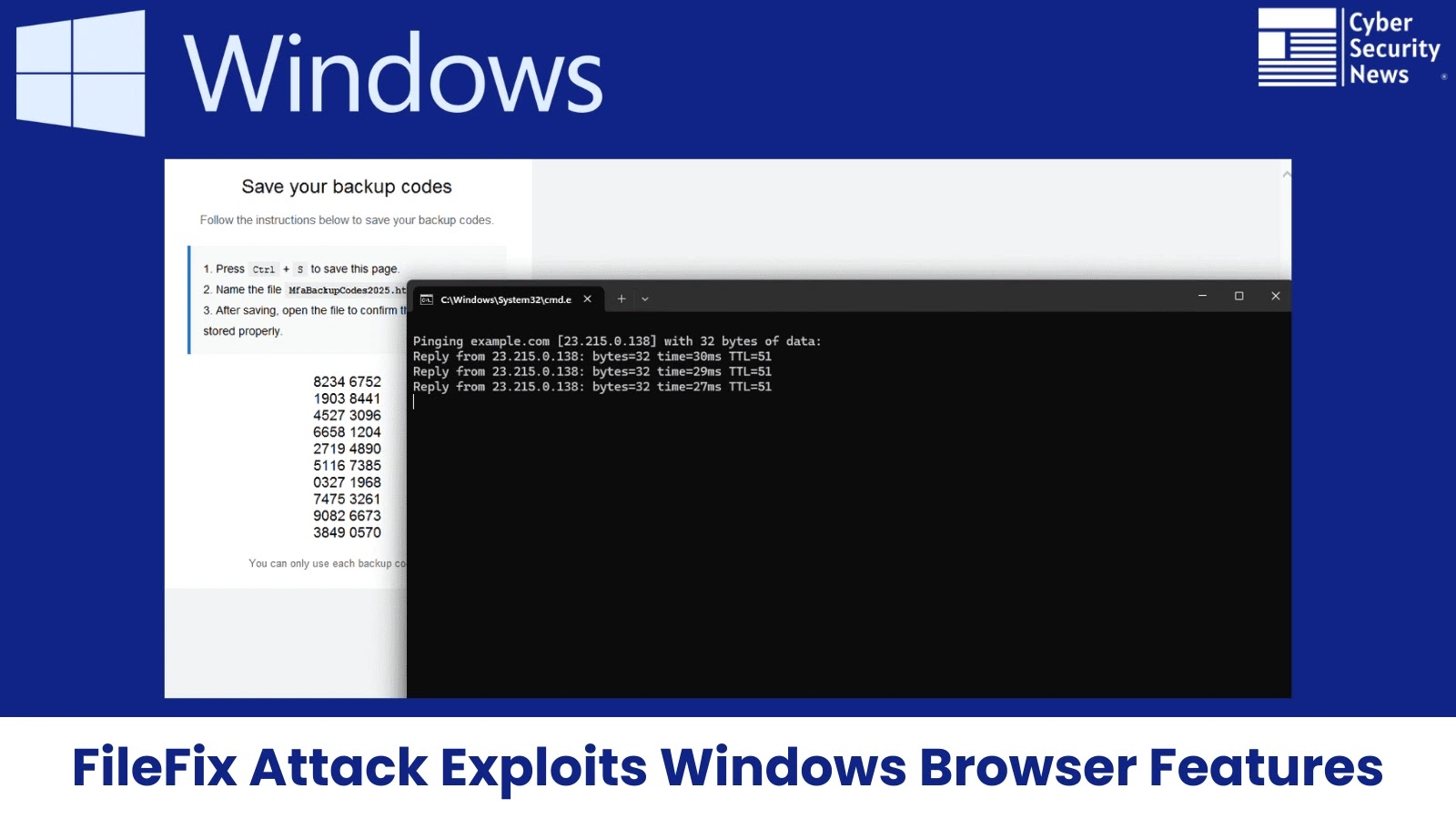
FileFix Attack Exploits Windows Browser Features to Bypass Mark-of-the-Web Protection FileFix Attack Exploits Windows Browser Features to Bypass Mark-of-the-Web Protection Cyber Security News
Teaching Claude to Cheat Reward Hacking Coding Tasks Makes Them Behave Maliciously in Other Tasks Teaching Claude to Cheat Reward Hacking Coding Tasks Makes Them Behave Maliciously in Other Tasks Cyber Security News
New QUIC-LEAK Vulnerability Let Attackers Exhaust Server Memory and Trigger DoS Attack New QUIC-LEAK Vulnerability Let Attackers Exhaust Server Memory and Trigger DoS Attack Cyber Security News
Threat Actors are Actively Exploiting Vulnerabilities in Open-Source Ecosystem to Propagate Malicious Code Threat Actors are Actively Exploiting Vulnerabilities in Open-Source Ecosystem to Propagate Malicious Code Cyber Security News
Gigabyte UEFI Firmware Vulnerability Let Attackers Execute Arbitrary Code in the SMM Environment Gigabyte UEFI Firmware Vulnerability Let Attackers Execute Arbitrary Code in the SMM Environment Cyber Security News
Europol Dismantles Fraud Crypto Investment Ring That Tricked 5000+ Victims Worldwide Europol Dismantles Fraud Crypto Investment Ring That Tricked 5000+ Victims Worldwide Cyber Security News

Categories

  • Cyber Security News
  • How To?
  • Security Week News
  • The Hacker News

Recent Posts

  • Critical Flaw in WordPress Plugin Risks Site Security
  • Google Chrome Update: Critical Security Fixes Released
  • Google Warns of Intensified Cyber Threats to Defense Sector
  • Evilmouse: A $44 Device Breaches System Security
  • Massive Data Breach at ApolloMD Affects Over 626,000

Pages

  • About Us – Contact
  • Disclaimer
  • Privacy Policy
  • Terms and Rules

Archives

  • February 2026
  • January 2026
  • December 2025
  • November 2025
  • October 2025
  • September 2025
  • August 2025
  • July 2025
  • June 2025
  • May 2025

Recent Posts

  • Critical Flaw in WordPress Plugin Risks Site Security
  • Google Chrome Update: Critical Security Fixes Released
  • Google Warns of Intensified Cyber Threats to Defense Sector
  • Evilmouse: A $44 Device Breaches System Security
  • Massive Data Breach at ApolloMD Affects Over 626,000

Pages

  • About Us – Contact
  • Disclaimer
  • Privacy Policy
  • Terms and Rules

Categories

  • Cyber Security News
  • How To?
  • Security Week News
  • The Hacker News

Copyright © 2026 Cyber Web Spider Blog – News.

Powered by PressBook Masonry Dark