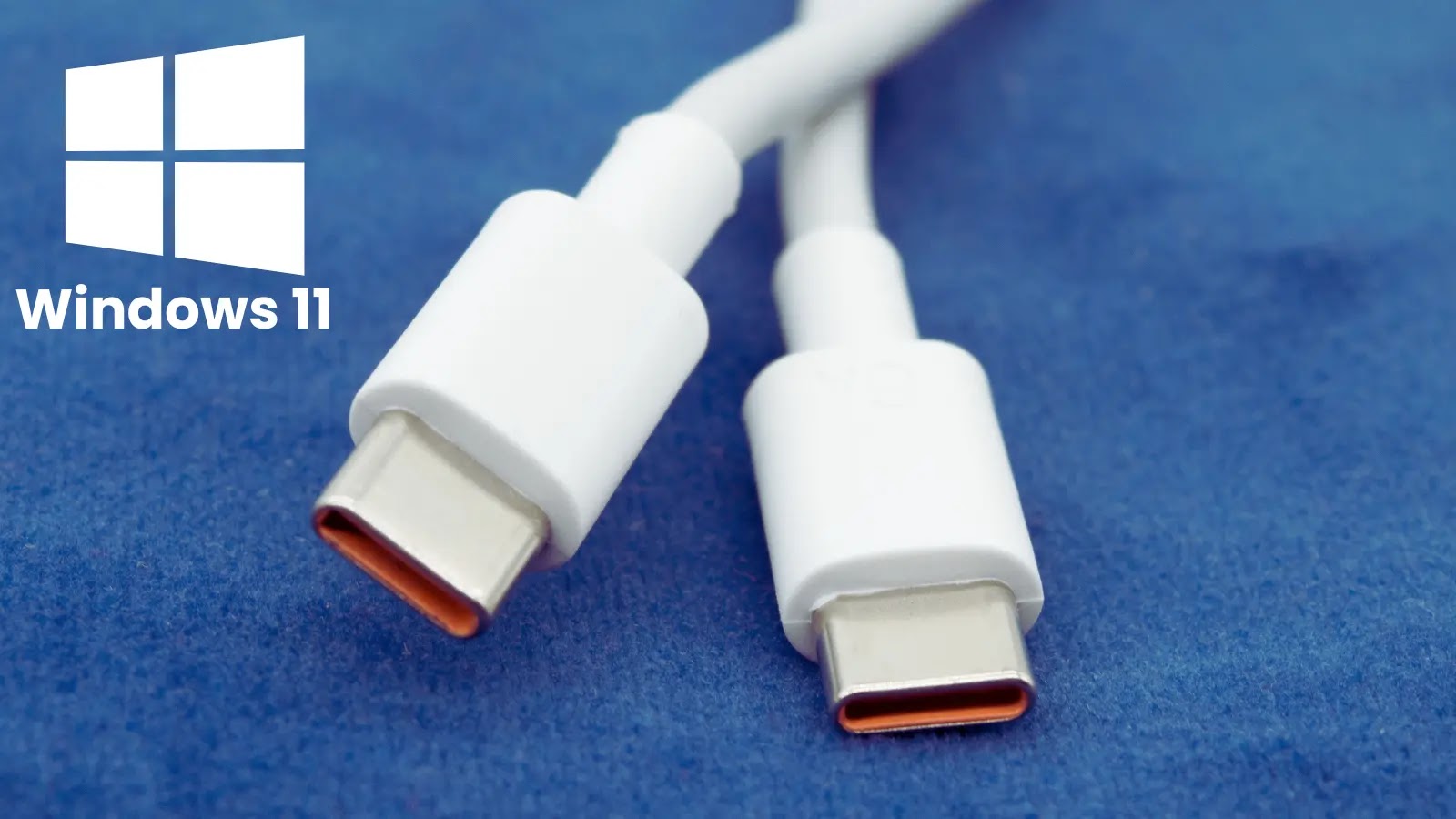
Microsoft is issuing a direct name to its {hardware} companions, urging authentic gear producers (OEMs) to deal with configuration points that forestall essential USB-C troubleshooting notifications from functioning accurately in Home windows 11.
These built-in alerts are designed to reinforce person expertise by figuring out and serving to to resolve widespread issues resembling gradual charging, defective connections, and using unsupported equipment.
Whereas Home windows 11 features a sturdy system for notifying customers of USB-C port points, the function’s effectiveness is completely depending on how producers configure their {hardware}.
Based on a latest technical replace, if customers aren’t seeing these useful alerts, the issue doubtless stems from incorrect platform settings carried out by the OEM, not a flaw throughout the Home windows working system itself.
The core of the problem lies within the Superior Configuration and Energy Interface (ACPI) specification, a markup that permits the working system to speak with and handle {hardware} elements.
Microsoft has recognized a number of widespread errors in how OEMs are implementing this. These embody lacking or incorrect ACPI descriptors that fail to correctly determine USB-C ports, mislabeling port sorts (resembling figuring out an ordinary USB-A port as Sort-C), and complicated inside ports with externally accessible ones, which may suppress needed notifications.
To resolve these inconsistencies, Microsoft has laid out a transparent set of validation and testing protocols for producers. OEMs are being directed to make use of the Home windows {Hardware} Lab Equipment (HLK) to validate their USB port descriptors and be sure that particular ACPI strategies, particularly _UPC (USB Port Capabilities) and _PLD (Bodily Location of Gadget), are carried out accurately.
The corporate can be advising companions to conduct rigorous testing with quite a lot of charging eventualities, together with underpowered chargers and hubs, to substantiate that notifications seem as anticipated for the end-user.
Microsoft additionally addressed safety concerns, acknowledging that some OEMs could disable information switch over USB-C in sure environments.
In such instances, the corporate recommends that the coverage ought to solely apply to externally accessible ports and that producers ought to think about offering customers with a toggle to allow or disable information switch themselves.
The message to producers is evident: audit all USB port configurations, validate notification behaviors throughout all supported units, and coordinate with the Microsoft Home windows {Hardware} Compatibility Program (WHCP) to make sure new platforms meet the required requirements.
By taking these steps, OEMs can guarantee their prospects obtain the seamless and dependable gadget expertise that Home windows 11 goals to offer.
Discover this Story Fascinating! Observe us on Google Information, LinkedIn, and X to Get Extra Prompt Updates.