Skip to content
  • Blog Home
  • Cyber Map
  • About Us – Contact
  • Disclaimer
  • Terms and Rules
  • Privacy Policy
Cyber Web Spider Blog – News

Cyber Web Spider Blog – News

Globe Threat Map provides a real-time, interactive 3D visualization of global cyber threats. Monitor DDoS attacks, malware, and hacking attempts with geo-located arcs on a rotating globe. Stay informed with live logs and archive stats.

  • Home
  • Cyber Map
  • Cyber Security News
  • Security Week News
  • The Hacker News
  • How To?
  • Toggle search form
Hackers Exploit Fake 7-Zip to Create Proxy Networks

Hackers Exploit Fake 7-Zip to Create Proxy Networks

Posted on February 10, 2026 By CWS

A new malicious campaign has surfaced, targeting unsuspecting users through a counterfeit version of the popular 7-Zip file archiving tool. This deceptive operation turns home computers into residential proxy nodes, exploiting users who download from an imposter domain.

Imposter Domains and Malware Installation

The attack hinges on a fraudulent site, 7zip[.]com, which closely resembles the official 7-zip.org, misleading users into installing a compromised installer. This installer appears genuine but harbors dangerous malware components, as reported by a Reddit user who experienced issues after following a PC-building tutorial on YouTube.

After downloading from the fake site, the user faced persistent errors and eventually discovered the infection when Microsoft Defender detected a generic trojan. The malware was present on both a laptop and a newly assembled desktop.

Malware Components and Persistence

Security experts from Malwarebytes identified that the malicious installer delivers a working version of 7-Zip alongside three hidden malware components: Uphero.exe, hero.exe, and hero.dll. These files are placed in the C:WindowsSysWOW64hero directory, a location not commonly checked by users.

The installer bore a digital signature from Jozeal Network Technology Co., Limited, initially adding false legitimacy. This signature has since been revoked. The malware gains persistence by registering as Windows services with SYSTEM-level startup privileges, manipulating firewall settings, and transmitting detailed system data to external servers.

Proxy Network and Detection Challenges

The malware’s core purpose is to turn infected systems into nodes in a residential proxy network. Using “smshero” themed domains, the malware communicates with command-and-control servers via encrypted channels, making detection difficult.

Researchers found that the malware uses a lightweight XOR-encoded protocol to obscure messages and creates outbound proxy connections through non-standard ports. This setup is typical of residential proxy services used for activities like fraud and web scraping. The malware also uses DNS-over-HTTPS to evade traditional monitoring.

Victims of this malware should consider their systems compromised. Security solutions like Malwarebytes can detect and eliminate known variants, but a full operating system reinstall might be necessary for complete removal. Users are advised to verify software sources, be skeptical of unexpected code-signing identities, and monitor for unauthorized system changes.

Network administrators can enhance security by blocking known malicious domains and endpoints. Stay informed by following us on Google News, LinkedIn, and X for more updates.

Cyber Security News Tags:7-Zip, Cybersecurity, digital safety, fake downloads, Hacking, internet security, malicious software, Malware, proxy networks, system compromise

Post navigation

Previous Post: Reco Secures $30M to Boost AI SaaS Security Solutions
Next Post: Google’s $32B Wiz Acquisition Gets EU Nod

Related Posts

McLaren Health Care Data Breach Exposes 743,000 People Personal Information McLaren Health Care Data Breach Exposes 743,000 People Personal Information Cyber Security News
Fired Intel Engineer Stolen 18,000 Files Many of which Were Classified as “Top Secret” Fired Intel Engineer Stolen 18,000 Files Many of which Were Classified as “Top Secret” Cyber Security News
Google Awards 0,000 Bounty for Chrome RCE Vulnerability Discovery Google Awards $250,000 Bounty for Chrome RCE Vulnerability Discovery Cyber Security News
Developers Frustrated by ‘No Server Available’ Message Developers Frustrated by ‘No Server Available’ Message Cyber Security News
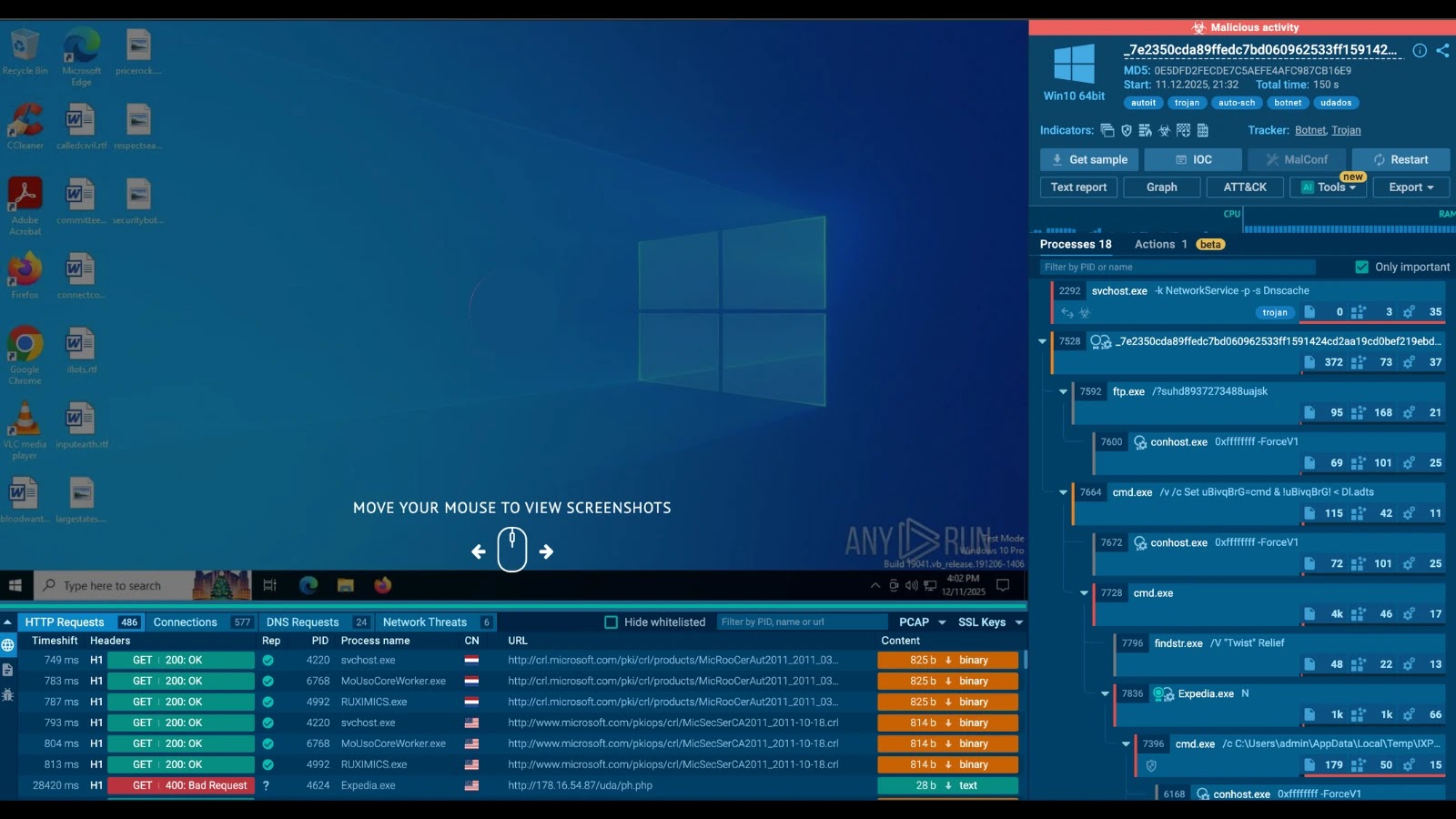
New Udados Botnet Launches Massive HTTP Flood DDoS Attacks Targeting Tech Sector New Udados Botnet Launches Massive HTTP Flood DDoS Attacks Targeting Tech Sector Cyber Security News
Lazarus Group’s IT Workers Scheme Hacker Group Caught Live On Camera Lazarus Group’s IT Workers Scheme Hacker Group Caught Live On Camera Cyber Security News

Categories

  • Cyber Security News
  • How To?
  • Security Week News
  • The Hacker News

Recent Posts

  • Critical Vulnerabilities Found in Intel’s TDX by Google
  • Socelars Malware Targets Windows for Data Theft
  • Siemens, Schneider, and Others Address ICS Vulnerabilities
  • North Korea-Linked UNC1069 Targets Crypto with AI Attacks
  • GitLab Releases Critical Security Updates to Fix Vulnerabilities

Pages

  • About Us – Contact
  • Disclaimer
  • Privacy Policy
  • Terms and Rules

Archives

  • February 2026
  • January 2026
  • December 2025
  • November 2025
  • October 2025
  • September 2025
  • August 2025
  • July 2025
  • June 2025
  • May 2025

Recent Posts

  • Critical Vulnerabilities Found in Intel’s TDX by Google
  • Socelars Malware Targets Windows for Data Theft
  • Siemens, Schneider, and Others Address ICS Vulnerabilities
  • North Korea-Linked UNC1069 Targets Crypto with AI Attacks
  • GitLab Releases Critical Security Updates to Fix Vulnerabilities

Pages

  • About Us – Contact
  • Disclaimer
  • Privacy Policy
  • Terms and Rules

Categories

  • Cyber Security News
  • How To?
  • Security Week News
  • The Hacker News

Copyright © 2026 Cyber Web Spider Blog – News.

Powered by PressBook Masonry Dark