Skip to content
  • Blog Home
  • Cyber Map
  • About Us – Contact
  • Disclaimer
  • Terms and Rules
  • Privacy Policy
Cyber Web Spider Blog – News

Cyber Web Spider Blog – News

Globe Threat Map provides a real-time, interactive 3D visualization of global cyber threats. Monitor DDoS attacks, malware, and hacking attempts with geo-located arcs on a rotating globe. Stay informed with live logs and archive stats.

  • Home
  • Cyber Map
  • Cyber Security News
  • Security Week News
  • The Hacker News
  • How To?
  • Toggle search form
Critical Vulnerabilities Found in Intel’s TDX by Google

Critical Vulnerabilities Found in Intel’s TDX by Google

Posted on February 11, 2026 By CWS

Intel’s collaboration with Google has led to the revelation of significant security flaws within its Trust Domain Extensions (TDX) technology. This comprehensive audit uncovered various vulnerabilities, bugs, and suggestions for improvement, highlighting potential risks in cloud and multi-tenant environments.

Background on TDX Technology

Trust Domain Extensions (TDX) is a hardware-based technology developed by Intel to ensure the security of sensitive workloads and data. Its primary function is to protect information even when the hypervisor or insiders are compromised. TDX achieves this by creating Confidential Virtual Machines, which are isolated to maintain both confidentiality and integrity.

Details of the Security Audit

Over a period of five months in 2025, Intel’s INT31 team, along with Google Cloud Security experts, conducted an in-depth analysis of TDX Module 1.5. Using a combination of manual reviews, custom tools, and AI, they identified critical vulnerabilities as well as areas for potential enhancement. The collaboration resulted in the discovery of five key vulnerabilities and 35 additional bugs and weaknesses.

Intel acted swiftly to address these issues, releasing patches concurrently with a public advisory. The vulnerabilities have been cataloged under various CVEs, including CVE-2025-32007 and CVE-2025-30513, and pose risks such as privilege escalation and information leaking.

Implications of the Findings

A particular vulnerability, CVE-2025-30513, gained attention for its potential to undermine TDX security guarantees completely. Google elaborated on how this flaw allows an untrusted host to alter a Trust Domain’s attributes during migration, compromising its security. This can lead to unauthorized access to sensitive data, posing significant threats during the lifecycle of a Trust Domain.

To provide further insight into the audit’s findings, Google released an extensive technical report. Concurrently, Intel published a blog post summarizing the research project, emphasizing their swift response in mitigating the identified risks.

Future Outlook and Industry Impact

This security audit underscores the critical importance of continuous security evaluations in maintaining robust cloud computing environments. The proactive measures taken by Intel and Google reflect a commitment to enhancing cybersecurity standards. As the industry evolves, such collaborations will be essential to safeguard sensitive data against emerging threats.

In the wake of these findings, further scrutiny of similar technologies is expected, emphasizing the need for comprehensive security strategies across the industry.


Security Week News Tags:cloud computing, cloud security, confidential computing, CVE, Cybersecurity, Google, Intel, Security, TDX, Vulnerabilities

Post navigation

Previous Post: Socelars Malware Targets Windows for Data Theft
Next Post: Critical Windows Shell Vulnerability Threatens User Security

Related Posts

Anubis Ransomware Packs a Wiper to Permanently Delete Files Anubis Ransomware Packs a Wiper to Permanently Delete Files Security Week News
1Kosmos Raises  Million for Identity Verification and Authentication Platform 1Kosmos Raises $57 Million for Identity Verification and Authentication Platform Security Week News
F5 to Acquire CalypsoAI for 0 Million F5 to Acquire CalypsoAI for $180 Million Security Week News
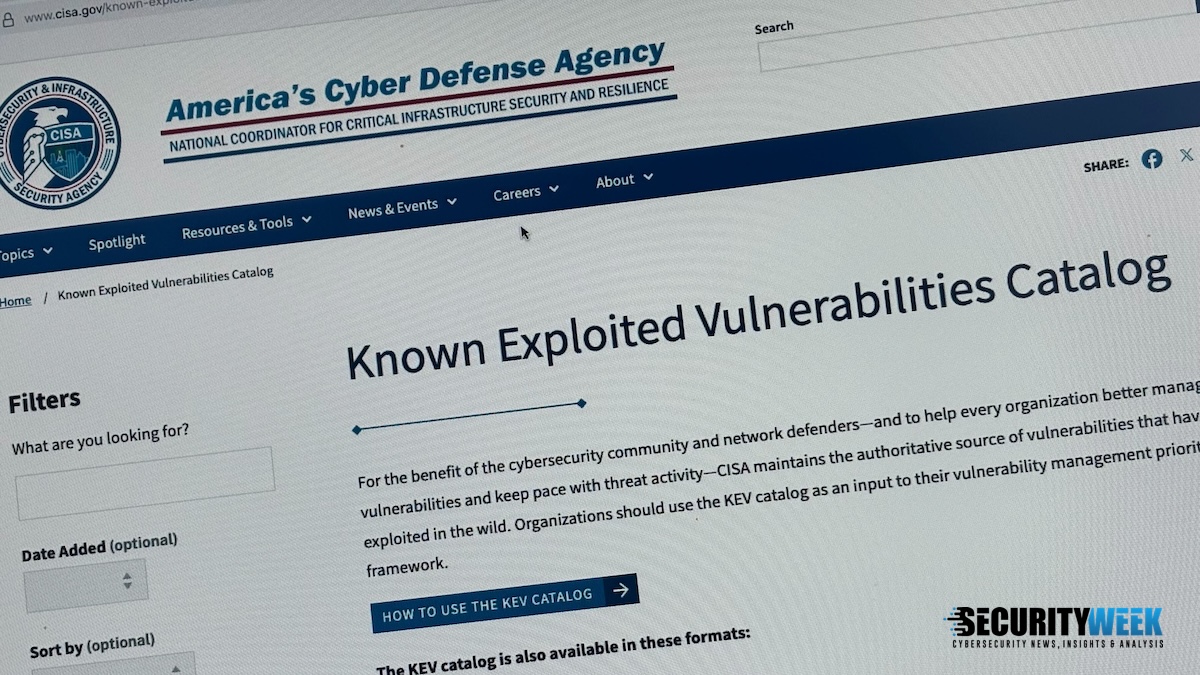
CISA KEV Catalog Expanded 20% in 2025, Topping 1,480 Entries CISA KEV Catalog Expanded 20% in 2025, Topping 1,480 Entries Security Week News
NHS Investigating Oracle EBS Hack Claims as Hackers Name Over 40 Alleged Victims NHS Investigating Oracle EBS Hack Claims as Hackers Name Over 40 Alleged Victims Security Week News
Neon Cyber Emerges from Stealth, Shining a Light into the Browser Neon Cyber Emerges from Stealth, Shining a Light into the Browser Security Week News

Categories

  • Cyber Security News
  • How To?
  • Security Week News
  • The Hacker News

Recent Posts

  • Six New Microsoft Vulnerabilities Added to CISA’s KEV List
  • Fortinet Addresses Critical Security Flaws in Latest Update
  • Critical Windows Shell Vulnerability Threatens User Security
  • Critical Vulnerabilities Found in Intel’s TDX by Google
  • Socelars Malware Targets Windows for Data Theft

Pages

  • About Us – Contact
  • Disclaimer
  • Privacy Policy
  • Terms and Rules

Archives

  • February 2026
  • January 2026
  • December 2025
  • November 2025
  • October 2025
  • September 2025
  • August 2025
  • July 2025
  • June 2025
  • May 2025

Recent Posts

  • Six New Microsoft Vulnerabilities Added to CISA’s KEV List
  • Fortinet Addresses Critical Security Flaws in Latest Update
  • Critical Windows Shell Vulnerability Threatens User Security
  • Critical Vulnerabilities Found in Intel’s TDX by Google
  • Socelars Malware Targets Windows for Data Theft

Pages

  • About Us – Contact
  • Disclaimer
  • Privacy Policy
  • Terms and Rules

Categories

  • Cyber Security News
  • How To?
  • Security Week News
  • The Hacker News

Copyright © 2026 Cyber Web Spider Blog – News.

Powered by PressBook Masonry Dark