Jan 15, 2026Ravie LakshmananCybersecurity / Hacking Information
The web by no means stays quiet. Each week, new hacks, scams, and safety issues present up someplace.
This week’s tales present how briskly attackers change their methods, how small errors flip into large dangers, and the way the identical previous instruments preserve discovering new methods to interrupt in.
Learn on to catch up earlier than the following wave hits.
Unauthenticated RCE threat
A high-severity safety flaw has been disclosed in Redis (CVE-2025-62507, CVSS rating: 8.8) that might probably result in distant code execution via a stack buffer overflow. It was fastened in model 8.3.2. JFrog’s evaluation of the flaw has revealed that the vulnerability is triggered when utilizing the brand new Redis 8.2 XACKDEL command, which was launched to simplify and optimize stream cleanup. Particularly, it resides within the implementation of xackdelCommand(), a operate answerable for parsing and processing the checklist of stream IDs provided by the consumer. “The core difficulty is that the code doesn’t confirm that the variety of IDs offered by the consumer matches throughout the bounds of this stack-allocated array,” the corporate mentioned. “Consequently, when extra IDs are provided than the array can maintain, the operate continues writing previous the tip of the buffer. This leads to a basic stack-based buffer overflow.” The vulnerability may be triggered remotely within the default Redis configuration simply by sending a single XACKDEL command containing a sufficiently giant variety of message IDs. “It’s also necessary to notice that by default, Redis doesn’t implement any authentication, making this an unauthenticated distant code execution,” JFrog added. As of writing, there are 2,924 servers vulnerable to the flaw.
Signed malware evasion
BaoLoader, ClickFix campaigns, and Maverick emerged as the highest three threats between September 1 and November 30, 2025, based on ReliaQuest. In contrast to typical malware that steals certificates, BaoLoader’s operators are recognized to register reliable companies in Panama and Malaysia particularly to buy legitimate code-signing certificates from main certificates authorities to signal their payloads. “With these certificates, their malware seems reliable to each customers and safety instruments, permitting them to function largely undetected whereas being dismissed as merely probably undesirable applications (PUPs),” ReliaQuest mentioned. The malware, as soon as launched, abuses “node.exe” to run malicious JavaScript for reconnaissance, in-memory command execution, and backdoor entry. It additionally routes command-and-control (C2) site visitors by means of reliable cloud providers, concealing outbound site visitors as regular enterprise exercise and undermining reputation-based blocking.
RMM abuse surge
Phishing emails disguised as vacation celebration invites, overdue invoices, tax notices, Zoom assembly requests, or doc signing notifications are getting used to ship Distant Monitoring and Administration (RMM) instruments like LogMeIn Resolve, Naverisk, and ScreenConnect in multi-stage assault campaigns. In some instances, ScreenConnect is used to ship secondary instruments, together with different distant entry applications, alongside HideMouse and WebBrowserPassView. Whereas the precise technique behind putting in duplicate distant entry instruments just isn’t clear, it is believed that the risk actors could also be utilizing trial licenses, forcing them to change them to keep away from them expiring. In one other incident analyzed by CyberProof, attackers transitioned from concentrating on an worker’s private PayPal account to establishing a company foothold by means of a multi-layered RMM technique involving using LogMeIn Rescue and AnyDesk by tricking victims into putting in the software program over the cellphone by pretending to be help personnel. The e-mail is designed to create urgency by masquerading as PayPal alerts.
CAV operator caught
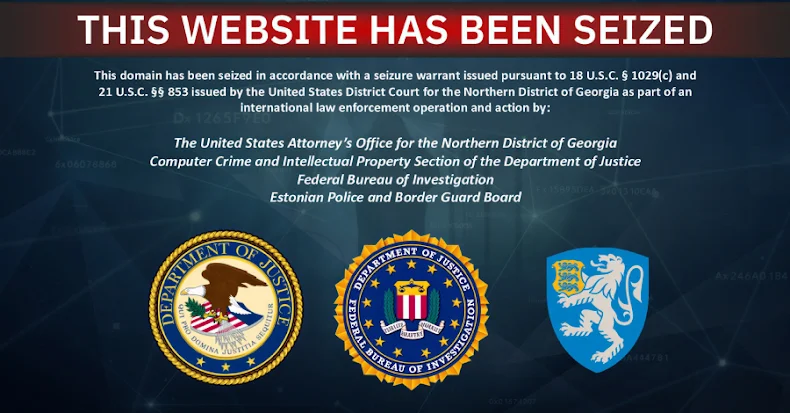
Dutch authorities mentioned they’ve arrested a 33-year-old at Schiphol for his or her alleged involvement within the operation of AVCheck, a counter-antivirus (CAV) service that was dismantled by a multinational legislation enforcement operation in Could 2025. “The service provided by the suspect enabled cybercriminals to refine the concealment of malicious information every time,” Dutch officers mentioned. “It is vitally necessary for cybercriminals that as few antivirus applications as potential are capable of detect the malicious exercise, in an effort to maximize their possibilities of success to find victims. On this means, the person enabled criminals to make use of the malware they’d developed to assert as many victims as potential.”
Gemini powers Siri
Apple and Google have confirmed that the following model of Siri will use Gemini and its cloud expertise in a multi-year collaboration between the 2 tech giants. “Apple and Google have entered right into a multi-year collaboration underneath which the following technology of Apple Basis Fashions will likely be based mostly on Google’s Gemini fashions and cloud expertise,” Google mentioned. “These fashions will assist energy future Apple Intelligence options, together with a extra personalised Siri coming this 12 months.” Google emphasised that Apple Intelligence will proceed to run on Apple gadgets and Non-public Cloud Compute, whereas sustaining Apple’s industry-leading privateness requirements. “This looks like an unreasonable focus of energy for Google, provided that additionally they have Android and Chrome,” Tesla and X CEO Elon Musk mentioned.
China bans overseas instruments
China has requested home corporations to cease utilizing cybersecurity software program made by roughly a dozen companies from the U.S. and Israel attributable to nationwide safety issues, Reuters reported, citing “two individuals briefed on the matter.” This contains VMware, Palo Alto Networks, Fortinet, and Test Level. Authorities have reportedly expressed issues that the software program may acquire and transmit confidential data overseas.
RCE by way of AI libraries
Safety flaws have been disclosed in open-source synthetic intelligence/machine studying (AI/ML) Python libraries printed by Apple (FlexTok), NVIDIA (NeMo), and Salesforce (Uni2TS) that enable for distant code execution (RCE) when a mannequin file with malicious metadata is loaded. “The vulnerabilities stem from libraries utilizing metadata to configure advanced fashions and pipelines, the place a shared third-party library instantiates courses utilizing this metadata,” Palo Alto Networks Unit 42 mentioned. “Weak variations of those libraries merely execute the offered knowledge as code. This enables an attacker to embed arbitrary code in mannequin metadata, which might routinely execute when susceptible libraries load these modified fashions.” The third-party library in query is Meta’s Hydra, particularly a operate named “hydra.utils.instantiate()” that makes it potential to run code utilizing Python features like os.system(), builtins.eval(), and builtins.exec(). The vulnerabilities, tracked as CVE-2025-23304 (NVIDIA) and CVE-2026-22584 (Salesforce), have since been addressed by the respective corporations. Hydra has additionally up to date its documentation to state that RCE is feasible when utilizing instantiate() and that it has applied a default checklist of blocklisted modules to mitigate the chance. “To bypass it, set the env var HYDRA_INSTANTIATE_ALLOWLIST_OVERRIDE with a colon-separated checklist of modules to allowlist,” it mentioned.
AI voice evasion
A gaggle of teachers has devised a method referred to as VocalBridge that can be utilized to bypass present safety defenses and execute voice cloning assaults. “Most present purification strategies are designed to counter adversarial noise in automated speech recognition (ASR) methods reasonably than speaker verification or voice cloning pipelines,” the workforce from the College of Texas at San Antonio mentioned. “Consequently, they fail to suppress the fine-grained acoustic cues that outline speaker id and are sometimes ineffective towards speaker verification assaults (SVA). To handle these limitations, we suggest Diffusion-Bridge (VocalBridge), a purification framework that learns a latent mapping from perturbed to scrub speech within the EnCodec latent area. Utilizing a time-conditioned 1D U-Web with a cosine noise schedule, the mannequin allows environment friendly, transcript-free purification whereas preserving speaker-discriminative construction.”
Telecoms underneath scrutiny
Russia’s telecommunications watchdog Roskomnadzor has referred to as out 33 telecom operators for failing to put in site visitors inspection and content material filtering gear. A complete of 35 instances of violations have been detected on the operators’ networks. “Courts have already taken place in 4 instances, and fines have been issued to violators. Supplies on six information have been despatched to the courtroom. The remaining operators have been summoned to attract up protocols,” the Roskomnadzor mentioned. Within the aftermath of Russia’s invasion of Ukraine in 2022, the company has mandated that each one telecom operators should set up gear that inspects consumer site visitors and blocks entry to “undesired” websites.
Turla evasion ways
A brand new evaluation of a Turla malware often called Kazuar has revealed the varied strategies the backdoor employs to evade safety options and enhance evaluation time. This contains using the Element Object Mannequin (COM), patchless Occasion Tracing for Home windows (ETW), Antimalware Scan Interface (AMSI) bypass, and a management movement redirection trick to hold out the first malicious routines in the course of the second run of a operate named “Qtupnngh,” which then launches three Kazuar .NET payloads (KERNEL, WORKER, and BRIDGE) utilizing multi-stage an infection chain. “The core logic resides within the kernel, which acts as the first orchestrator. It handles process processing, keylogging, configuration knowledge dealing with, and so forth,” researcher Dominik Reichel mentioned. “The employee manages operational surveillance by monitoring the contaminated host’s atmosphere and safety posture, amongst its varied different tasks. Lastly, the bridge features because the communications layer, facilitating knowledge switch and exfiltration from the native knowledge listing by means of a collection of compromised WordPress plugin paths.”
PLC flaws uncovered
Cybersecurity researchers have disclosed particulars of a number of crucial safety vulnerabilities impacting the Delta Electronics DVP-12SE11T programmable logic controller (PLC) that pose extreme dangers starting from unauthorized entry to operational disruption in operational expertise (OT) environments. The vulnerabilities embrace: CVE-2025-15102 (CVSS rating: 9.8), a password safety bypass, CVE-2025-15103 (CVSS rating: 9.8), an authentication bypass by way of partial password disclosure, CVE-2025-15358 (CVSS rating: 7.5): a denial-of-service, and CVE-2025-15359 (CVSS rating: 9.8), an out-of-bounds reminiscence write. The problems have been addressed by way of firmware updates in late December 2025. “Weaknesses in PLC authentication and reminiscence dealing with can considerably enhance operational threat in OT environments, significantly the place legacy methods or restricted community segmentation are current,” OPSWAT Unit 515, which found the failings throughout a safety evaluation in August 2025, mentioned.
Salesforce audit device
Mandiant has launched an open-source device to assist Salesforce admins audit misconfigurations that might expose delicate knowledge. Known as AuraInspector, it has been described as a Swiss Military knife of Salesforce Expertise Cloud testing. “It facilitates in discovering misconfigured Salesforce Expertise Cloud functions in addition to automates a lot of the testing course of,” Google mentioned. This contains discovery of accessible information from each Visitor and Authenticated contexts, the power to get the overall variety of information of objects utilizing the undocumented GraphQL Aura methodology, checks for self-registration capabilities, and discovery of “Residence URLs”, which may enable unauthorized entry to delicate administrative performance.
Wi-Fi DoS exploit
A high-severity flaw (CVSS rating: 8.4) in Broadcom Wi-Fi chipset software program can enable an unauthenticated attacker inside radio vary to utterly take wi-fi networks offline by sending a single malicious body, whatever the configured community safety stage, forcing routers to be manually rebooted earlier than connectivity may be restored. The flaw impacts 5GHz wi-fi networks and causes all related purchasers, together with visitor networks, to be disconnected concurrently. Ethernet connections and the two.4 GHz community will not be affected. “This vulnerability permits an attacker to make the entry level unresponsive to all purchasers and terminate any ongoing consumer connections,” Black Duck mentioned. “If knowledge transmission to subsequent methods is ongoing, the information could develop into corrupted or, at a minimal, the transmission will likely be interrupted.” The assault bypasses WPA2 and WPA3 protections, and it may be repeated indefinitely to trigger extended community disruptions. Broadcom has launched a patch to handle the reported downside. Further particulars have been withheld because of the potential threat it poses to quite a few methods that use the chipset.
Good contract exploit
Unknown risk actors have stolen $26 million value of Ether from the Truebit cryptocurrency platform by exploiting a vulnerability within the firm’s five-year-old sensible contract. “The attacker exploited a mathematical vulnerability within the sensible contract’s pricing of the TRU token, which set its worth very near zero,” Halborn mentioned. “With entry to a low-cost supply of TRU tokens, the attacker was capable of drain worth from the contract by promoting them again to the contract at full value. The attacker carried out a collection of high-value mint requests that netted them a considerable amount of TRU tokens at negligible value.”
Bill lure marketing campaign
A brand new wave of assaults has been discovered to leverage invoice-themed lures in phishing emails to deceive recipients into opening a PDF attachment that shows an error message, instructing them to obtain the file by clicking on a button. Among the hyperlinks redirect to a web page disguised as Google Drive that mimics MP4 video information, however, in actuality, drop RMM instruments resembling Syncro, SuperOps, NinjaOne, and ScreenConnect for persistent distant entry. “As they don’t seem to be malware like backdoors or Distant Entry Trojans (RATs), risk actors are more and more leveraging them,” AhnLab mentioned. “It’s because these instruments have been designed to evade detection by safety merchandise like firewalls and anti-malware options, that are restricted to easily detecting and blocking recognized malware strains.”
Taiwan hospitals hit
A ransomware pressure dubbed CrazyHunter has compromised at the least six corporations in Taiwan, most of them being hospitals. A Go-based ransomware and a fork of the Prince ransomware, it employs superior encryption and supply strategies focused towards Home windows-based machines, per Trellix. It additionally maintains a knowledge leak website to publicize sufferer data. “The preliminary compromise usually entails exploiting weaknesses in a company’s Energetic Listing (AD) infrastructure, often by leveraging weak passwords on area accounts,” the corporate mentioned. The risk actors have been discovered to make use of SharpGPOAbuse to distribute the ransomware payload by means of Group Coverage Objects (GPOs) and propagate it throughout the community. A modified Zemana anti-malware driver is used to raise their privileges and kill safety processes as a part of a Carry Your Personal Weak Driver (BYOVD) assault. CrazyHunter is assessed to be lively since at the least early 2025, with Taiwanese authorities describing it as a Chinese language hacker group comprising two people, Luo and Xu, who bought the stolen knowledge to trafficking teams in each China and Taiwan. Two Taiwanese suspects alleged to be concerned in knowledge trafficking have been arrested and subsequently launched on bail final August.
That is the wrap for this week. These tales present how briskly issues can change and the way small dangers can develop large if ignored.
Maintain your methods up to date, look ahead to the quiet stuff, and do not belief what seems to be regular too shortly.
Subsequent Thursday, ThreatsDay will likely be again with extra brief takes from the week’s greatest strikes in hacking and safety.