In a recent revelation, cybersecurity experts have uncovered a sophisticated malware operation, tagged as DEAD#VAX, which employs a combination of advanced techniques and legitimate system features to circumvent standard detection systems. This campaign orchestrates the deployment of AsyncRAT, a remote access trojan, using IPFS-hosted Virtual Hard Disk (VHD) files, as detailed by researchers Akshay Gaikwad, Shikha Sangwan, and Aaron Beardslee from Securonix.
Innovative Techniques in Malware Deployment
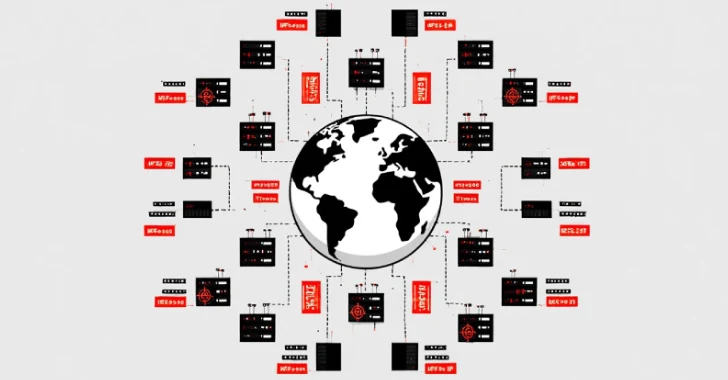
The DEAD#VAX campaign distinguishes itself by utilizing a decentralized network, InterPlanetary Filesystem (IPFS), to distribute VHD files disguised as innocuous PDF documents. These files, once opened by unsuspecting targets, mount as virtual hard drives, initiating the malware’s infection sequence. The use of VHDs in this context exemplifies a modern evasion strategy that bypasses traditional security measures.
Central to this operation is AsyncRAT, an open-source malware that provides malicious actors with significant control over compromised systems. It facilitates espionage activities such as keylogging, screen and webcam capture, and clipboard monitoring, while also allowing file system access and execution of remote commands.
Complex Multi-Stage Execution Pipeline
The deployment of AsyncRAT is achieved through a multi-layered process involving highly obfuscated scripts and self-parsing PowerShell loaders. These components work together to deliver an encrypted shellcode directly into trusted Windows processes, maintaining a fileless execution that leaves minimal forensic evidence.
Upon mounting the VHD, an embedded Windows Script File (WSF) is executed, which triggers a series of checks to ensure the environment is not virtualized or sandboxed. It then runs a PowerShell-based injector designed to embed the payload into Microsoft-signed processes, enhancing the malware’s ability to blend into legitimate system operations.
Stealth and Persistence in Malware Operations
The stealth of the DEAD#VAX campaign is further enhanced by controlling execution timing and using sleep intervals to minimize CPU usage and avoid suspicious activity. This strategic execution reduces anomalies in runtime behavior, making detection by traditional security solutions challenging.
By opting for a fileless execution model, the malware avoids creating recognizable binaries on disk, thereby complicating detection and forensic analysis. This approach represents a growing trend among modern attackers who favor trusted file formats and script manipulation to evade security defenses.
The DEAD#VAX operation underscores a significant shift in cyber threats, where attackers deploy multi-stage pipelines that appear innocuous individually, complicating detection and response efforts. As these methods evolve, cybersecurity defenses must adapt to address the increasing sophistication of such threats.