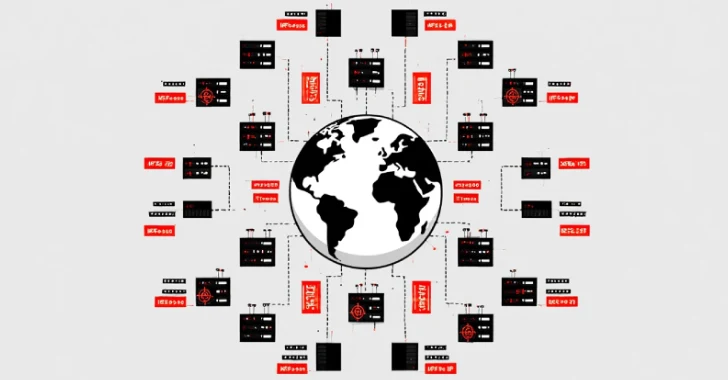
The cybersecurity landscape is witnessing a significant shift as Transparent Tribe, a group associated with Pakistan, has adopted artificial intelligence to enhance its malware deployment strategies. This sophisticated campaign primarily targets Indian governmental bodies and embassies, utilizing AI-powered tools to create a vast array of malware implants.
AI-Powered Malware Production
In a move towards malware industrialization, Transparent Tribe is employing AI to mass-produce implants using lesser-known programming languages such as Nim, Zig, and Crystal. According to Bitdefender’s recent analysis, these implants exploit trusted services like Slack, Discord, Supabase, and Google Sheets to evade detection. This strategy, termed Distributed Denial of Detection (DDoD), focuses on overwhelming security systems with numerous polyglot binaries rather than relying on advanced technical prowess.
By leveraging large language models, hackers can easily generate code in unfamiliar languages, thus narrowing the expertise gap. This development has facilitated the mass production of malware, allowing even novice cybercriminals to craft functional code efficiently.
Targeting Indian and Afghan Entities
The attacks primarily focus on the Indian government, its embassies abroad, and to a lesser extent, the Afghan government and private enterprises. Transparent Tribe employs LinkedIn to identify and target high-value individuals. Initial infection tactics involve phishing emails with Windows shortcuts contained in ZIP archives or ISO images, as well as PDFs with misleading download prompts leading to malicious websites.
Once the user interacts with these elements, a PowerShell script is executed to download and operate the main backdoor, paving the way for further compromise. Known adversary simulation tools like Cobalt Strike and Havoc are utilized to maintain persistence within the targeted systems.
Diverse Malware Arsenal
The campaign features a variety of tools, including Warcode, a Crystal-based shellcode loader, and NimShellcodeLoader, which deploys a Cobalt Strike beacon. CreepDropper, a .NET malware, installs additional payloads such as SHEETCREEP and MAILCREEP. Other tools like SupaServ and LuminousStealer use platforms like Supabase and Google Drive for communication and data exfiltration.
Furthermore, CrystalShell and its Zig counterpart, ZigShell, are designed to target multiple operating systems. These tools, along with others like CrystalFile and LuminousCookies, illustrate the extensive arsenal at the disposal of Transparent Tribe.
Despite the technical regression in APT36’s approach, Bitdefender warns that the industrialization of malware through AI is a growing threat. The combination of niche programming languages and trusted services enables even mediocre code to succeed by overloading traditional security measures.
Implications for Cybersecurity
The use of AI in malware development signifies a pivotal change in cyber threats, highlighting the need for robust security strategies. While AI-assisted malware may be unstable, its ability to overwhelm defenses poses a significant risk. Organizations must adopt advanced security solutions to counteract these evolving tactics.
As malicious actors continue to refine their methods, the importance of staying informed and proactive in cybersecurity efforts cannot be overstated. The convergence of AI and malware represents a formidable challenge that requires vigilance and innovation in defense strategies.