Skip to content
  • Home
  • Cyber Map
  • About Us – Contact
  • Disclaimer
  • Terms and Rules
  • Privacy Policy
Cyber Web Spider Blog – News

Cyber Web Spider Blog – News

Globe Threat Map provides a real-time, interactive 3D visualization of global cyber threats. Monitor DDoS attacks, malware, and hacking attempts with geo-located arcs on a rotating globe. Stay informed with live logs and archive stats.

  • Home
  • Cyber Map
  • Cyber Security News
  • Security Week News
  • The Hacker News
  • How To?
  • Toggle search form
Critical Windows Flaw Allows SYSTEM Level Access

Critical Windows Flaw Allows SYSTEM Level Access

Posted on March 27, 2026 By CWS

A recent investigation has revealed a significant local privilege escalation vulnerability in the Windows Error Reporting (WER) service, potentially enabling attackers to gain SYSTEM level access.

Nature of the Vulnerability

Identified as CVE-2026-20817, this critical flaw compelled Microsoft to eliminate the susceptible feature entirely, opting against traditional patching methods. The vulnerability resides in the main executable library, WerSvc.dll, of the Windows Error Reporting service.

Researchers Denis Faiustov and Ruslan Sayfiev from GMO Cybersecurity highlighted that the flaw arises from improper permission handling during client request processing. This structural weakness allows a low-privileged user to execute commands at an elevated level.

Exploitation Methodology

Exploiting this flaw involves the attacker connecting to the ALPC port using the NtAlpcConnectPort API and sending a payload through the NtAlpcSendWaitReceivePort API. This requires precise manipulation of the MessageFlags parameter and structural padding to exploit the vulnerable logic.

The vulnerability centers around ALPC messages directed to the WindowsErrorReportingServicePort. An attacker’s crafted message with a File Mapping object can trigger the ElevatedProcessStart function, reading malicious arguments via the MapViewOfFile API, and eventually invoking the CreateElevatedProcessAsUser function, initiating WerFault.exe with SYSTEM privileges under attacker control.

Microsoft’s Response and Security Measures

Microsoft’s approach to resolving this issue involved introducing a private function test that disables the SvcElevatedLaunch functionality altogether. This drastic measure returns an error code, effectively neutralizing the vulnerability by removing the feature from the codebase.

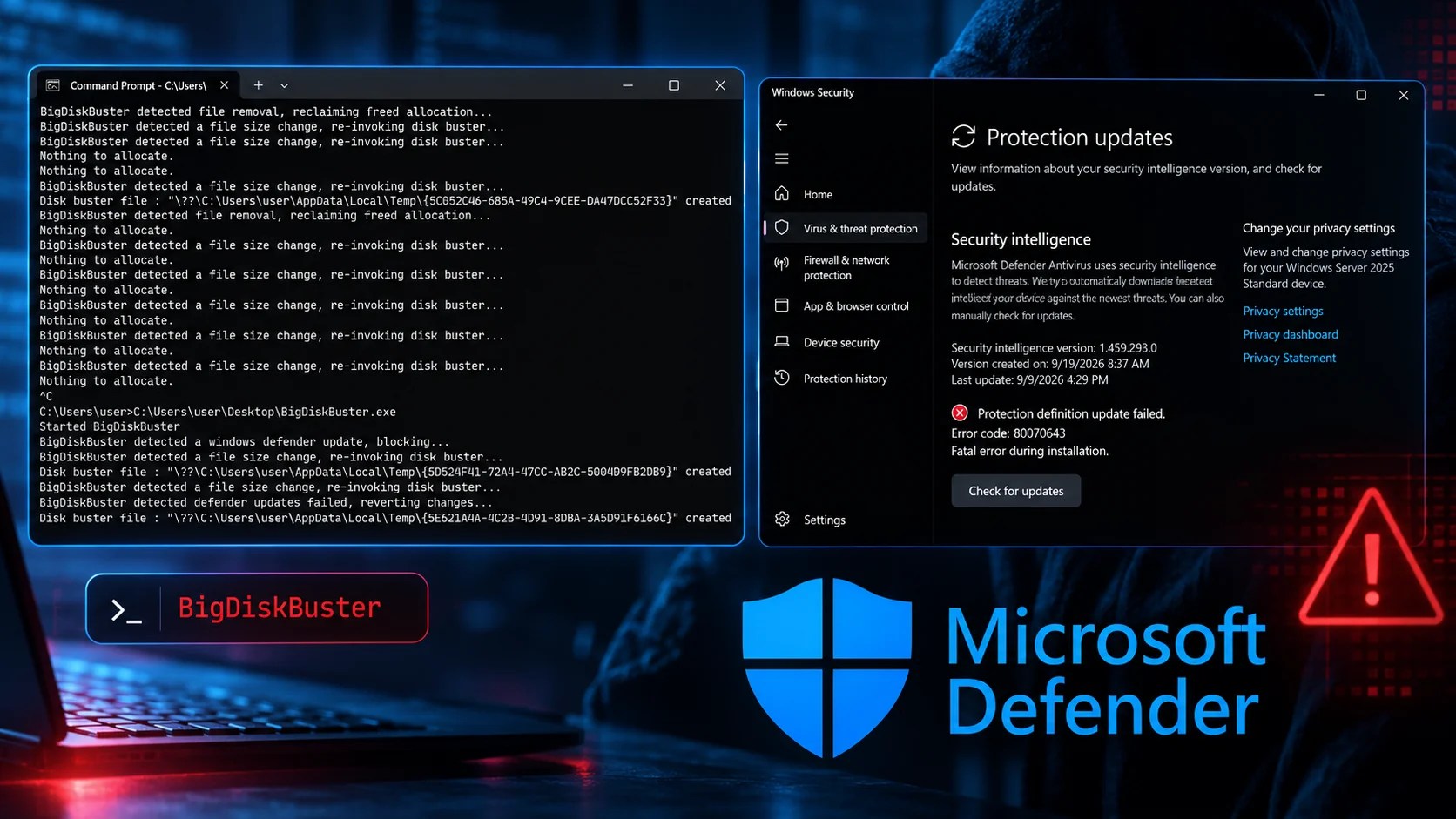
Despite this remediation, attackers can still exploit the flaw by leveraging specific command-line options and advanced Windows techniques to execute arbitrary code. Security solutions like Microsoft Defender are actively detecting and alerting such suspicious activities.

Security analysts have warned of numerous fake proof-of-concept repositories for CVE-2026-20817 appearing on platforms like GitHub. These often contain hidden malware, emphasizing the need for careful analysis of downloaded security tools.

For ongoing updates, follow us on Google News, LinkedIn, and X. Contact us to feature your cybersecurity stories.
Cyber Security News Tags:ALPC, CVE-2026-20817, Cybersecurity, Malware, Microsoft, privilege escalation, SYSTEM access, Vulnerability, WerSvc.dll, Windows Error Reporting

Post navigation

Previous Post: Critical Security Gap in PTC Software Alarms German Authorities
Next Post: Bearlyfy Group Intensifies Cyber Attacks on Russian Firms

Related Posts

Link11 Highlights Growing Cybersecurity Risks and Introduces Integrated WAAP Protection Platform Link11 Highlights Growing Cybersecurity Risks and Introduces Integrated WAAP Protection Platform Cyber Security News
APT36 Hackers Attacking Indian Defense Personnel in Sophisticated Phishing Attack APT36 Hackers Attacking Indian Defense Personnel in Sophisticated Phishing Attack Cyber Security News
Threat Actors Leverage JSON Storage Services to Host and Deliver Malware Via Trojanized Code Projects Threat Actors Leverage JSON Storage Services to Host and Deliver Malware Via Trojanized Code Projects Cyber Security News
MicroStealer Malware Targets Telecom and Education Sectors MicroStealer Malware Targets Telecom and Education Sectors Cyber Security News
Critical Google Gemini CLI Flaw Exposes Systems to Attack Critical Google Gemini CLI Flaw Exposes Systems to Attack Cyber Security News
Critical TP-Link Vulnerabilities Demand Immediate Firmware Updates Critical TP-Link Vulnerabilities Demand Immediate Firmware Updates Cyber Security News

Categories

  • Cyber Security News
  • How To?
  • Security Week News
  • The Hacker News

Recent Posts

  • Hackers Exploit GitHub with Fake AI Repositories
  • Checkmarx Jenkins Plugin Compromised by TeamPCP
  • Fake Claude Campaign Utilizes PlugX-Like DLL Sideloading
  • Critical cPanel Vulnerability Exploited by Cybercriminals
  • AI-Powered Zero-Day Exploits Raise Cybersecurity Concerns

Pages

  • About Us – Contact
  • Disclaimer
  • Privacy Policy
  • Terms and Rules

Archives

  • May 2026
  • April 2026
  • March 2026
  • February 2026
  • January 2026
  • December 2025
  • November 2025
  • October 2025
  • September 2025
  • August 2025
  • July 2025
  • June 2025
  • May 2025

Recent Posts

  • Hackers Exploit GitHub with Fake AI Repositories
  • Checkmarx Jenkins Plugin Compromised by TeamPCP
  • Fake Claude Campaign Utilizes PlugX-Like DLL Sideloading
  • Critical cPanel Vulnerability Exploited by Cybercriminals
  • AI-Powered Zero-Day Exploits Raise Cybersecurity Concerns

Pages

  • About Us – Contact
  • Disclaimer
  • Privacy Policy
  • Terms and Rules

Categories

  • Cyber Security News
  • How To?
  • Security Week News
  • The Hacker News

Copyright © 2026 Cyber Web Spider Blog – News.

Powered by PressBook Masonry Dark