Skip to content
  • Home
  • Cyber Map
  • About Us – Contact
  • Disclaimer
  • Terms and Rules
  • Privacy Policy
Cyber Web Spider Blog – News

Cyber Web Spider Blog – News

Globe Threat Map provides a real-time, interactive 3D visualization of global cyber threats. Monitor DDoS attacks, malware, and hacking attempts with geo-located arcs on a rotating globe. Stay informed with live logs and archive stats.

  • Home
  • Cyber Map
  • Cyber Security News
  • Security Week News
  • The Hacker News
  • How To?
  • Toggle search form
Cryptomining Botnet Targets Over 1,000 ComfyUI Instances

Cryptomining Botnet Targets Over 1,000 ComfyUI Instances

Posted on April 7, 2026 By CWS

An aggressive campaign has been identified aiming at internet-exposed platforms running ComfyUI, a notable stable diffusion tool, to conscript them into a cryptomining and proxy botnet. This activity is primarily orchestrated using a specifically designed Python scanner that scans major cloud IP ranges for susceptible targets. Once identified, malicious nodes are deployed through ComfyUI-Manager if no existing vulnerable node is present, according to a report by Censys security researcher Mark Ellzey.

Mechanics of the Cryptomining Operation

The campaign systematically identifies and exploits misconfigured ComfyUI instances that permit remote code execution without authentication. Once compromised, the hosts become part of a cryptomining network mining Monero via XMRig and Conflux using lolMiner. These operations are centrally administered via a Flask-based command-and-control dashboard. Despite the relatively small number of over 1,000 publicly accessible ComfyUI instances, the attacker leverages these for financial gain through opportunistic campaigns.

Tools and Exploitation Techniques

Censys uncovered the campaign after finding an open directory linked to the Aeza Group, known for bulletproof hosting services. This directory housed tools used for reconnaissance and exploitation, including scripts to locate and exploit ComfyUI instances. The scripts exploit ComfyUI’s custom nodes that execute raw Python code without authentication, allowing attackers to deliver malicious payloads efficiently.

Persistence and Competitive Targeting

To maintain persistence, the attackers deploy mechanisms that download a shell script every six hours and re-execute exploits upon ComfyUI startup. The script disables shell history, eliminates competing miners, and uses the LD_PRELOAD hook to conceal a watchdog process. Additionally, the malware protects its binaries with the ‘chattr +i’ command to prevent their deletion or modification. Notably, the campaign targets a rival botnet, ‘Hisana’, by redirecting its mining output to the attacker’s wallet and occupying its command port.

Further analysis revealed an SSH attempt to another IP associated with a worm campaign on vulnerable Redis servers, indicating a broader attack strategy. Despite initial appearances of unsophistication, the campaign’s tactics suggest a deliberate approach to exploit exposed services for persistent and monetizable infections.

Broader Context of Botnet Campaigns

The discovery aligns with other botnet campaigns exploiting various vulnerabilities across platforms like n8n, Tenda routers, and Apache ActiveMQ to install malware for cryptomining and DDoS attacks. Researchers have observed a significant increase in botnet activity, partly due to the availability of source code for botnets like Mirai, facilitating widespread attacks.

As botnet campaigns continue to proliferate, the cybersecurity landscape faces ongoing challenges in protecting exposed services from exploitation. Continuous monitoring and updating of security protocols remain essential in mitigating such threats.

The Hacker News Tags:Aeza Group, Botnet, Censys, ComfyUI, Cryptomining, Cybersecurity, Hysteria V2, lolMiner, Malware, network security, XMRig

Post navigation

Previous Post: GPUBreach Attack Threatens System Security with Root Access
Next Post: Grafana Vulnerability Risks Data Exposure via AI Features

Related Posts

ValleyRAT Malware Concealed in Trusted Adware ValleyRAT Malware Concealed in Trusted Adware The Hacker News
Microsoft Exposes AutoJack Exploit in AI Browsing Agents Microsoft Exposes AutoJack Exploit in AI Browsing Agents The Hacker News
Critical JetBrains TeamCity Flaw Actively Exploited: CISA Critical JetBrains TeamCity Flaw Actively Exploited: CISA The Hacker News
SinoTrack GPS Devices Vulnerable to Remote Vehicle Control via Default Passwords SinoTrack GPS Devices Vulnerable to Remote Vehicle Control via Default Passwords The Hacker News
Qilin Ransomware Ranked Highest in April 2025 with Over 45 Data Leak Disclosures Qilin Ransomware Ranked Highest in April 2025 with Over 45 Data Leak Disclosures The Hacker News
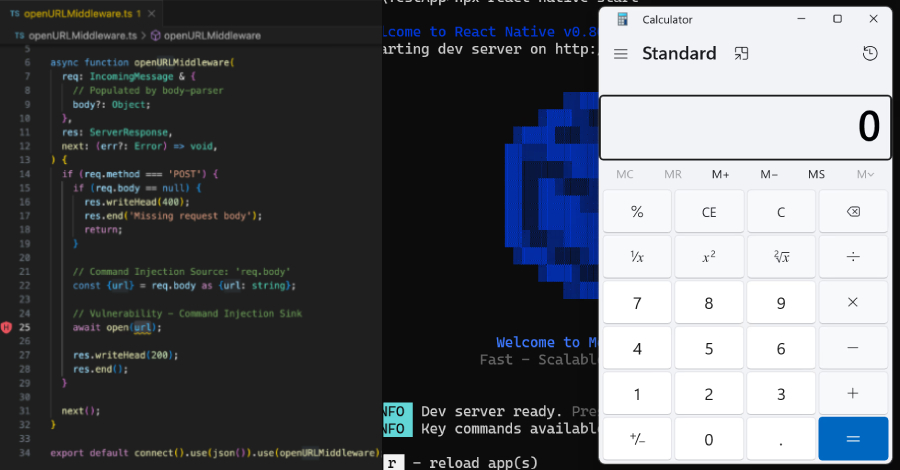
Critical React Native CLI Flaw Exposed Millions of Developers to Remote Attacks Critical React Native CLI Flaw Exposed Millions of Developers to Remote Attacks The Hacker News

Categories

  • Cyber Security News
  • How To?
  • Security Week News
  • The Hacker News

Recent Posts

  • AppViewX Enhances AI Security with New Tools
  • Cyberattack Exposes Data of Over 1 Million in Arizona Courts
  • Criminal IP Unveils AITEM: Revolutionizing Cybersecurity
  • Iranian Hackers Exploit Fake Coding Test to Infiltrate Iraqi Systems
  • Aembit Enhances Security for AI Agents in Enterprises

Pages

  • About Us – Contact
  • Disclaimer
  • Privacy Policy
  • Terms and Rules

Archives

  • October 2026
  • September 2026
  • August 2026
  • July 2026
  • June 2026
  • May 2026
  • April 2026
  • March 2026
  • February 2026
  • January 2026
  • December 2025
  • November 2025
  • October 2025
  • September 2025
  • August 2025
  • July 2025
  • June 2025
  • May 2025

Recent Posts

  • AppViewX Enhances AI Security with New Tools
  • Cyberattack Exposes Data of Over 1 Million in Arizona Courts
  • Criminal IP Unveils AITEM: Revolutionizing Cybersecurity
  • Iranian Hackers Exploit Fake Coding Test to Infiltrate Iraqi Systems
  • Aembit Enhances Security for AI Agents in Enterprises

Pages

  • About Us – Contact
  • Disclaimer
  • Privacy Policy
  • Terms and Rules

Categories

  • Cyber Security News
  • How To?
  • Security Week News
  • The Hacker News

Copyright © 2026 Cyber Web Spider Blog – News.

Powered by PressBook Masonry Dark