Skip to content
  • Home
  • Cyber Map
  • About Us – Contact
  • Disclaimer
  • Terms and Rules
  • Privacy Policy
Cyber Web Spider Blog – News

Cyber Web Spider Blog – News

Globe Threat Map provides a real-time, interactive 3D visualization of global cyber threats. Monitor DDoS attacks, malware, and hacking attempts with geo-located arcs on a rotating globe. Stay informed with live logs and archive stats.

  • Home
  • Cyber Map
  • Cyber Security News
  • Security Week News
  • The Hacker News
  • How To?
  • Toggle search form
Vidar Malware Uses JPEGs to Hide Payloads

Vidar Malware Uses JPEGs to Hide Payloads

Posted on April 27, 2026 By CWS

The Vidar malware family, known for its information-stealing capabilities, has evolved significantly in 2026. Researchers have uncovered that its latest iteration cleverly conceals secondary payloads within JPEG images and TXT documents, complicating detection efforts by security tools.

This development signifies a major change in Vidar’s attack strategy, enhancing its ability to extract sensitive information from victims globally. Initially appearing in 2018 as a simple credential thief based on the Arkei framework, Vidar has transformed into a formidable Malware-as-a-Service (MaaS) offering, leveraging complex multi-stage delivery mechanisms and employing platforms such as Telegram for command-and-control operations.

Evolution of Vidar Malware

Vidar has matured from merely stealing passwords to executing comprehensive infection sequences within a computer’s memory, minimizing observable traces on compromised systems. The Lat61 Threat Intelligence Team at Point Wild, including researchers Kedar Shashikant Pandit and Prathamesh Shingare, has detailed the new variant’s infection process, revealing its reliance on obfuscated scripts and trusted Windows utilities to remain under the radar.

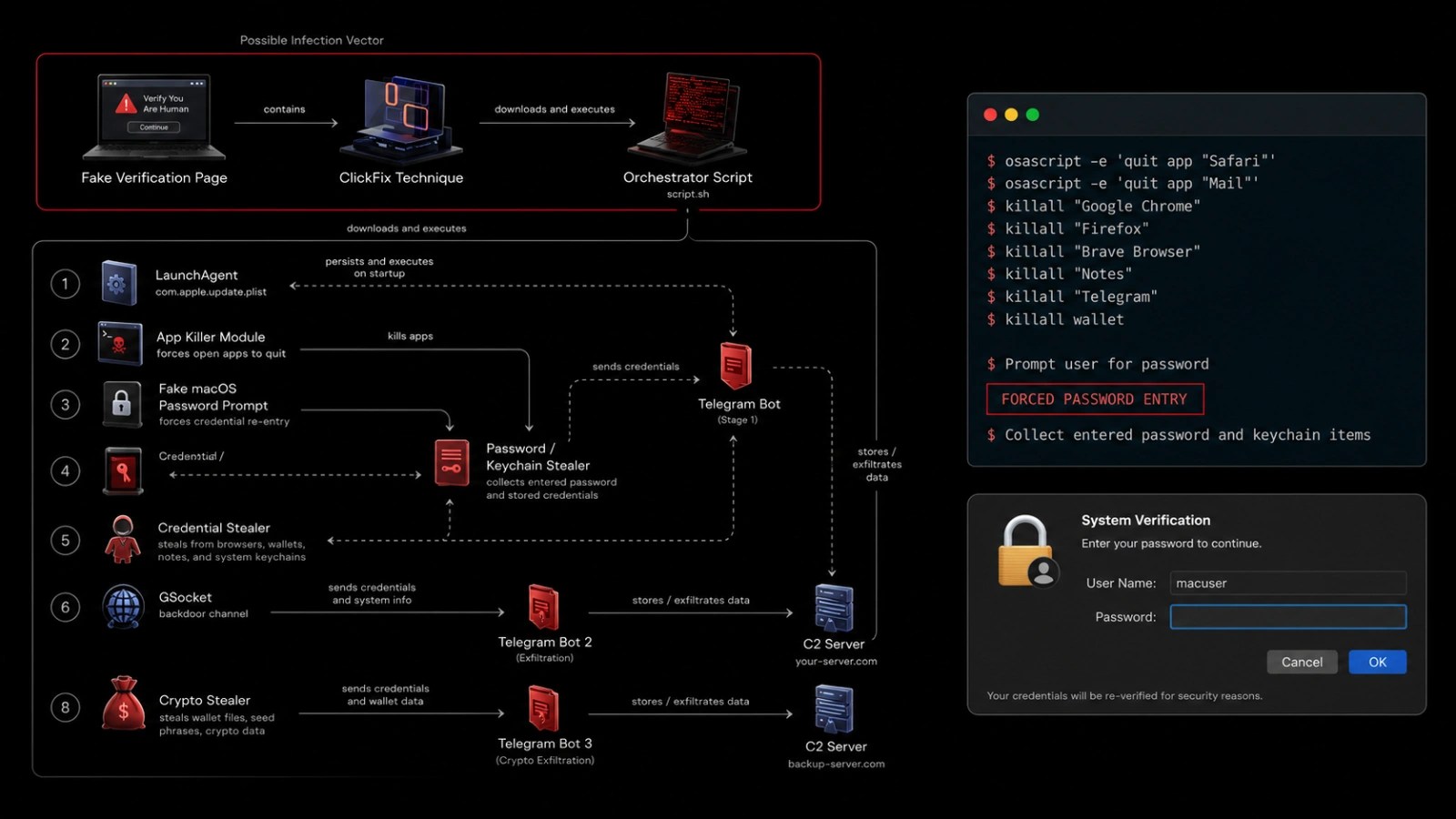
Vidar’s distribution methods are diverse. It infiltrates systems through fake GitHub repositories posing as developer tools or leaked software. Compromised WordPress sites and fraudulent CAPTCHA pages, known as ClickFix, deceive users into initiating Windows commands that start the infection chain. Additionally, gaming communities are targeted with phony cheat tool repositories on platforms like GitHub, Discord, and Reddit, where users may disregard security alerts for in-game benefits.

Impact on Security and Data

The scope of Vidar’s impact is extensive, attacking over 200 browser extensions, including popular crypto wallets like MetaMask and password managers such as Bitwarden. This elevates the threat from simple credential theft to a severe risk of financial loss and widespread data compromise for both individuals and organizations.

The infection mechanism begins with a Go-compiled dropper serving as the initial entry point. Go’s association with benign applications aids in avoiding detection. Once executed, the dropper installs a VBScript in the Windows Temp folder, which assesses the environment for sandbox conditions before executing obfuscated PowerShell commands to download and decode hidden payloads from JPEG and TXT files.

Preventative Measures

Security teams are advised to block outbound connections to IP-based HTTP endpoints, monitor for unusual WScript and PowerShell activities, restrict execution of RegAsm.exe to authenticated processes, and routinely check startup folders for unauthorized changes. These steps are critical in mitigating the risks posed by Vidar’s sophisticated infection strategies.

For the latest updates, follow us on Google News, LinkedIn, and X. Set CSN as a preferred news source on Google to stay informed.

Cyber Security News Tags:2026 cyber threats, browser extensions, crypto wallet security, Cybercrime, Cybersecurity, data security, GitHub malware, information-stealing malware, JPEG payloads, malware-as-a-service, PowerShell scripts, security tools, social media threats, Vidar malware, WordPress security

Post navigation

Previous Post: Firefox Bug Enables Tor User Tracking
Next Post: US Intensifies Efforts Against Southeast Asia Cybercrimes

Related Posts

SnappyClient Malware Threatens Windows with Stealthy Data Breaches SnappyClient Malware Threatens Windows with Stealthy Data Breaches Cyber Security News
NVIDIA NSIGHT Graphics for Linux Vulnerability Allows Code Execution Attacks NVIDIA NSIGHT Graphics for Linux Vulnerability Allows Code Execution Attacks Cyber Security News
Fake Zoom Website Exploits 1,437 Users with Spyware Fake Zoom Website Exploits 1,437 Users with Spyware Cyber Security News
New Botnet Hijacks 9,000 ASUS Routers & Enables SSH Access by Injecting Public Key New Botnet Hijacks 9,000 ASUS Routers & Enables SSH Access by Injecting Public Key Cyber Security News
APT37 Hackers Weaponizes JPEG Files to Attack Windows System Leveraging “mspaint.exe” File APT37 Hackers Weaponizes JPEG Files to Attack Windows System Leveraging “mspaint.exe” File Cyber Security News
An Open-Source Tool to See Through Encrypted Traffic in Linux systems An Open-Source Tool to See Through Encrypted Traffic in Linux systems Cyber Security News

Categories

  • Cyber Security News
  • How To?
  • Security Week News
  • The Hacker News

Recent Posts

  • Fake Tax Notices Lure Indian Taxpayers into Malware Trap
  • Google Warns of Rising Malicious AI Prompt Injection Attacks
  • ClickFix Attack Evolves: New Tactics Bypass Detection
  • UNC6692 Deploys Snow Malware via Email Scams and Social Tactics
  • CODESYS Vulnerabilities Allow App Backdoors

Pages

  • About Us – Contact
  • Disclaimer
  • Privacy Policy
  • Terms and Rules

Archives

  • April 2026
  • March 2026
  • February 2026
  • January 2026
  • December 2025
  • November 2025
  • October 2025
  • September 2025
  • August 2025
  • July 2025
  • June 2025
  • May 2025

Recent Posts

  • Fake Tax Notices Lure Indian Taxpayers into Malware Trap
  • Google Warns of Rising Malicious AI Prompt Injection Attacks
  • ClickFix Attack Evolves: New Tactics Bypass Detection
  • UNC6692 Deploys Snow Malware via Email Scams and Social Tactics
  • CODESYS Vulnerabilities Allow App Backdoors

Pages

  • About Us – Contact
  • Disclaimer
  • Privacy Policy
  • Terms and Rules

Categories

  • Cyber Security News
  • How To?
  • Security Week News
  • The Hacker News

Copyright © 2026 Cyber Web Spider Blog – News.

Powered by PressBook Masonry Dark