Skip to content
  • Home
  • Cyber Map
  • About Us – Contact
  • Disclaimer
  • Terms and Rules
  • Privacy Policy
Cyber Web Spider Blog – News

Cyber Web Spider Blog – News

Globe Threat Map provides a real-time, interactive 3D visualization of global cyber threats. Monitor DDoS attacks, malware, and hacking attempts with geo-located arcs on a rotating globe. Stay informed with live logs and archive stats.

  • Home
  • Cyber Map
  • Cyber Security News
  • Security Week News
  • The Hacker News
  • How To?
  • Toggle search form
VECT 2.0 Ransomware Poses Severe Data Recovery Risks

VECT 2.0 Ransomware Poses Severe Data Recovery Risks

Posted on June 5, 2026 By CWS

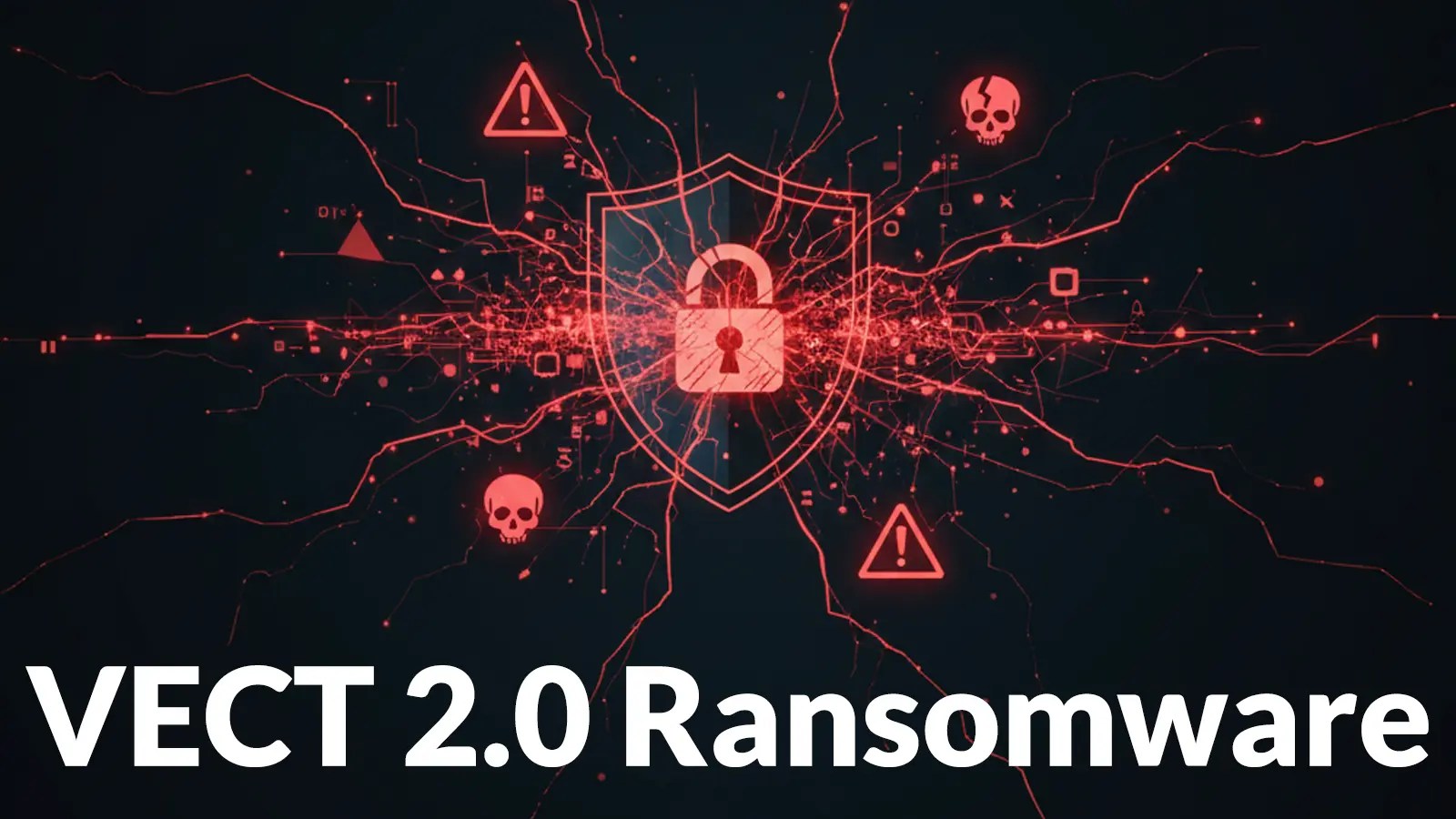
A newly detected ransomware variant, VECT 2.0, is causing significant alarm among cybersecurity experts. The primary concern lies in its capability to inflict irreparable damage to files, even when victims comply with ransom demands. This ransomware’s unique architecture often results in incomplete file recovery, leaving affected businesses vulnerable.

Structural Challenges in Recovery

Unlike typical ransomware failures, which are often attributed to weak security measures or user errors, the issues with VECT 2.0 stem from its deliberate design flaws. It targets a broad array of business-critical data, including documents, databases, and virtual disks, exploiting accessible paths and bypassing only a minimal list of exclusions.

Developed as a 64-bit Windows-based malware, VECT 2.0 is linked to the DEVMAN 3.0 family, sharing similar destructive capabilities. Security firm Morphisec’s analysis reveals that the malware can corrupt files in such a way that even its proprietary decryptor cannot remedy.

Complex Encryption Mechanisms

One of the critical findings is VECT 2.0’s method of renaming files before encryption, appending a .vect extension. This can mislead users into believing that files are encrypted even when they might remain partly or entirely unmodified, complicating recovery efforts.

Additionally, the ransomware records minimal metadata, offering only a 12-byte trailer with no detailed information on file size or content chunks. This lack of comprehensive metadata significantly hinders decryption processes, making file restoration nearly impossible.

Implications for Cybersecurity Practices

For files exceeding 128 KB, VECT 2.0 employs a unique method of dividing and encrypting data blocks with multiple keys, retaining only the final key. This approach results in permanent data loss for three out of four blocks, a situation exacerbated by a discovered buffer-size mismatch during encryption.

The ransomware’s use of shared buffers across multiple processing threads introduces issues such as race conditions, where simultaneous operations result in corrupted file states. This can lead to varying file outcomes, from renamed to partially encrypted, complicating any recovery attempts.

In light of these challenges, cybersecurity teams are urged to prioritize preventive measures over reactive ones. Implementing robust endpoint protection that can intercept ransomware activities before they commence encryption is crucial.

While traditional indicators of compromise (IoCs) such as file hashes or IP addresses are not provided, the .vect file extension remains a key identifier for VECT 2.0 activity. This extension is crucial for threat detection and incident response strategies.

Stay updated with the latest cybersecurity trends and insights by following us on Google News, LinkedIn, and X. Make sure to set CSN as your preferred news source for timely updates on emerging threats.
Cyber Security News Tags:business data protection, cyber threats, Cybersecurity, data recovery, Encryption, endpoint protection, file encryption, IT security, malware analysis, malware design, Morphisec, Ransomware, security solutions, VECT 2.0, Windows ransomware

Post navigation

Previous Post: Chinese Spies Exploit Fake Job Offers to Extract Sensitive Data
Next Post: Hackers Breach Dashlane’s 2FA, Download Encrypted Vaults

Related Posts

Claude’s New Feature Simplifies AI Memory Transfer Claude’s New Feature Simplifies AI Memory Transfer Cyber Security News
Angular Platform Vulnerability Allows Malicious Code Execution Via Weaponized SVG Animation Files Angular Platform Vulnerability Allows Malicious Code Execution Via Weaponized SVG Animation Files Cyber Security News
Notepad++ Compromised by Chinese APT Group with Custom Malware Notepad++ Compromised by Chinese APT Group with Custom Malware Cyber Security News
Windows Common Log File System 0-Day Vulnerability Actively Exploited in the Wild Windows Common Log File System 0-Day Vulnerability Actively Exploited in the Wild Cyber Security News
xHunt APT Hackers Attacking Microsoft Exchange and IIS Web Servers to Deploy Custom Backdoors xHunt APT Hackers Attacking Microsoft Exchange and IIS Web Servers to Deploy Custom Backdoors Cyber Security News
ShinyHunters Allegedly Breaches Cisco Data ShinyHunters Allegedly Breaches Cisco Data Cyber Security News

Categories

  • Cyber Security News
  • How To?
  • Security Week News
  • The Hacker News

Recent Posts

  • Malicious Extensions Target AI Chat Platforms Users
  • Reaper Malware Threatens Mac Users with Browser and Wallet Attacks
  • Chrome 149 Update Fixes Record 429 Security Flaws
  • New Cyber Threat OP-512 Hits Microsoft IIS Servers
  • Chinese Hackers Exploit BRICKSTORM to Infiltrate Networks

Pages

  • About Us – Contact
  • Disclaimer
  • Privacy Policy
  • Terms and Rules

Archives

  • June 2026
  • May 2026
  • April 2026
  • March 2026
  • February 2026
  • January 2026
  • December 2025
  • November 2025
  • October 2025
  • September 2025
  • August 2025
  • July 2025
  • June 2025
  • May 2025

Recent Posts

  • Malicious Extensions Target AI Chat Platforms Users
  • Reaper Malware Threatens Mac Users with Browser and Wallet Attacks
  • Chrome 149 Update Fixes Record 429 Security Flaws
  • New Cyber Threat OP-512 Hits Microsoft IIS Servers
  • Chinese Hackers Exploit BRICKSTORM to Infiltrate Networks

Pages

  • About Us – Contact
  • Disclaimer
  • Privacy Policy
  • Terms and Rules

Categories

  • Cyber Security News
  • How To?
  • Security Week News
  • The Hacker News

Copyright © 2026 Cyber Web Spider Blog – News.

Powered by PressBook Masonry Dark