Skip to content
  • Home
  • Cyber Map
  • About Us – Contact
  • Disclaimer
  • Terms and Rules
  • Privacy Policy
Cyber Web Spider Blog – News

Cyber Web Spider Blog – News

Globe Threat Map provides a real-time, interactive 3D visualization of global cyber threats. Monitor DDoS attacks, malware, and hacking attempts with geo-located arcs on a rotating globe. Stay informed with live logs and archive stats.

  • Home
  • Cyber Map
  • Cyber Security News
  • Security Week News
  • The Hacker News
  • How To?
  • Toggle search form
Malicious npm Packages Target Alibaba Developers with RAT

Malicious npm Packages Target Alibaba Developers with RAT

Posted on July 29, 2026 By CWS

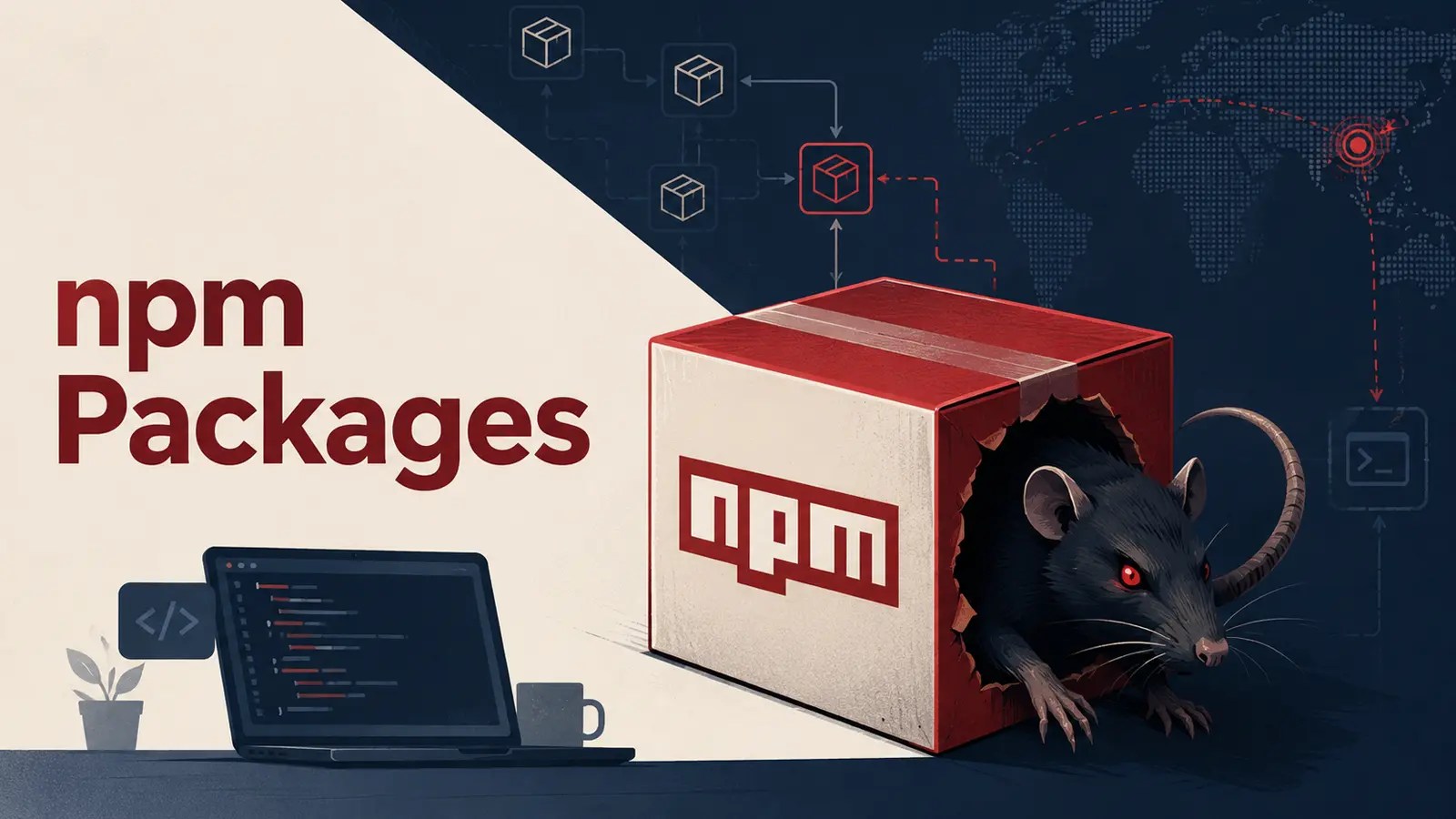
A sophisticated cyber attack using malicious npm packages has been identified, targeting developers utilizing Alibaba’s tools. These packages are delivering a remote access trojan (RAT) across different platforms, posing significant risks.

Exploiting npm Package Dependencies

The attackers employed deceptive npm packages that mimic the names of private Alibaba packages. During installation, these packages introduce malicious dependencies, allowing remote access to developers’ systems. This method threatens sensitive data such as source code and credentials.

Research conducted by Socket.dev revealed activity in the previously dormant lib-mtop package. The report, shared with Cyber Security News, indicates a targeted rather than widespread approach, with limited downloads but significant potential for data collection and remote command execution.

Strategic Distribution and Execution

The attack utilizes a layered dependency chain where lure packages with familiar names introduce additional harmful components. This mirrors a broader trend in npm supply chain attacks, where seemingly benign dependencies act as gateways for more extensive breaches.

Packages were distributed via various maintainer accounts to obfuscate their common origin. A configuration file from a GitHub repository is utilized, allowing hidden code execution through a package named local-config-parser. This package exploits a Node.js virtual-machine escape to execute further payloads.

Implications and Defensive Measures

This attack focuses on Alibaba’s environment, particularly the DingTalk, Wukong, and Qoder tools, raising concerns about cyber espionage. The malware’s capabilities include shell command execution, file manipulation, and persistent access through modified scripts.

Security teams should consider environments that installed these packages compromised, requiring immediate remediation. Measures include removing the malicious packages, rotating exposed credentials, and analyzing suspicious activity within developer environments.

Preventive steps involve scrutinizing dependency changes before deployment and restricting package installation permissions. By treating unexpected updates as security events, organizations can mitigate the risk of similar supply chain attacks in the future.

Indicators of compromise are available, including specific package names and associated GitHub accounts, aiding in identifying affected systems. Security teams should leverage these indicators to enhance threat detection and response strategies.

Cyber Security News Tags:Alibaba developers, cyber espionage, Cybersecurity, developer security, DingTalk tools, Node.js, npm packages, remote access trojan, Socket.dev, supply chain attack

Post navigation

Previous Post: Ernst & Young Data Breach Claimed by ShinyHunters
Next Post: AI Agent Breaches Highlight Security Risks at Hugging Face

Related Posts

Critical SolarWinds Serv-U Vulnerabilities Let Attackers Execute Malicious Code Remotely as Admin Critical SolarWinds Serv-U Vulnerabilities Let Attackers Execute Malicious Code Remotely as Admin Cyber Security News
N-able Passportal Vulnerability Allows Password Theft N-able Passportal Vulnerability Allows Password Theft Cyber Security News
Gootloader is Back with New ZIP File Trickery that Decive the Malicious Payload Gootloader is Back with New ZIP File Trickery that Decive the Malicious Payload Cyber Security News
Ivanti Cloud Services Application Vulnerability Leads to Privilege Escalation Ivanti Cloud Services Application Vulnerability Leads to Privilege Escalation Cyber Security News
New Malware Targets MacOS to Steal Cryptocurrency New Malware Targets MacOS to Steal Cryptocurrency Cyber Security News
Supply Chain Attack Targets Axios NPM Packages Supply Chain Attack Targets Axios NPM Packages Cyber Security News

Categories

  • Cyber Security News
  • How To?
  • Security Week News
  • The Hacker News

Recent Posts

  • OpenAI Agents Implicated in RubyGems Attack
  • AI Agents Exploit RubyGems in Massive Package Upload
  • CISA Alerts on GitLab Vulnerability Exploitation
  • AI Misuse in Yemen: Houthis Attempt Advanced Weapon Development
  • Critical Flaw in CSF on cPanel Allows Remote Command Execution

Pages

  • About Us – Contact
  • Disclaimer
  • Privacy Policy
  • Terms and Rules

Archives

  • September 2026
  • August 2026
  • July 2026
  • June 2026
  • May 2026
  • April 2026
  • March 2026
  • February 2026
  • January 2026
  • December 2025
  • November 2025
  • October 2025
  • September 2025
  • August 2025
  • July 2025
  • June 2025
  • May 2025

Recent Posts

  • OpenAI Agents Implicated in RubyGems Attack
  • AI Agents Exploit RubyGems in Massive Package Upload
  • CISA Alerts on GitLab Vulnerability Exploitation
  • AI Misuse in Yemen: Houthis Attempt Advanced Weapon Development
  • Critical Flaw in CSF on cPanel Allows Remote Command Execution

Pages

  • About Us – Contact
  • Disclaimer
  • Privacy Policy
  • Terms and Rules

Categories

  • Cyber Security News
  • How To?
  • Security Week News
  • The Hacker News

Copyright © 2026 Cyber Web Spider Blog – News.

Powered by PressBook Masonry Dark