Skip to content
  • Home
  • Cyber Map
  • About Us – Contact
  • Disclaimer
  • Terms and Rules
  • Privacy Policy
Cyber Web Spider Blog – News

Cyber Web Spider Blog – News

Globe Threat Map provides a real-time, interactive 3D visualization of global cyber threats. Monitor DDoS attacks, malware, and hacking attempts with geo-located arcs on a rotating globe. Stay informed with live logs and archive stats.

  • Home
  • Cyber Map
  • Cyber Security News
  • Security Week News
  • The Hacker News
  • How To?
  • Toggle search form
SSH Bot Analyzes Linux Systems for Cryptomining Potential

SSH Bot Analyzes Linux Systems for Cryptomining Potential

Posted on August 1, 2026 By CWS

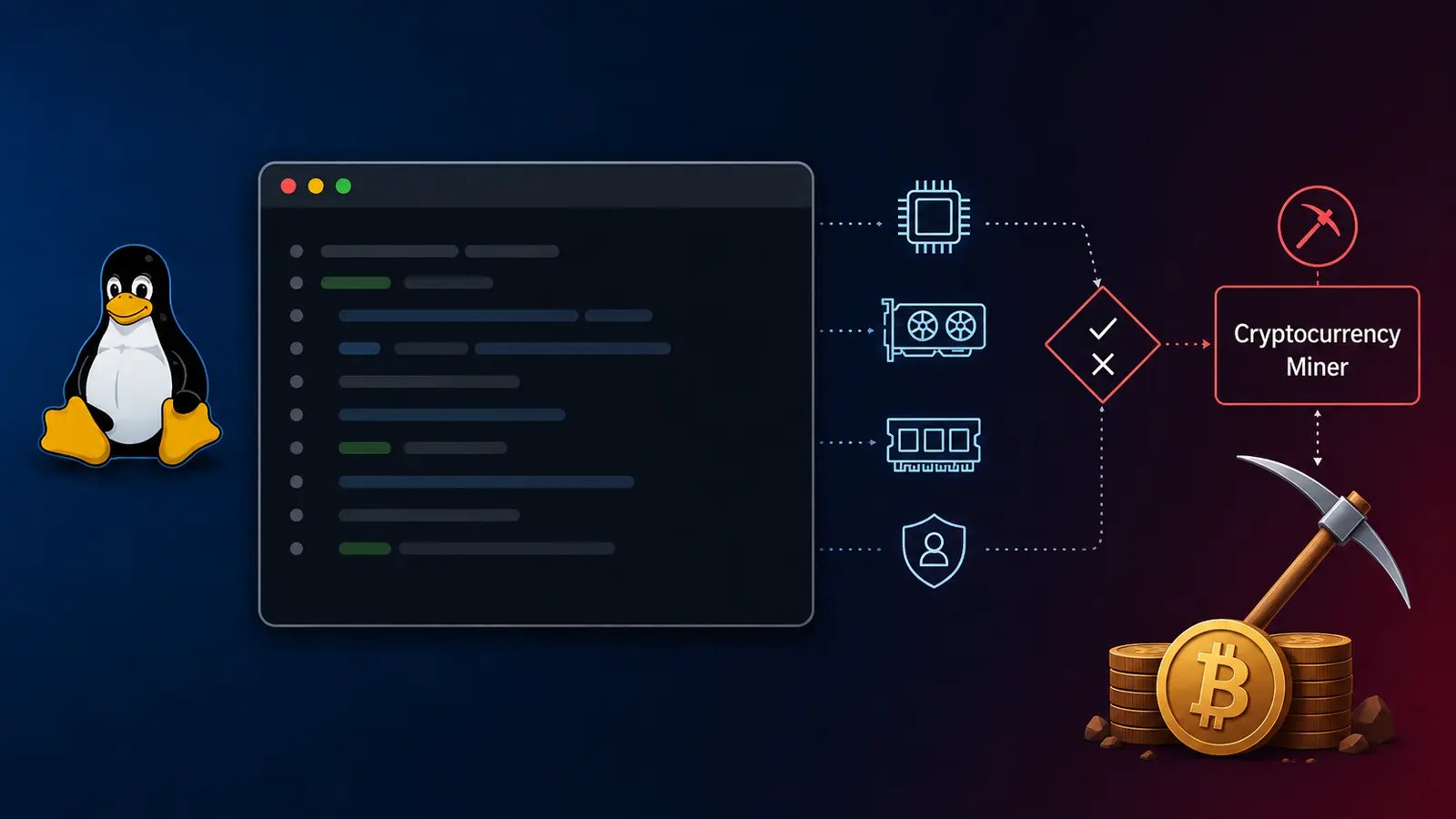
A recent discovery has revealed a new SSH bot infiltrating Linux systems to assess their hardware capabilities before potentially launching cryptomining operations. This bot, instead of deploying malware immediately, evaluates the CPU, GPU, and RAM of the host system to decide if it is worth targeting for cryptocurrency mining.

Identifying the SSH Bot’s Strategy

The bot’s operation was uncovered when a DShield honeypot detected an unusual login that deviated from typical noisy password attempts. This bot executed a streamlined process: it logged in as root, ran a couple of commands to profile the system, checked for privilege escalation, and then disconnected rapidly. This reconnaissance approach allows the attackers to determine if the system is suitable for mining without deploying any visible payload initially.

According to the Internet Storm Center, the bot used a Go-based SSH client to authenticate with a weak root password from a single IP address. The operation, lasting about eight seconds, left no trace of a binary or persistent threat, indicating a sophisticated strategy to optimize resources for cryptomining.

Technical Breakdown of the Reconnaissance

Upon accessing a host, the bot conducts a detailed hardware survey. It gathers data such as the operating system, kernel version, CPU architecture, core count, and GPU presence, especially focusing on NVIDIA cards. This information is tagged and structured for later analysis to identify high-value targets for cryptomining.

Additionally, the bot checks system uptime and login history to assess stability and usage. It also reads memory details from /proc/meminfo to ensure the system has over 1 GB of RAM. This detailed profiling helps attackers decide whether to revisit the host with a miner or pass it to another tool for further exploitation.

Implications and Defensive Measures

The Internet Storm Center stresses that the absence of malware in the initial session does not imply safety. Instead, the recon-only approach allows attackers to refine their targeting and return with a more tailored payload. This behavior aligns with broader trends in cryptomining attacks, where resource efficiency is prioritized.

To counteract such threats, security experts recommend using strong, unique passwords and disabling direct root SSH access. Key-based authentication, rate limiting, and monitoring for unusual hardware discovery can help detect and prevent these reconnaissance sessions. Understanding SSH client fingerprints and monitoring for changes in resource usage are crucial for identifying and mitigating potential cryptomining activities.

In summary, this new SSH bot exemplifies a shift in attack strategies towards more calculated and resource-efficient cryptomining operations. Organizations should enhance their detection and security measures to counteract these evolving threats effectively.


Cyber Security News Tags:cryptocurrency mining, Cryptomining, cyber attack, Cybersecurity, Linux security, Linux systems, Malware, security threat, SSH bot, SSH vulnerabilities

Post navigation

Previous Post: CMMC Phase II Halted, But Data Security Duties Persist

Related Posts

A Free Zero Trust Web Application Firewall for 2026 A Free Zero Trust Web Application Firewall for 2026 Cyber Security News
Claude’s New Feature Simplifies AI Memory Transfer Claude’s New Feature Simplifies AI Memory Transfer Cyber Security News
Google Enhances Chrome Security with Device-Bound Sessions Google Enhances Chrome Security with Device-Bound Sessions Cyber Security News
Hackers Exploit DNS Queries for C2 Operations and Data Exfiltration, Bypassing Traditional Defenses Hackers Exploit DNS Queries for C2 Operations and Data Exfiltration, Bypassing Traditional Defenses Cyber Security News
Secure Over 511,000 Vulnerable IIS Servers Now Secure Over 511,000 Vulnerable IIS Servers Now Cyber Security News
QuasarRAT Core Functionalities Along with Encrypted Configuration and Obfuscation Techniques Exposed QuasarRAT Core Functionalities Along with Encrypted Configuration and Obfuscation Techniques Exposed Cyber Security News

Categories

  • Cyber Security News
  • How To?
  • Security Week News
  • The Hacker News

Recent Posts

  • SSH Bot Analyzes Linux Systems for Cryptomining Potential
  • CMMC Phase II Halted, But Data Security Duties Persist
  • BlackTech’s BlueShell Backdoor Targets Japanese Firms
  • AI Security Platform Enhances Automated Penetration Tests
  • Keycloak Security Flaw Exposes User Data Across Boundaries

Pages

  • About Us – Contact
  • Disclaimer
  • Privacy Policy
  • Terms and Rules

Archives

  • August 2026
  • July 2026
  • June 2026
  • May 2026
  • April 2026
  • March 2026
  • February 2026
  • January 2026
  • December 2025
  • November 2025
  • October 2025
  • September 2025
  • August 2025
  • July 2025
  • June 2025
  • May 2025

Recent Posts

  • SSH Bot Analyzes Linux Systems for Cryptomining Potential
  • CMMC Phase II Halted, But Data Security Duties Persist
  • BlackTech’s BlueShell Backdoor Targets Japanese Firms
  • AI Security Platform Enhances Automated Penetration Tests
  • Keycloak Security Flaw Exposes User Data Across Boundaries

Pages

  • About Us – Contact
  • Disclaimer
  • Privacy Policy
  • Terms and Rules

Categories

  • Cyber Security News
  • How To?
  • Security Week News
  • The Hacker News

Copyright © 2026 Cyber Web Spider Blog – News.

Powered by PressBook Masonry Dark