Skip to content
  • Home
  • Cyber Map
  • About Us – Contact
  • Disclaimer
  • Terms and Rules
  • Privacy Policy
Cyber Web Spider Blog – News

Cyber Web Spider Blog – News

Globe Threat Map provides a real-time, interactive 3D visualization of global cyber threats. Monitor DDoS attacks, malware, and hacking attempts with geo-located arcs on a rotating globe. Stay informed with live logs and archive stats.

  • Home
  • Cyber Map
  • Cyber Security News
  • Security Week News
  • The Hacker News
  • How To?
  • Toggle search form
Projextor Malware Exploits Trusted Software Tools

Projextor Malware Exploits Trusted Software Tools

Posted on August 18, 2026 By CWS

Projextor represents a sophisticated malware campaign that leverages seemingly innocuous desktop applications as a conduit for harmful code. By embedding itself into functional tools like document converters and meal planners, Projextor provides unsuspecting users with applications that appear beneficial upon initial use.

Deceptive Packaging and Distribution

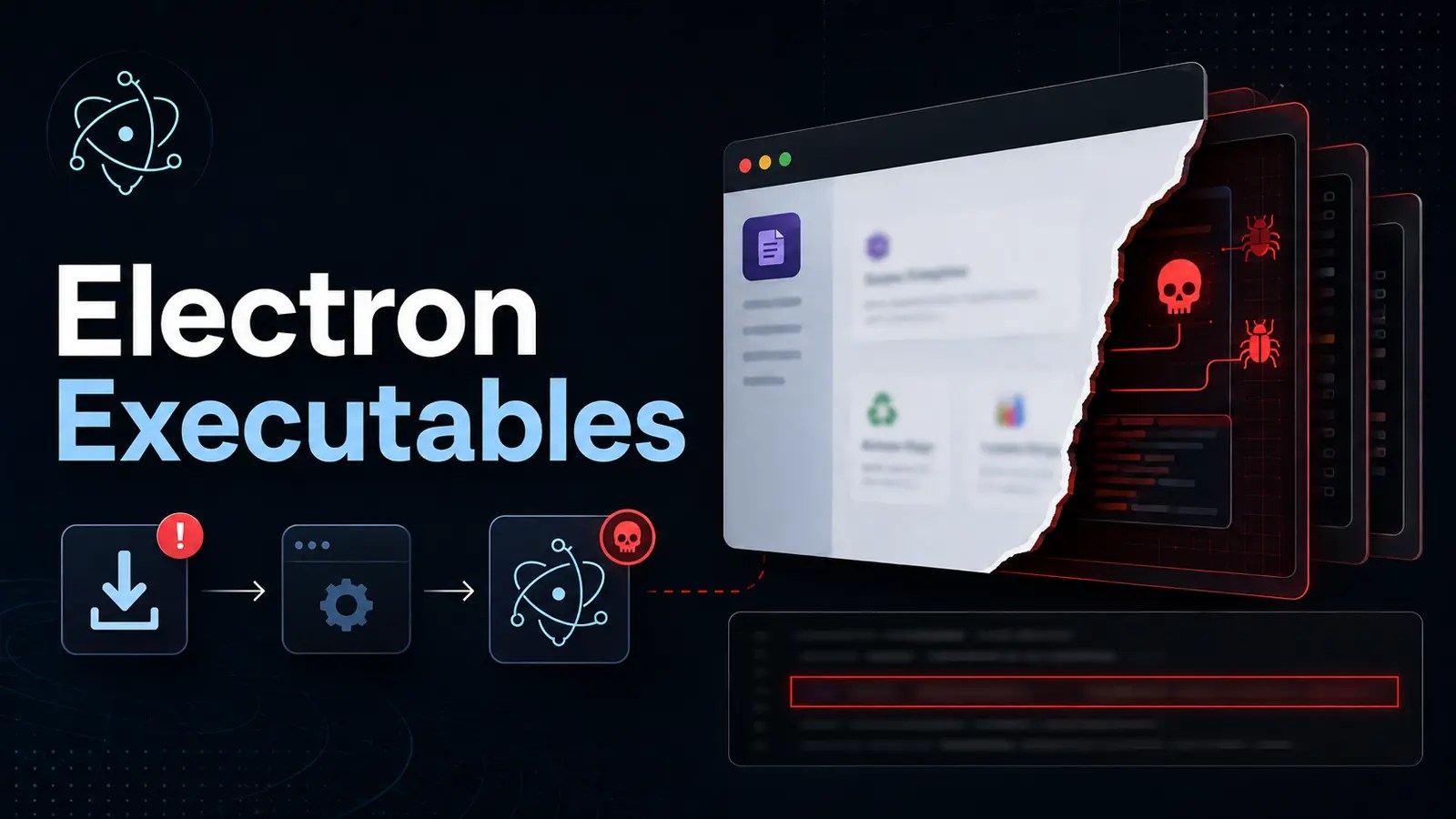
The campaign’s operators utilize deceptive download sites and installers to distribute free productivity software. Once a user initiates the installation, the software retrieves an Electron-based application, which masks its malicious activities under the guise of normal operations, such as file handling and system resource usage.

G Data researchers identified a series of document converters and recipe applications utilizing the same hidden framework. According to a report shared with Cyber Security News, these applications function normally while concealing code with extensive access privileges, posing significant threats to both individuals and organizations.

Invisible Yet Dangerous

Projextor’s ability to execute new scripts after installation, coupled with its desktop-capture features, significantly increases its threat level. This functionality could potentially expose sensitive information, including documents and browser sessions. The software’s apparent normality often leaves users unsuspecting of any malicious activity, extending the risk beyond a single device.

The use of Electron, a popular technology for creating desktop applications, allows Projextor to exploit operating system functions. By manipulating Electron’s default security settings, the malware gains access to powerful system capabilities, enabling it to load and execute JavaScript modules from a designated directory.

Security Implications and Recommendations

The seamless operation of Projextor’s interface effectively reduces obvious warning signs, allowing the malware to be distributed through common installer formats. For instance, a captured sample revealed a download address within an NSIS script, illustrating how familiar installer formats can quietly fetch more capable components.

Security experts suggest downloading software only from verified sources and confirming the publisher’s authenticity. Organizations should scrutinize newly installed Electron applications for unexpected preload scripts and insecure settings. Preventing unapproved software installations and educating users on avoiding search-result download traps can mitigate exposure risks.

In conclusion, the Projextor malware campaign highlights the importance of vigilance in software downloads and installations. By understanding the tactics employed by such malware, users and organizations can better protect themselves against potential threats.

Cyber Security News Tags:cyber threats, Cybersecurity, data protection, digital safety, Electron apps, IT security, malicious software, Malware, malware campaign, malware threats, online security, Projextor malware, Software Security, software vulnerabilities, trusted software

Post navigation

Previous Post: Fortinet Expands AI Security with Virtue AI Acquisition
Next Post: Detecting North Korean Workers in IT: Essential Strategies

Related Posts

Hackers Weaponizee Amazon Simple Email Service to Send 50,000+ Malicious Emails Per Day Hackers Weaponizee Amazon Simple Email Service to Send 50,000+ Malicious Emails Per Day Cyber Security News
Malicious npm Packages Compromise Developer Systems Malicious npm Packages Compromise Developer Systems Cyber Security News
Hackers Use .PIF Files and UAC Bypass to Drop Remcos Malware on Windows Hackers Use .PIF Files and UAC Bypass to Drop Remcos Malware on Windows Cyber Security News
Critical Metabase Vulnerability Allows Admin Access Critical Metabase Vulnerability Allows Admin Access Cyber Security News
Oblivion RAT Exploits Fake Updates for Android Espionage Oblivion RAT Exploits Fake Updates for Android Espionage Cyber Security News
Massive Hacking Operation WrtHug Compromises Thousands of ASUS Routers Worldwide Massive Hacking Operation WrtHug Compromises Thousands of ASUS Routers Worldwide Cyber Security News

Categories

  • Cyber Security News
  • How To?
  • Security Week News
  • The Hacker News

Recent Posts

  • Citrix NetScaler Reboot Issues Post-Patch
  • Session Cookie Flaw Risks Entra ID MFA Security
  • Sony Enhances PS5 Security Amid Relapse Jailbreak Concerns
  • Critical Dell CSM Vulnerabilities Allow Admin Access
  • WordPress Backups Expose Valuable AWS and Email Credentials

Pages

  • About Us – Contact
  • Disclaimer
  • Privacy Policy
  • Terms and Rules

Archives

  • October 2026
  • September 2026
  • August 2026
  • July 2026
  • June 2026
  • May 2026
  • April 2026
  • March 2026
  • February 2026
  • January 2026
  • December 2025
  • November 2025
  • October 2025
  • September 2025
  • August 2025
  • July 2025
  • June 2025
  • May 2025

Recent Posts

  • Citrix NetScaler Reboot Issues Post-Patch
  • Session Cookie Flaw Risks Entra ID MFA Security
  • Sony Enhances PS5 Security Amid Relapse Jailbreak Concerns
  • Critical Dell CSM Vulnerabilities Allow Admin Access
  • WordPress Backups Expose Valuable AWS and Email Credentials

Pages

  • About Us – Contact
  • Disclaimer
  • Privacy Policy
  • Terms and Rules

Categories

  • Cyber Security News
  • How To?
  • Security Week News
  • The Hacker News

Copyright © 2026 Cyber Web Spider Blog – News.

Powered by PressBook Masonry Dark