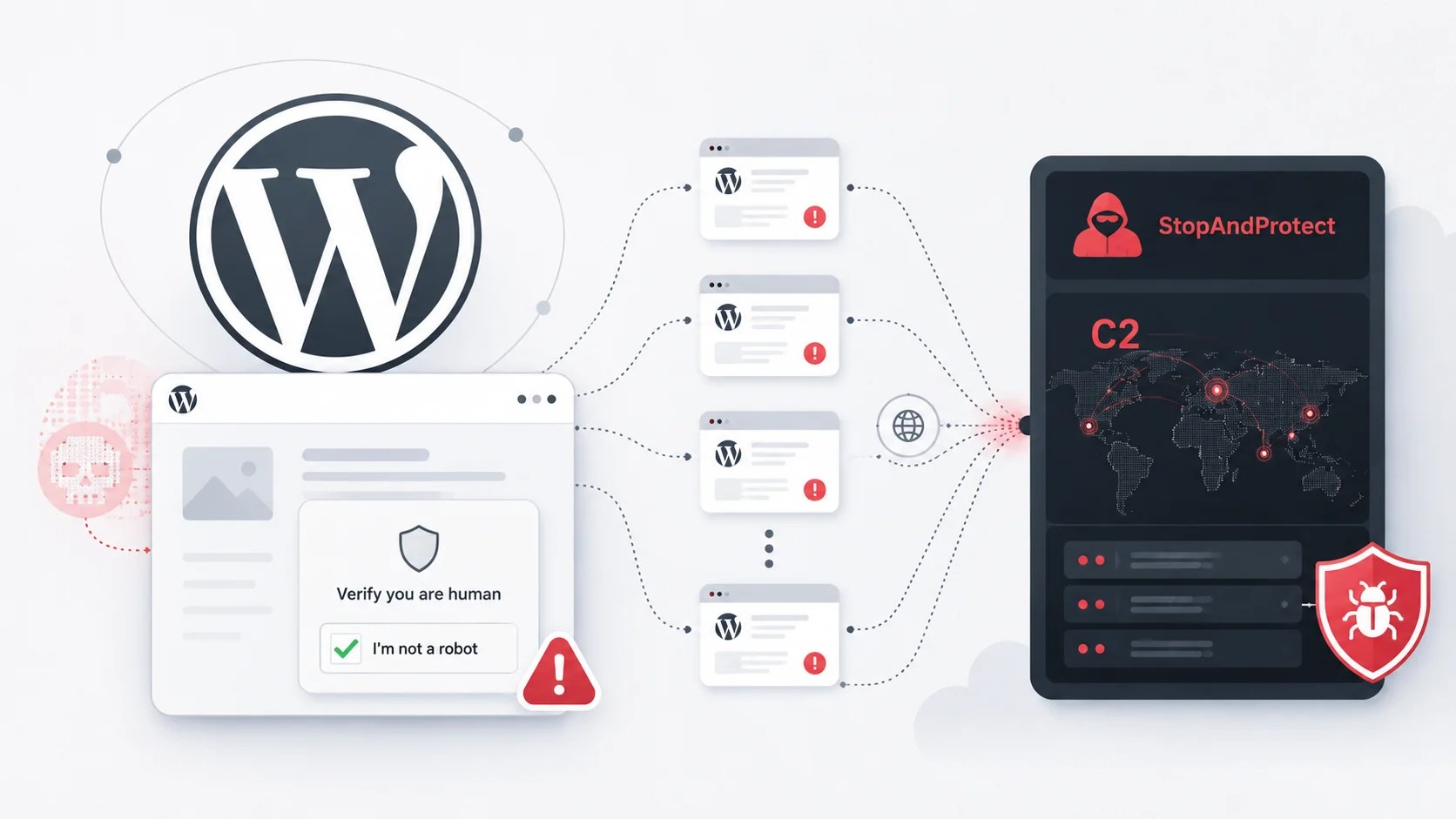
A recent cybersecurity investigation has revealed a malicious operation named StopAndProtect, which is exploiting thousands of compromised WordPress websites to build an extensive command-and-control (C2) network. This campaign combines ransomware and stealthy data exfiltration, targeting sensitive information from affected systems globally.
According to internal logs, the campaign has impacted over 6,000 unique IP addresses, with the United States, Russia, and India showing the highest infection rates. The threat actors manipulate nearly 2,000 compromised WordPress domains, establishing a robust infrastructure to distribute malware and manage stolen data.
WordPress Sites as C2 Servers
The attack begins with deceptive CAPTCHA prompts on vulnerable WordPress sites, where visitors are misled into executing a harmful PowerShell command. This command triggers a multi-stage infection process using PowerShell scripts and .NET loaders, deploying a suite of malicious tools.
These tools include ransomware, credential stealers, screen lockers, and network worms. The operation, as detailed by Check Point Research, focuses on intelligence gathering and selective targets, deviating from typical smash-and-grab tactics.
Analyzing the Threat
Security researchers gained insight into the operation through exposed PHP endpoints and open directories on compromised servers. Notably, the attackers mistakenly uploaded internal development files, shedding light on their tactics, including a Visual Basic tool for managing hijacked sites and deploying malware.
This case underscores the dangers of outdated Content Management Systems (CMS). One site had been unpatched since 2021, leaving it vulnerable to numerous exploits. Unpatched WordPress sites offer persistent entry points for attackers to convert legitimate domains into malicious hubs.
Securing Your WordPress Site
To counter these threats, website administrators must rigorously update WordPress core files, themes, and plugins. Regular scans for unauthorized scripts and suspicious account activity are essential. End users should regard any terminal command prompts as potential security threats.
By maintaining a vigilant approach to security updates and monitoring network activity, organizations can mitigate the risks posed by such malware campaigns. Proactive measures are vital to prevent adversaries from exploiting vulnerabilities and expanding their reach within networks.
In conclusion, the StopAndProtect operation highlights the evolving threats to web security and the importance of regular maintenance and monitoring of digital assets. As attackers continuously refine their methods, robust defense strategies are crucial in safeguarding sensitive information and maintaining secure online environments.