The cybersecurity sector often marks a significant victory when a formidable botnet is dismantled. These efforts necessitate intricate technical procedures and international collaboration, complicating operations for cybercriminals. However, the real challenge lies in addressing the persistent threats that remain despite such achievements. Recent data from Q2 2026 emphasizes the importance of distinguishing between temporary successes and ongoing vulnerabilities.
In the past few years, botnets have grown exponentially. Observations showed a leap from 136,000 devices in 2023 to a staggering 13.5 million devices by Q1 2026. Yet, an unexpected decline to 2.09 million devices occurred in Q2 2026. This drop coincided with a coordinated operation in March 2026 by law enforcement agencies across the United States, Canada, and Germany. The effort disrupted several notorious botnets, such as Aisiru and Kimwolf, proving that global collaboration can effectively dismantle even the most resilient cybercriminal networks.
The Limits of Command-and-Control Takedowns
While dismantling a botnet’s command-and-control (C2) infrastructure is a significant accomplishment, it does not fully account for the dramatic decrease observed in Q2 2026. Multiple factors likely contributed to this reduction. Following major law enforcement actions, increased efforts by Internet service providers, security vendors, and researchers often lead to the identification and remediation of compromised systems. Additionally, routine updates and hardware replacements can progressively reduce the number of vulnerable devices.
Despite these successes, the durability of this change remains uncertain. The underlying conditions that facilitate the emergence of large botnets are still largely intact. The demand for DDoS services persists, incentivizing botnet operators to either reconstruct their networks or build new ones. The growing number of Internet-connected devices, many of which are inadequately secured, provides fertile ground for new botnets. Moreover, advances in AI-powered automation enable attackers to swiftly identify and exploit vulnerabilities on a massive scale.
Innovations in Botnet Architecture
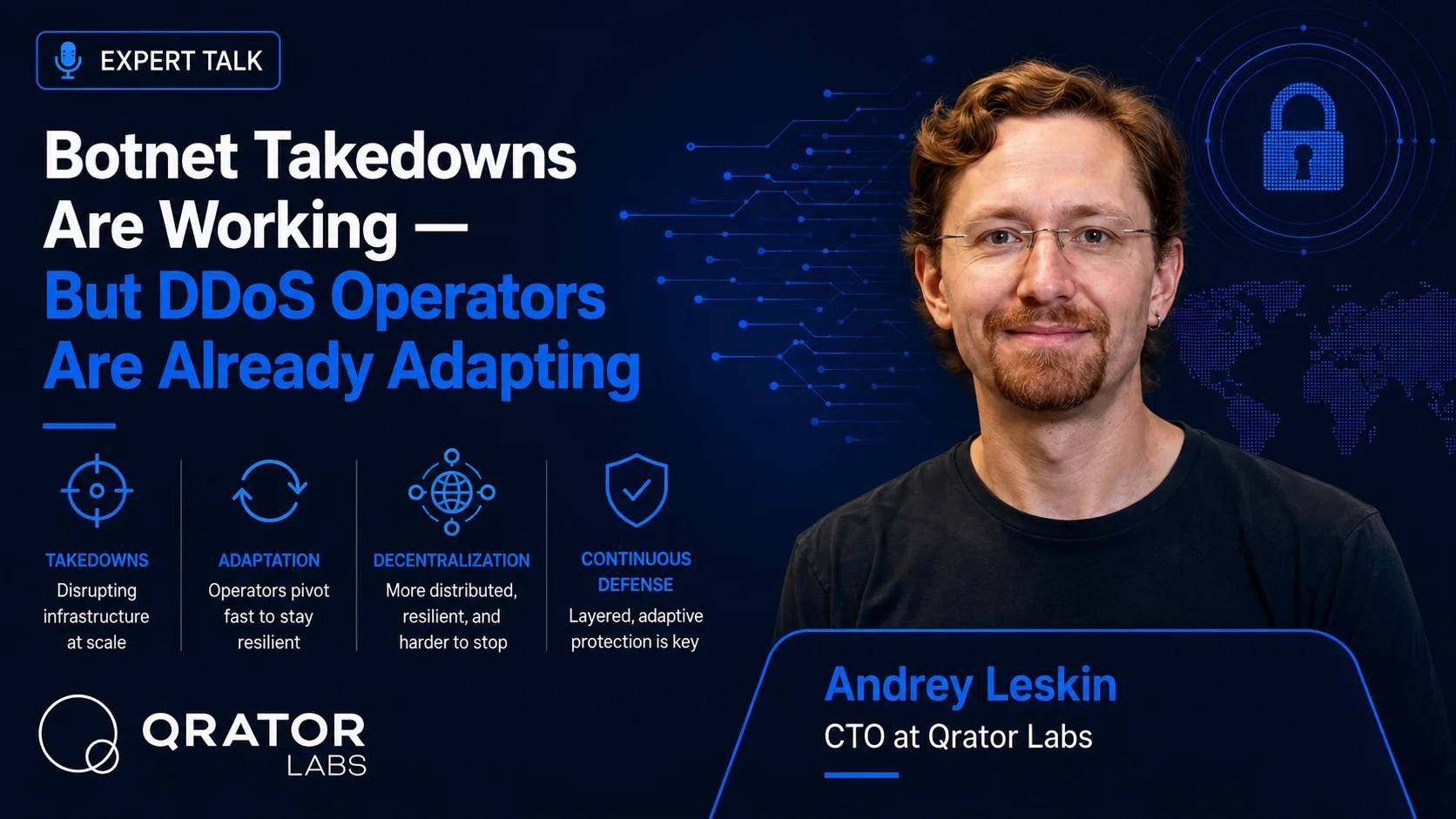
Rebuilding is just one strategy for adaptation. Some botnet operators are innovating by redesigning their infrastructure to circumvent the vulnerabilities exploited in takedowns. A notable trend is the shift from traditional C2 systems to decentralized, blockchain-based models. Botnets like Aeternum and Void exemplify this shift, using smart contracts on blockchain platforms such as Polygon and Ethereum to distribute commands securely.
Choosing blockchain technology is strategic, as disrupting these commands would require undermining the entire blockchain, a task that is both technically challenging and economically prohibitive. While blockchain-based botnets are not immune to investigation, they complicate efforts to disrupt traditional C2 channels, posing new challenges for cybersecurity professionals.
Geographical Trends and DDoS Defense Strategies
The geographic distribution of botnets is also evolving. In Q2 2025, a handful of countries were responsible for the majority of application-layer DDoS attacks. By Q2 2026, this concentration had decreased significantly, making country-based blocking less effective. As malicious traffic becomes more dispersed, relying solely on geographic origin for defense is increasingly inadequate.
To build more resilient defenses, organizations should not equate botnet size with reduced DDoS risk. A smaller botnet does not necessarily equate to a weaker threat. As botnets decentralize and diversify, organizations must prepare for sophisticated, multi-layered DDoS attacks. Effective defenses require integrated strategies that address both network and application-layer threats. Additionally, adaptive filtering and continuous traffic analysis can provide more reliable protection than geographic filtering alone.
In conclusion, while botnet takedowns demonstrate the impact of coordinated international efforts, they should be viewed as temporary disruptions rather than solutions. The ongoing challenge for defenders is to build resilient infrastructures that can withstand the evolving strategies of cybercriminals, who persistently rebuild and innovate.