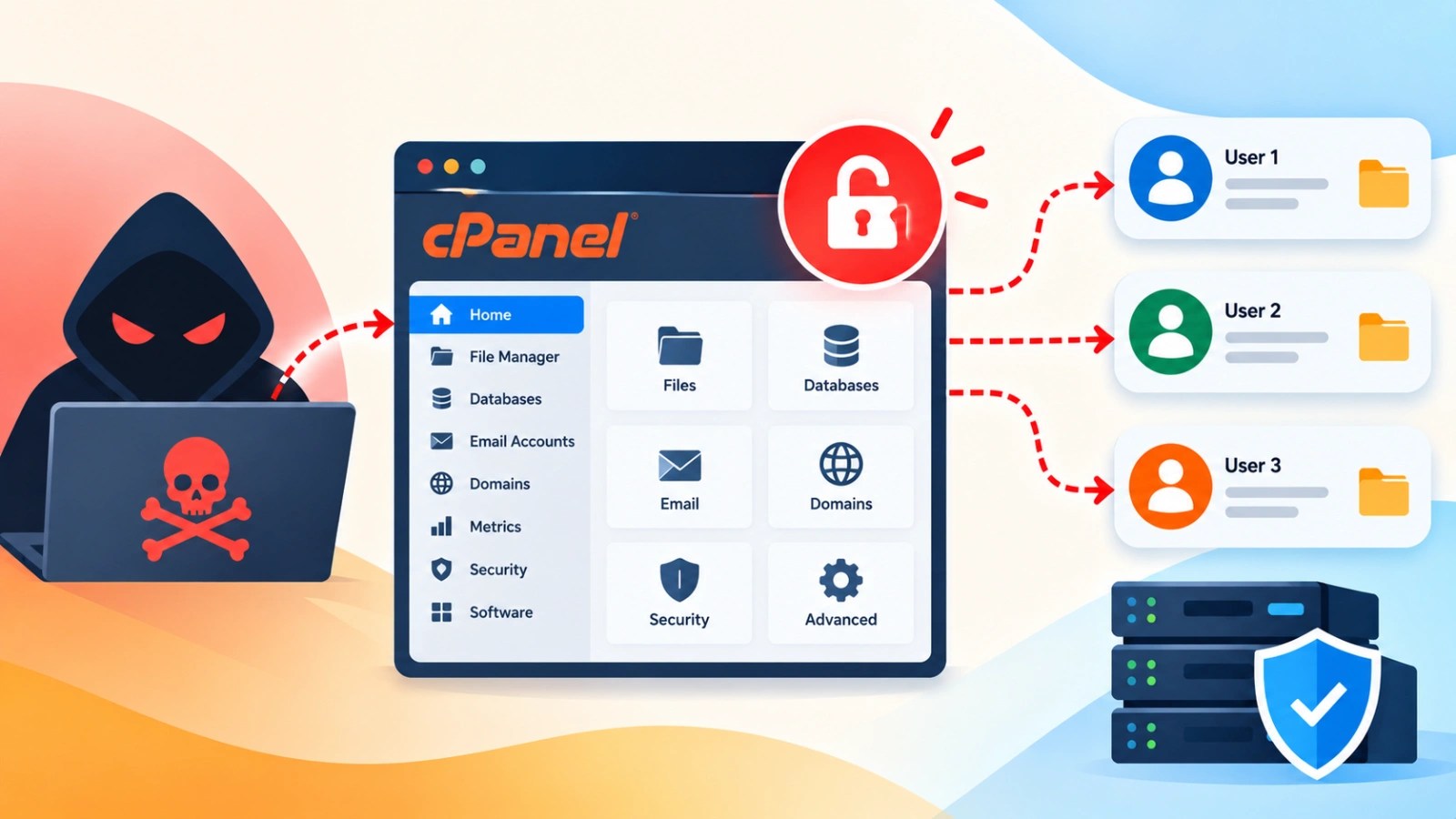
Recent security updates have addressed several vulnerabilities within the cPanel system, posing significant risks to shared-hosting servers. These flaws, particularly the permissions issue identified as CVE-2026-68490, could potentially allow unauthorized access to user data such as calendars and contacts.
Details of the cPanel Vulnerabilities
On September 22, 2026, cPanel released a security update to patch multiple vulnerabilities including a root privilege-escalation bug and a cross-account database flaw in WP Toolkit. The primary issue, CVE-2026-68490, arises from improper permissions in the CalDAV and CardDAV functionalities, allowing users on the same server to access others’ information.
This vulnerability undermines the tenant isolation expected in multi-user environments. While attackers cannot alter the data, they can still extract details like names and email addresses, potentially facilitating phishing attacks. The flaw was responsibly disclosed by security expert Ali Mustafa, also known as rz1027.
Impact on Shared Hosting Services
The exposure of read-only data is a serious concern for shared hosting services. This security gap means that a legitimate user could gather sensitive information from unrelated accounts without consent. As per cPanel’s advisory, the vulnerability affects versions 120 and above, with fixed builds now available.
Additionally, CVE-2026-87899 presents a more severe threat, where an authenticated user could elevate privileges and execute commands as root. This vulnerability, alongside CVE-2026-87900, which affects WP Toolkit, highlights the critical need for immediate updates to prevent cross-tenant data manipulation.
Recommendations for Administrators
Administrators are urged to update cPanel and WHM through the latest version available in the WHM interface or by executing the appropriate command line scripts. WP Toolkit requires a separate upgrade to version 6.11.3 or beyond. After updates, it is crucial to review system logs for any unusual cross-user activity.
Given the ongoing discovery of cPanel-related security issues, hosting providers should ensure that all systems, especially those in public and multi-user settings, adhere to robust automatic update policies. Previous vulnerabilities, including command injection and SQL injection threats, underscore the importance of vigilance.
In conclusion, maintaining up-to-date security measures is vital to protecting user data and preventing unauthorized access. With the potential for significant data breaches, immediate attention to these updates is necessary to safeguard both server integrity and user privacy.