Skip to content
  • Home
  • Cyber Map
  • About Us – Contact
  • Disclaimer
  • Terms and Rules
  • Privacy Policy
Cyber Web Spider Blog – News

Cyber Web Spider Blog – News

Globe Threat Map provides a real-time, interactive 3D visualization of global cyber threats. Monitor DDoS attacks, malware, and hacking attempts with geo-located arcs on a rotating globe. Stay informed with live logs and archive stats.

  • Home
  • Cyber Map
  • Cyber Security News
  • Security Week News
  • The Hacker News
  • How To?
  • Toggle search form
Anthropic’s OSS Scanner Enhances Open-Source Security

Anthropic’s OSS Scanner Enhances Open-Source Security

Posted on October 9, 2026 By CWS

Anthropic’s New Security Tool for Open-Source Projects

Anthropic has unveiled the OSS Scanner, a new tool designed to identify security vulnerabilities in crucial open-source repositories. This complimentary service directly notifies project maintainers of potential issues. By leveraging the company’s advanced AI models, developers gain rapid insights into vulnerabilities, bypassing the delays associated with manual reviews.

How the OSS Scanner Operates

The service builds on Anthropic’s previous initiatives, like Project Glasswing, which had reviewed over 6,000 vulnerability reports by October 2026. The OSS Scanner, however, offers a distinct pathway for projects that wish to utilize AI-generated findings.

According to its GitHub repository, the scanner constructs an enrolled project within a secure virtual machine with initial network access for setup. Once dependencies are installed, internet access is removed, allowing a secure environment for the scan to take place.

Detailed Reporting and Continuous Scanning

Maintainers receive detailed reports via email, including steps to reproduce the issue and suggested patches when available. While the scans are automated and not reviewed manually before dispatch, Anthropic ensures thoroughness with agents that validate bugs and trace their origins.

Post initial scan, the service periodically rechecks projects for new vulnerabilities based on demand and usage frequency. This continuous scanning reflects Anthropic’s commitment to enhancing security research, as seen in previous efforts like discovering vulnerabilities in Firefox.

Enrollment and Configuration Process

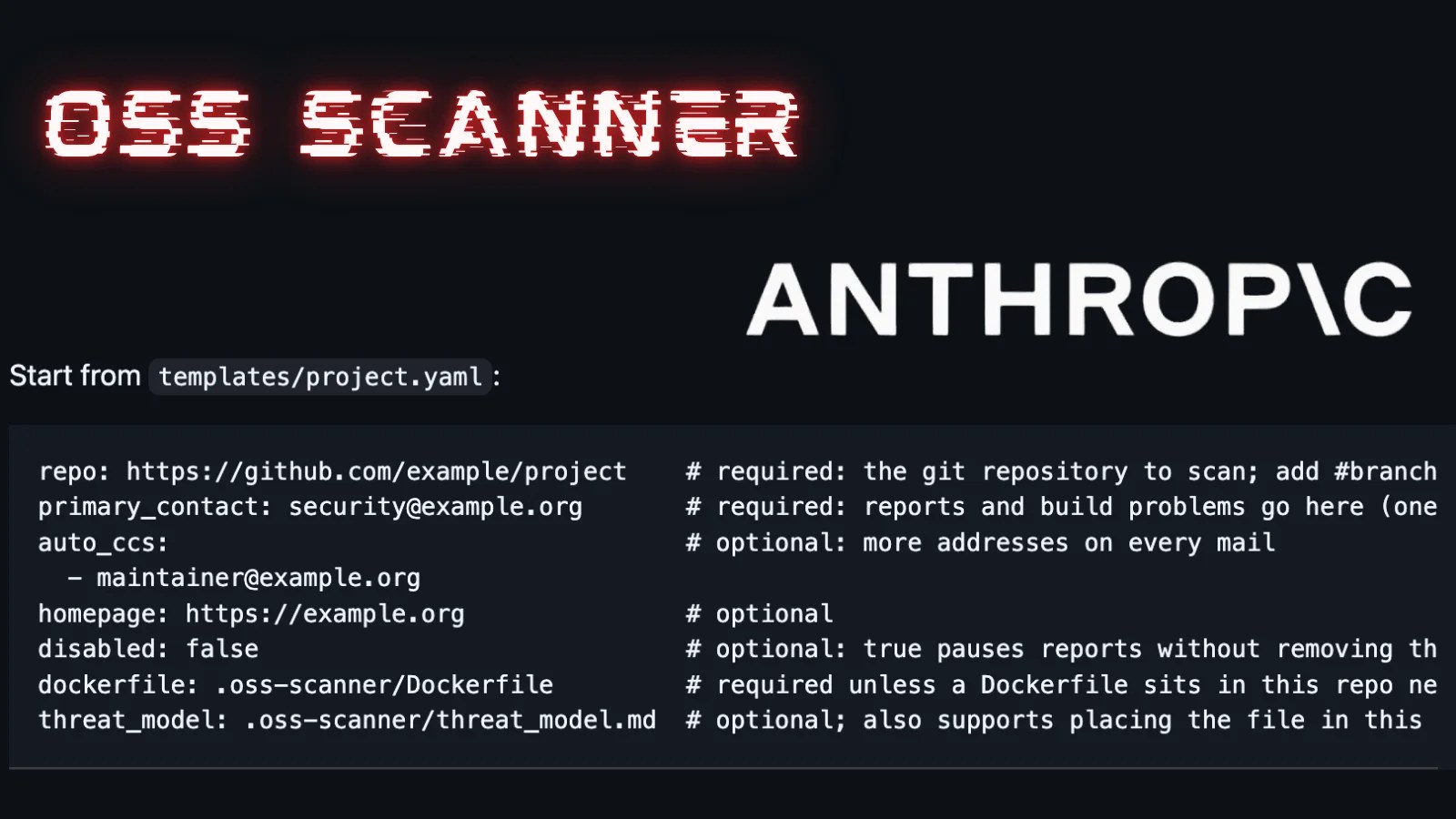
Project maintainers can apply for the OSS Scanner through the official GitHub repository. They must submit a pull request with a project.yaml configuration detailing the repository address and primary contact email. Anthropic verifies the applicants as core maintainers before acceptance.

Eligible projects are typically those with extensive use and exposure to remote attacks. A Dockerfile is necessary to guide the installation and build process, and maintainers can include a threat_model.md file to inform the scan. This file outlines potential vulnerabilities and preferred reporting formats, reducing assumptions by the scanner.

For security, maintainers are encouraged to use a dedicated security email alias and can opt to receive encrypted reports via an OpenPGP public key. While there’s no strict disclosure deadline for unvalidated findings, confirmed reports might transition to a human-reviewed process.

Anthropic’s OSS Scanner represents a significant step in fortifying open-source projects against security threats, providing a streamlined approach to identifying and addressing vulnerabilities.


Cyber Security News Tags:AI security tools, AI-generated reports, Anthropic, Cybersecurity, GitHub, open source security, OSS Scanner, Project Glasswing, security research, software testing, vulnerability scanning

Post navigation

Previous Post: Exploit Exposes Root Access Flaw in AnyDesk Linux
Next Post: P7 DarkSword iOS Exploit Kit Targets Crypto Wallets

Related Posts

Critical Vivotek Vulnerability Allows Remote Users to Inject Arbitrary Code Critical Vivotek Vulnerability Allows Remote Users to Inject Arbitrary Code Cyber Security News
Scans From Hacked Cisco Small Business Routers, Linksys and Araknis are at the Raise Scans From Hacked Cisco Small Business Routers, Linksys and Araknis are at the Raise Cyber Security News
Ad Blocker Extensions Secretly Capture AI Chats Ad Blocker Extensions Secretly Capture AI Chats Cyber Security News
Lovable AI Platform Vulnerability Exposes Project Data Lovable AI Platform Vulnerability Exposes Project Data Cyber Security News
Google’s Vertex AI Vulnerability Enables Low-Privileged Users to Gain Service Agent Roles Google’s Vertex AI Vulnerability Enables Low-Privileged Users to Gain Service Agent Roles Cyber Security News
New Framework Enhances APT Attribution New Framework Enhances APT Attribution Cyber Security News

Categories

  • Cyber Security News
  • How To?
  • Security Week News
  • The Hacker News

Recent Posts

  • GhostAction Breach Exposes GitHub Repositories to Secret Theft
  • P7 DarkSword iOS Exploit Kit Targets Crypto Wallets
  • Anthropic’s OSS Scanner Enhances Open-Source Security
  • Exploit Exposes Root Access Flaw in AnyDesk Linux
  • Warden Stealer Malware Expands via ClickFix and Malvertising

Pages

  • About Us – Contact
  • Disclaimer
  • Privacy Policy
  • Terms and Rules

Archives

  • October 2026
  • September 2026
  • August 2026
  • July 2026
  • June 2026
  • May 2026
  • April 2026
  • March 2026
  • February 2026
  • January 2026
  • December 2025
  • November 2025
  • October 2025
  • September 2025
  • August 2025
  • July 2025
  • June 2025
  • May 2025

Recent Posts

  • GhostAction Breach Exposes GitHub Repositories to Secret Theft
  • P7 DarkSword iOS Exploit Kit Targets Crypto Wallets
  • Anthropic’s OSS Scanner Enhances Open-Source Security
  • Exploit Exposes Root Access Flaw in AnyDesk Linux
  • Warden Stealer Malware Expands via ClickFix and Malvertising

Pages

  • About Us – Contact
  • Disclaimer
  • Privacy Policy
  • Terms and Rules

Categories

  • Cyber Security News
  • How To?
  • Security Week News
  • The Hacker News

Copyright © 2026 Cyber Web Spider Blog – News.

Powered by PressBook Masonry Dark