Skip to content
  • Home
  • Cyber Map
  • About Us – Contact
  • Disclaimer
  • Terms and Rules
  • Privacy Policy
Cyber Web Spider Blog – News

Cyber Web Spider Blog – News

Globe Threat Map provides a real-time, interactive 3D visualization of global cyber threats. Monitor DDoS attacks, malware, and hacking attempts with geo-located arcs on a rotating globe. Stay informed with live logs and archive stats.

  • Home
  • Cyber Map
  • Cyber Security News
  • Security Week News
  • The Hacker News
  • How To?
  • Toggle search form
India Enforces Caller Name Display on All New Networks

India Enforces Caller Name Display on All New Networks

Posted on October 15, 2026 By CWS

The Indian government has announced a new regulation for telecom service providers (TSPs) that mandates the display of callers’ registered names alongside their phone numbers for all incoming calls. This initiative, effective from November 1, 2026, aims to help users identify unknown callers and reduce spam and fraudulent activities.

Implementation of CNAP Service

To enforce this regulation, the Department of Telecommunications has circulated a directive encouraging TSPs to implement the Calling Name Presentation (CNAP) service. According to a circular dated October 13, 2026, issued by the Ministry of Communications, the CNAP service will display the calling user’s name on the recipient’s device when a call is received.

The calling name identity is derived from subscriber data records maintained by the originating TSP, ensuring that this information is included in the caller’s line identification. Currently, the focus is on applying this system to wireless terrestrial networks utilizing 4G and later technologies, with potential future rollouts for 2G, 3G, and public switched telephone networks (PSTNs).

User Call Identification Process

Under the new guidelines, the caller’s number will appear first, followed by their name, if saved in the recipient’s contacts. For numbers not stored in contacts, the telecom operator’s database will provide the name for domestic calls, while calls from overseas will display “International Call.” Originating TSPs must maintain databases that map subscriber names to numbers, enabling receiving operators to query and display this information accurately.

Additionally, telecom operators must offer a Calling Line Identification Restriction (CLIR) feature, allowing users to hide their caller information if desired. The Ministry of Communications emphasizes a secure-by-design approach to protect communication security, ensuring no retention of caller identities once calls conclude.

Business and Bulk Connection Considerations

For users with business or bulk connections, the regulation offers the option to use a “preferred name” instead of the standard calling name identity. This preferred name must be a registered trademark or trade name, as recorded with the Trade Marks Registry or on the Goods and Services Tax portal.

For new connections, the preferred name must be documented in the customer application form and subscriber data record, with original proof of registration presented to the originating TSP. This ensures that businesses can maintain their brand identity during communications while complying with the new regulations.

As India advances these telecom regulations, the focus remains on enhancing call transparency and reducing unsolicited communication, fostering a more secure and user-friendly telecommunication environment.

The Hacker News Tags:4G networks, caller ID, CNAP service, communication security, fraud prevention, India telecom, Ministry of Communications, Privacy, telecom regulations, telecom security

Post navigation

Previous Post: Hackers Exploit WinRAR Vulnerability in CIS Attacks
Next Post: Hirudo Android RAT Threatens Banking Security

Related Posts

WP Maps Pro Vulnerability Exploited to Create Admin Accounts WP Maps Pro Vulnerability Exploited to Create Admin Accounts The Hacker News
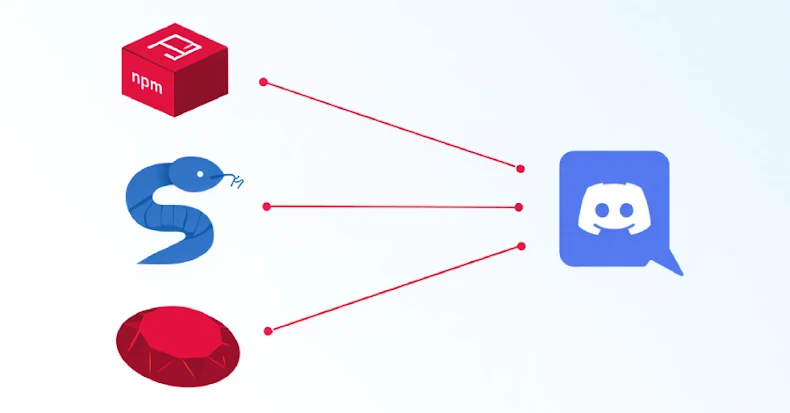
npm, PyPI, and RubyGems Packages Found Sending Developer Data to Discord Channels npm, PyPI, and RubyGems Packages Found Sending Developer Data to Discord Channels The Hacker News
Malicious Vite npm Packages Exploit Blockchain for Cyberattack Malicious Vite npm Packages Exploit Blockchain for Cyberattack The Hacker News
SmarterMail Fixes Critical Unauthenticated RCE Flaw with CVSS 9.3 Score SmarterMail Fixes Critical Unauthenticated RCE Flaw with CVSS 9.3 Score The Hacker News
The Evolution of UTA0388’s Espionage Malware The Evolution of UTA0388’s Espionage Malware The Hacker News
Why More Security Leaders Are Selecting AEV Why More Security Leaders Are Selecting AEV The Hacker News

Categories

  • Cyber Security News
  • How To?
  • Security Week News
  • The Hacker News

Recent Posts

  • Best Malware Analysis Tools of 2026 Revealed
  • New Malware CikaBika Bot Exploits Discord for Control
  • Critical Drupal RCE Vulnerability Resolved in Core Modules
  • Leading DLP Software Solutions for 2026 Revealed
  • Hirudo Android RAT Threatens Banking Security

Pages

  • About Us – Contact
  • Disclaimer
  • Privacy Policy
  • Terms and Rules

Archives

  • October 2026
  • September 2026
  • August 2026
  • July 2026
  • June 2026
  • May 2026
  • April 2026
  • March 2026
  • February 2026
  • January 2026
  • December 2025
  • November 2025
  • October 2025
  • September 2025
  • August 2025
  • July 2025
  • June 2025
  • May 2025

Recent Posts

  • Best Malware Analysis Tools of 2026 Revealed
  • New Malware CikaBika Bot Exploits Discord for Control
  • Critical Drupal RCE Vulnerability Resolved in Core Modules
  • Leading DLP Software Solutions for 2026 Revealed
  • Hirudo Android RAT Threatens Banking Security

Pages

  • About Us – Contact
  • Disclaimer
  • Privacy Policy
  • Terms and Rules

Categories

  • Cyber Security News
  • How To?
  • Security Week News
  • The Hacker News

Copyright © 2026 Cyber Web Spider Blog – News.

Powered by PressBook Masonry Dark