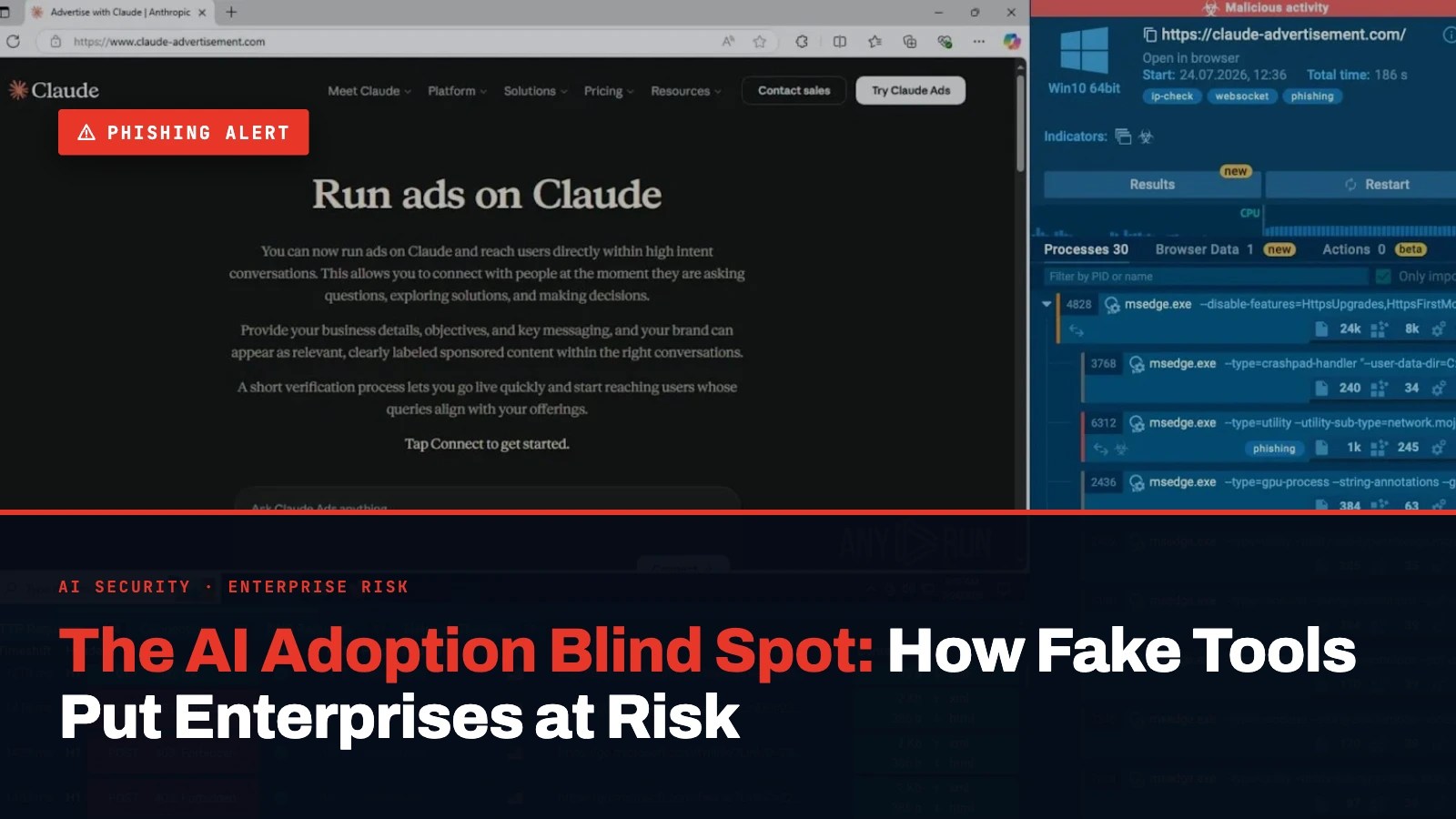
The rapid integration of artificial intelligence within enterprises is undeniable, with employees increasingly relying on tools such as ChatGPT, Claude, and Microsoft Copilot. However, this growing dependence has opened new avenues for cybercriminals. These attackers are leveraging the trust in AI platforms by creating counterfeit applications designed to infiltrate corporate environments, steal credentials, and deploy malware.
Rising Threats from Fake AI Tools
Research conducted by ANY.RUN showcases the tactics used by attackers who mimic popular AI brands to target corporate users, including sectors like technology and marketing. The study reveals a significant challenge for security leaders: detecting these threats hidden within seemingly benign applications before they lead to credential theft or broader business disruptions.
Between April 15 and October 5, 2026, researchers identified 1,258 public sandbox analyses linked to fake AI campaigns. The United States and India were top contributors, with notable involvement in campaigns involving fake Claude downloads and ChatGPT-themed attacks. These incidents span multiple industries, with technology, telecommunications, and education being the most affected.
Targeted Attacks on Specific Roles
Attackers customize their strategies based on employee roles to maximize impact. Developers are often targeted with fake AI coding assistants that risk exposing source code and API keys. In one instance, a counterfeit GitHub Copilot page provided malicious installation instructions. Similarly, marketing teams face threats from fake AI advertising programs designed to compromise accounts with access to advertising budgets and billing systems.
Furthermore, fake desktop applications pose a risk to corporate users by installing malware that secretly collects sensitive data. These findings underscore that fake AI threats are not confined to IT departments but can affect any employee interacting with AI tools without proper security protocols.
Strategies to Mitigate Fake AI Threats
Understanding how these attacks unfold is crucial for prevention. Attackers often impersonate trusted brands like ChatGPT or Microsoft Copilot through counterfeit websites and ads. Once the fake installer is executed, malicious code can harvest sensitive data such as passwords and session cookies.
Fake AI threats extend beyond Windows, as macOS devices also face risks from malicious installation instructions. For enterprises using mixed operating systems, this creates additional challenges in identifying and containing threats. Cross-platform behavioral analysis, such as that supported by ANY.RUN’s Interactive Sandbox, is essential for investigating suspicious activities in isolated environments.
As AI adoption continues to grow, enterprises must equip their security teams with the tools and visibility needed to detect and respond to threats disguised as legitimate applications. This involves understanding the scope of what executes on employee devices and ensuring prompt containment of any identified threats.
Over 16,000 organizations globally utilize ANY.RUN’s services to enhance cybersecurity operations. These solutions have led to higher detection rates, reduced mean time to response, and fewer escalations, enabling security teams to focus on critical threats and ensure the protection of their digital environments.