Skip to content
  • Home
  • Cyber Map
  • About Us – Contact
  • Disclaimer
  • Terms and Rules
  • Privacy Policy
Cyber Web Spider Blog – News

Cyber Web Spider Blog – News

Globe Threat Map provides a real-time, interactive 3D visualization of global cyber threats. Monitor DDoS attacks, malware, and hacking attempts with geo-located arcs on a rotating globe. Stay informed with live logs and archive stats.

  • Home
  • Cyber Map
  • Cyber Security News
  • Security Week News
  • The Hacker News
  • How To?
  • Toggle search form
AI Agent Security: Lessons from Token’s Experiment

AI Agent Security: Lessons from Token’s Experiment

Posted on November 11, 2026 By CWS

Token’s recent experiment with AI agents has uncovered significant insights into security practices. This endeavor revealed the importance of distinct identities, appropriate access, and clear traceability for AI agents, aligning with the company’s advice to clients.

Understanding AI Agent Vulnerabilities

Token’s creation of an agent that inherently violated security practices allowed the company to explore how to effectively secure such systems. In situations where an agent operates within a user’s authenticated session, the application may fail to recognize the presence and intent of the agent, leading to potential security gaps. As businesses increasingly deploy AI agents, understanding how to manage their identities and access becomes crucial.

The agent, named Rehearsal, demonstrated typical user interface functionalities by navigating web pages and filling forms autonomously. Despite its utility, the agent’s actions were indistinguishable from the user’s, given that session cookies lack identifiers for the session initiator. This underscores the challenge in differentiating between human and agent activities.

Enhancing Security Through Internal Controls

Token’s ability to manage both the agent and the application enabled it to address these security challenges. By implementing measures such as session logging and restricting the agent’s permissions, Token ensured that the agent’s reach remained limited compared to the user’s. For instance, Rehearsal was designed to operate in a read-only mode, preventing unauthorized data alterations without user consent.

These practices are effective within Token’s ecosystem but highlight the difficulty in applying similar controls to external agents. The lack of visibility into an agent’s actions presents a significant hurdle for organizations relying on third-party applications.

Preparing for Broader AI Agent Integration

As AI agent use becomes more widespread, it’s imperative to establish dedicated channels distinct from human users. Current browser and application capabilities, such as Chrome’s auto-browse restrictions and Microsoft’s agentic browsing settings, offer initial solutions by requiring user verification for sensitive operations and tagging agent-driven interactions.

Emerging standards, like WebMCP and Web Bot Auth, aim to provide frameworks for agent interaction with applications, yet gaps remain. For example, while WebMCP supports action exposure to agents, it does not inherently limit agent permissions. Similarly, Web Bot Auth can verify agent-originated requests but does not facilitate delegation tracking.

Actionable Steps for Security Teams

In anticipation of evolving standards, security teams must proactively identify and control AI agents within their systems. This involves cataloging browser agents, tracing their usage, and implementing authentication measures for critical actions. Furthermore, engaging SaaS vendors to distinguish agent activity in audit logs and support scoped delegation is crucial.

Ultimately, until comprehensive standards are established, companies should treat AI agents as delegated access entities, necessitating thorough discovery, restriction, and monitoring to prevent unauthorized privilege use.

For more insights on AI and security, follow us on various platforms and stay updated with our exclusive content contributions.

The Hacker News Tags:access control, agent delegation, agent identity, AI security, browser agents, cyber threats, Cybersecurity, data protection, digital identity, IT standards, session security, Token, Web Bot Auth, WebMCP

Post navigation

Previous Post: AhsayCBS Vulnerabilities Exploited by Hackers for Malware Deployment
Next Post: Bay Secures $50 Million to Regulate Enterprise AI Agents

Related Posts

Secure Vibe Coding: The Complete New Guide Secure Vibe Coding: The Complete New Guide The Hacker News
Chrome Extension Caught Injecting Hidden Solana Transfer Fees Into Raydium Swaps Chrome Extension Caught Injecting Hidden Solana Transfer Fees Into Raydium Swaps The Hacker News
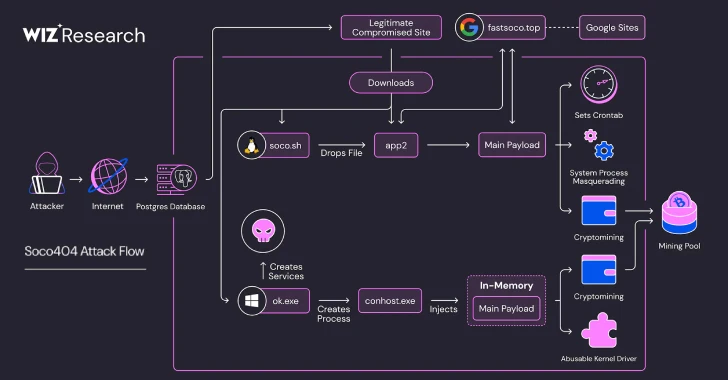
Soco404 and Koske Malware Target Cloud Services with Cross-Platform Cryptomining Attacks Soco404 and Koske Malware Target Cloud Services with Cross-Platform Cryptomining Attacks The Hacker News
Phishing Risks and Cyber Threats: Top Stories of the Week Phishing Risks and Cyber Threats: Top Stories of the Week The Hacker News
Wormable AirPlay Flaws Enable Zero-Click RCE on Apple Devices via Public Wi-Fi Wormable AirPlay Flaws Enable Zero-Click RCE on Apple Devices via Public Wi-Fi The Hacker News
Study Reveals Security Flaws in Free Android VPN Apps Study Reveals Security Flaws in Free Android VPN Apps The Hacker News

Categories

  • Cyber Security News
  • How To?
  • Security Week News
  • The Hacker News

Recent Posts

  • China-Linked Hackers Exploit Chrome Warnings for Malware
  • Finite State Secures $27M to Enhance Device Security
  • Thousands of Grok-Built Apps Expose Sensitive Data Online
  • Hidden Malware in PNG Images Targets Windows Domain Controllers
  • Bay Secures $50 Million to Regulate Enterprise AI Agents

Pages

  • About Us – Contact
  • Disclaimer
  • Privacy Policy
  • Terms and Rules

Archives

  • November 2026
  • October 2026
  • September 2026
  • August 2026
  • July 2026
  • June 2026
  • May 2026
  • April 2026
  • March 2026
  • February 2026
  • January 2026
  • December 2025
  • November 2025
  • October 2025
  • September 2025
  • August 2025
  • July 2025
  • June 2025
  • May 2025

Recent Posts

  • China-Linked Hackers Exploit Chrome Warnings for Malware
  • Finite State Secures $27M to Enhance Device Security
  • Thousands of Grok-Built Apps Expose Sensitive Data Online
  • Hidden Malware in PNG Images Targets Windows Domain Controllers
  • Bay Secures $50 Million to Regulate Enterprise AI Agents

Pages

  • About Us – Contact
  • Disclaimer
  • Privacy Policy
  • Terms and Rules

Categories

  • Cyber Security News
  • How To?
  • Security Week News
  • The Hacker News

Copyright © 2026 Cyber Web Spider Blog – News.

Powered by PressBook Masonry Dark