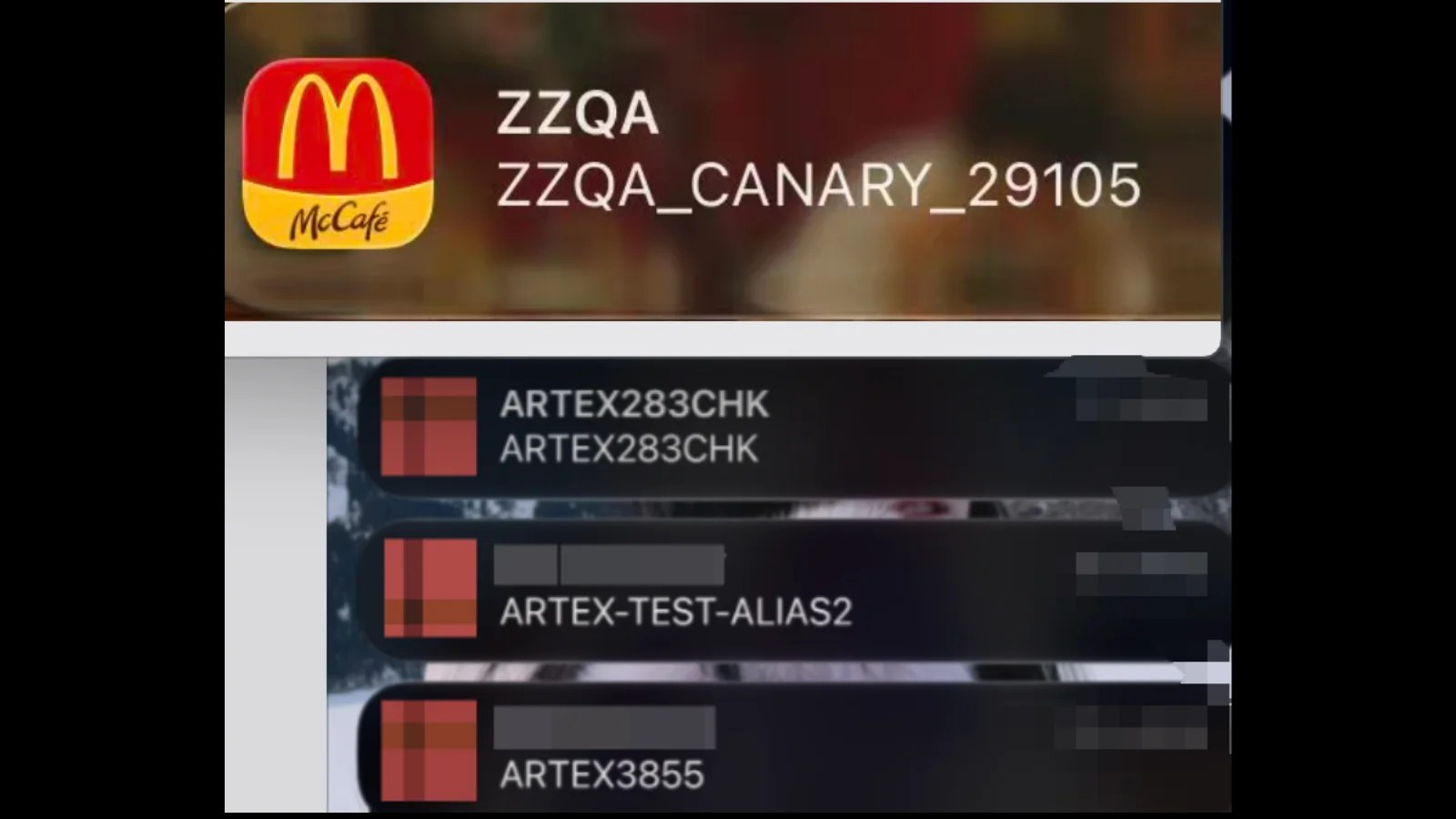
On November 17, 2026, McDonald’s iOS application users reported receiving a series of unexpected push notifications, prompting concerns over the app’s notification system security. The alerts, which appeared around 14:20, were mainly observed by iPhone users, according to a report by Blackorbird. Despite the unusual nature of the alerts, no concrete evidence has been found to confirm a vulnerability or clarify the method of their dispatch.
Unusual Alerts Cause Concern
The notifications included cryptic messages such as “ZZQA” and “ZZQA_CANARY_29105,” accompanied by a McCafé app icon. Additional alerts displayed strings like “ARTEX283CHK,” “ARTEX-TEST-ALIAS2,” and “ARTEX3855,” which appear to be test identifiers rather than typical promotional content. The origin and intent behind these messages remain unclear, and the provided screenshot does not definitively connect these alerts to a single application.
Potential Links and Comparisons
Blackorbird drew parallels between this incident and similar ARTEX notifications reported from a government service application the previous week, suggesting the possibility of a shared service or methodology. However, this comparison does not confirm whether the same entity or vulnerability was involved. The report did not specify the government app in question.
Push notifications typically reach users via systems beyond the mobile app itself. According to Apple, messages are delivered through the Apple Push Notification service (APNs) after being initiated by the app’s server. The server must authenticate with a token or certificate, which is crucial to prevent unauthorized notification sending.
Investigations and Implications
Unexpected notifications do not inherently imply an iOS breach. Comprehensive investigations would need to scrutinize the app’s server, messaging protocols, account permissions, and transmission logs to determine the root cause. Apple’s guidelines emphasize the importance of keeping notification signing keys private to avoid malicious generation of authentication tokens.
The preliminary report provides an initial overview, lacking detailed technical analysis. There is no mention of the app version affected, user count, CVE identifiers, or specific attack vectors. The term “ARTEX” should be considered merely as a visible string in the alerts, not as evidence of a defined threat actor or tool.
Conclusion and Future Outlook
While this incident raises valid concerns about notification security, no verified evidence currently supports claims of stolen data, compromised devices, or a broader breach at McDonald’s. The primary question remains: who sent these notifications, and through what system? Until further findings are available, users and experts remain cautious, prioritizing vigilance and security in app interactions.