Skip to content
  • Home
  • Cyber Map
  • About Us – Contact
  • Disclaimer
  • Terms and Rules
  • Privacy Policy
Cyber Web Spider Blog – News

Cyber Web Spider Blog – News

Globe Threat Map provides a real-time, interactive 3D visualization of global cyber threats. Monitor DDoS attacks, malware, and hacking attempts with geo-located arcs on a rotating globe. Stay informed with live logs and archive stats.

  • Home
  • Cyber Map
  • Cyber Security News
  • Security Week News
  • The Hacker News
  • How To?
  • Toggle search form
Java4Shell Exploit Threatens Key Java Applications

Java4Shell Exploit Threatens Key Java Applications

Posted on November 18, 2026 By CWS

A significant security flaw, known as Java4Shell, has been discovered, allowing unauthorized code execution in popular applications such as Jira, Jenkins, and Keycloak. This vulnerability, identified by security research firm Calif, affects Java 17.0.6 and later versions on certain Intel and AMD processors.

Vulnerability Details

The Java4Shell flaw, tracked as CVE-2026-114938, is specific to x86-64 chips supporting AVX-512 VBMI. Researchers have found that a malformed Base64 string can exploit this vulnerability, leading to potential unauthorized code execution. Although Oracle and the OpenJDK project have issued patches, not all vendors have implemented fixes.

Security experts have noted that the flaw arises from a performance-optimized Base64 decoder in Java, which inadvertently allows data to be written beyond intended memory boundaries. This condition can be manipulated by attackers to execute arbitrary code under specific conditions.

Affected Systems and Impact

The vulnerability is present in Java versions 17.0.6 and later, and in Java SE 21, 25, and 27. While common Java versions 8 and 11 remain unaffected, specific builds and versions such as the Java SE 8 Performance Pack are vulnerable. Only systems with the specific processor feature set, including Intel Xeon Ice Lake and AMD Zen 4, are at risk.

The flaw can be exploited remotely without authentication in some application environments, posing a significant security risk. Security agencies in Canada have confirmed the potential for remote exploitation, although no active attacks have been reported yet.

Security Updates and Recommendations

To mitigate the risk, Oracle and other vendors have released updates to address the vulnerability. Users of affected Java versions are advised to apply these updates promptly. For systems that cannot be updated immediately, disabling specific Java features via JVM flags can temporarily mitigate the risk.

Security experts recommend monitoring systems for unusual Base64 activity and error logs that could indicate exploitation attempts. Organizations are urged to review their infrastructure for affected systems and implement necessary security measures.

In conclusion, the Java4Shell vulnerability underscores the importance of proactive security practices and timely updates in software environments. As vendors continue to release patches, staying informed and vigilant against such threats remains crucial.


The Hacker News Tags:CVE-2026-114938, Cybersecurity, Java 17, Java4Shell, Jenkins, Jira, Keycloak, OpenJDK, Oracle, Security

Post navigation

Previous Post: Java4Shell Vulnerability Poses Serious Risk to Java Servers
Next Post: Flipper One: New Linux Multi-tool for Network Security

Related Posts

A Cybercrime Merger Like No Other — Scattered Spider, LAPSUS$, and ShinyHunters Join Forces A Cybercrime Merger Like No Other — Scattered Spider, LAPSUS$, and ShinyHunters Join Forces The Hacker News
Discover Practical AI Tactics for GRC — Join the Free Expert Webinar Discover Practical AI Tactics for GRC — Join the Free Expert Webinar The Hacker News
The Impact of Robotic Process Automation (RPA) on Identity and Access Management The Impact of Robotic Process Automation (RPA) on Identity and Access Management The Hacker News
VoidLink Linux Malware Framework Built with AI Assistance Reaches 88,000 Lines of Code VoidLink Linux Malware Framework Built with AI Assistance Reaches 88,000 Lines of Code The Hacker News
Malicious Telnyx Versions on PyPI: Audio Steganography Attack Malicious Telnyx Versions on PyPI: Audio Steganography Attack The Hacker News
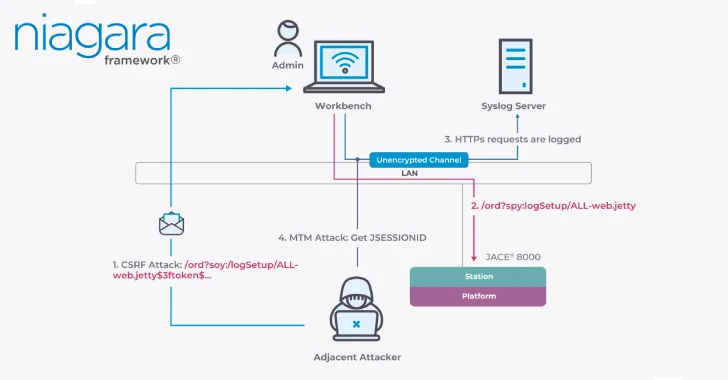
Critical Flaws in Niagara Framework Threaten Smart Buildings and Industrial Systems Worldwide Critical Flaws in Niagara Framework Threaten Smart Buildings and Industrial Systems Worldwide The Hacker News

Categories

  • Cyber Security News
  • How To?
  • Security Week News
  • The Hacker News

Recent Posts

  • 2027 Cybersecurity Awards: New AI Categories Announced
  • Malicious Agent Framework Releases Threaten Credentials
  • Critical NGINX HTTP/2 Vulnerabilities Threaten Web Servers
  • Patti Degnan: Navigating a Non-Traditional CISO Journey
  • New Technique Threatens Windows Hello and BitLocker Security

Pages

  • About Us – Contact
  • Disclaimer
  • Privacy Policy
  • Terms and Rules

Archives

  • November 2026
  • October 2026
  • September 2026
  • August 2026
  • July 2026
  • June 2026
  • May 2026
  • April 2026
  • March 2026
  • February 2026
  • January 2026
  • December 2025
  • November 2025
  • October 2025
  • September 2025
  • August 2025
  • July 2025
  • June 2025
  • May 2025

Recent Posts

  • 2027 Cybersecurity Awards: New AI Categories Announced
  • Malicious Agent Framework Releases Threaten Credentials
  • Critical NGINX HTTP/2 Vulnerabilities Threaten Web Servers
  • Patti Degnan: Navigating a Non-Traditional CISO Journey
  • New Technique Threatens Windows Hello and BitLocker Security

Pages

  • About Us – Contact
  • Disclaimer
  • Privacy Policy
  • Terms and Rules

Categories

  • Cyber Security News
  • How To?
  • Security Week News
  • The Hacker News

Copyright © 2026 Cyber Web Spider Blog – News.

Powered by PressBook Masonry Dark