Skip to content
  • Home
  • Cyber Map
  • About Us – Contact
  • Disclaimer
  • Terms and Rules
  • Privacy Policy
Cyber Web Spider Blog – News

Cyber Web Spider Blog – News

Globe Threat Map provides a real-time, interactive 3D visualization of global cyber threats. Monitor DDoS attacks, malware, and hacking attempts with geo-located arcs on a rotating globe. Stay informed with live logs and archive stats.

  • Home
  • Cyber Map
  • Cyber Security News
  • Security Week News
  • The Hacker News
  • How To?
  • Toggle search form
Critical Vulnerability in Apache Tomcat Allows Unauthorized Cluster Access

Critical Vulnerability in Apache Tomcat Allows Unauthorized Cluster Access

Posted on November 20, 2026 By CWS

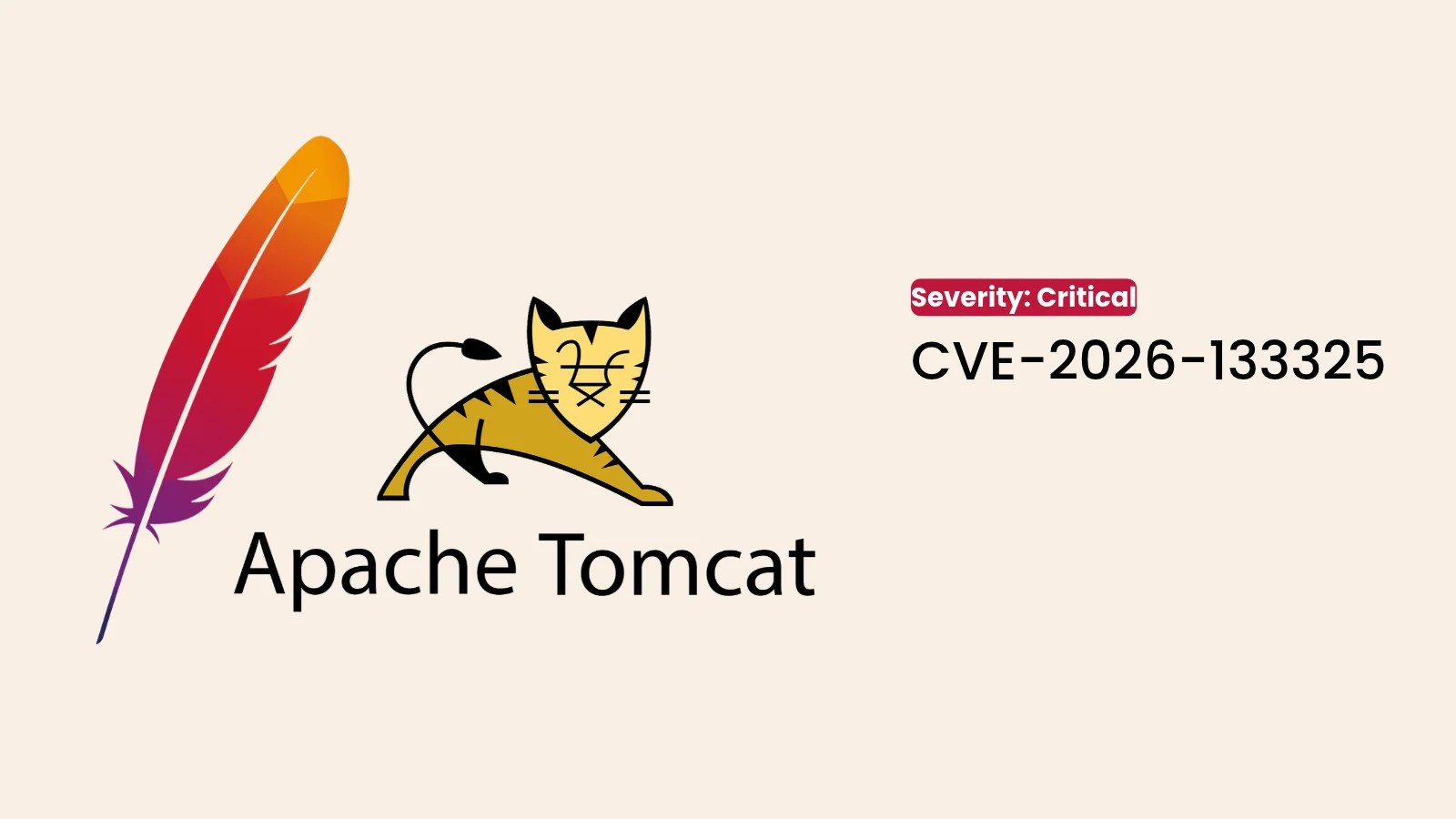
The Apache Software Foundation recently revealed a severe vulnerability in Apache Tomcat, enabling remote attackers to integrate into trusted server clusters without requiring authentication. Designated as CVE-2026-133325, this flaw impacts clusters utilizing TLS 1.3 with a pre-shared key.

Details of the Vulnerability

On November 19, 2026, Apache issued an advisory acknowledging the issue, crediting researcher Mike Read for its discovery. Affected versions include Tomcat 11.0.28 and 11.0.29, along with Tomcat 10.1.62 and 9.0.124. However, using these versions does not automatically expose servers, as the flaw necessitates specific encryption configurations and network access to inter-cluster communication services.

Implications for Apache Tomcat Clusters

Communication within Tomcat clusters is managed by Apache Tribes, enabling shared session data across servers. The flaw lies in the TLS 1.3 configuration, where Tomcat fails to authenticate the server identities during cluster connections. This oversight allows encrypted connections without proper authorization checks.

Previously, Cyber Security News reported on vulnerabilities within Tomcat’s EncryptInterceptor. The current advisory highlights a distinct issue where unauthorized cluster membership is tolerated, though no evidence of active exploitation or potential remote code execution has been reported.

Recommendations and Future Actions

Apache advises transitioning cluster communications to TLS 1.2 while maintaining pre-shared key usage. This recommendation pertains solely to inter-server traffic rather than HTTPS connections from website users. The forthcoming fixed versions are 11.0.30, 10.1.63, and 9.0.125 for the respective branches, as noted in Apache’s security notices.

Administrators are urged to verify their server versions and configurations, restrict cluster port access, and scrutinize logs for unauthorized membership alterations. Post-update, it’s crucial to ensure all expected cluster members reconnect and that session replication is functioning. Despite potential session data sharing disruptions, websites can continue to operate.

An earlier CISA alert regarding a Tomcat encryption flaw, identified as CVE-2026-34486, is unrelated to CVE-2026-133325. Both flaws should be monitored independently to ensure comprehensive security management.


Cyber Security News Tags:Apache Tomcat, Apache Tribes, CVE-2026-133325, CVE-2026-34486, Cybersecurity, Encryption, IT security, network security, pre-shared key, security flaw, server clusters, system update, TLS 1.3, Tomcat versions, Vulnerability

Post navigation

Previous Post: Weekly Cybersecurity Highlights: Key Updates
Next Post: WhatsApp Addresses Vulnerability Used in Scam Campaign

Related Posts

Axis Camera Server Vulnerabilities Exposes Thousands of Organizations to Attack Axis Camera Server Vulnerabilities Exposes Thousands of Organizations to Attack Cyber Security News
SilverFox Exploits Software to Evade Security Systems SilverFox Exploits Software to Evade Security Systems Cyber Security News
1000+ Exposed N-able N-central RMM Servers Unpatched for 0-Day Vulnerabilities 1000+ Exposed N-able N-central RMM Servers Unpatched for 0-Day Vulnerabilities Cyber Security News
Microsoft 365 Under Threat: Phishing Panel Exploits OAuth Flow Microsoft 365 Under Threat: Phishing Panel Exploits OAuth Flow Cyber Security News
AsyncAPI npm Packages Compromised, 2M Downloads Affected AsyncAPI npm Packages Compromised, 2M Downloads Affected Cyber Security News
New Namespace Reuse Vulnerability Allows Remote Code Execution in Microsoft Azure AI, Google Vertex AI, and Hugging Face New Namespace Reuse Vulnerability Allows Remote Code Execution in Microsoft Azure AI, Google Vertex AI, and Hugging Face Cyber Security News

Categories

  • Cyber Security News
  • How To?
  • Security Week News
  • The Hacker News

Recent Posts

  • Java Vulnerability Affects Palo Alto Products: Key Details
  • Debian Packages Retain Distrusted Certificates Despite Updates
  • WhatsApp Fixes Android Security Flaw Amid Scam Concerns
  • Microsoft Probes Attachment Upload Issues in New Outlook
  • Critical OpenSSL Vulnerability Discovered in Base64 Encoding

Pages

  • About Us – Contact
  • Disclaimer
  • Privacy Policy
  • Terms and Rules

Archives

  • November 2026
  • October 2026
  • September 2026
  • August 2026
  • July 2026
  • June 2026
  • May 2026
  • April 2026
  • March 2026
  • February 2026
  • January 2026
  • December 2025
  • November 2025
  • October 2025
  • September 2025
  • August 2025
  • July 2025
  • June 2025
  • May 2025

Recent Posts

  • Java Vulnerability Affects Palo Alto Products: Key Details
  • Debian Packages Retain Distrusted Certificates Despite Updates
  • WhatsApp Fixes Android Security Flaw Amid Scam Concerns
  • Microsoft Probes Attachment Upload Issues in New Outlook
  • Critical OpenSSL Vulnerability Discovered in Base64 Encoding

Pages

  • About Us – Contact
  • Disclaimer
  • Privacy Policy
  • Terms and Rules

Categories

  • Cyber Security News
  • How To?
  • Security Week News
  • The Hacker News

Copyright © 2026 Cyber Web Spider Blog – News.

Powered by PressBook Masonry Dark