Skip to content
  • Home
  • Cyber Map
  • About Us – Contact
  • Disclaimer
  • Terms and Rules
  • Privacy Policy
Cyber Web Spider Blog – News

Cyber Web Spider Blog – News

Globe Threat Map provides a real-time, interactive 3D visualization of global cyber threats. Monitor DDoS attacks, malware, and hacking attempts with geo-located arcs on a rotating globe. Stay informed with live logs and archive stats.

  • Home
  • Cyber Map
  • Cyber Security News
  • Security Week News
  • The Hacker News
  • How To?
  • Toggle search form
Webworm Modifies SoftEther VPN to Conceal Remote Access

Webworm Modifies SoftEther VPN to Conceal Remote Access

Posted on November 23, 2026 By CWS

The threat actor known as Webworm, linked with China, has been suspected of utilizing a customized version of SoftEther VPN Bridge. This modification aims to eliminate identifiable detection markers, masquerading the tool as network-monitoring software to facilitate secretive remote access to infiltrated networks.

According to an analysis by Rapid7, this altered variant employs various techniques to avoid detection by security systems. The cybersecurity firm attributes this development to the adversarial group with moderate confidence.

Background on Webworm

First identified by Symantec, a Broadcom company, in September 2022, Webworm is recognized as a nation-state group aligned with China. The group has targeted government bodies, IT services, and electrical companies across Russia, Georgia, Mongolia, and other Asian nations.

Webworm’s toolset includes legitimate software like SoftEther VPN, with the bridge component serving as a link between compromised networks and attacker-controlled systems. The latest insights from Rapid7 focus on a Windows executable named “netcapa.exe,” which is a modified version of SoftEther VPN Bridge.

Technical Modifications and Concealment

The altered version of the VPN Bridge, rebranded as NtMonitor VPN, poses as network-monitoring software from a fictitious company, Network Systems Solutions Inc. This variant was uploaded to VirusTotal around mid-January 2026. Despite the rebranding, many registry paths still reference the original “SoftEther Project,” indicating inconsistent renaming.

Significant changes include the use of benign-looking HTTP endpoints to replace existing ones for web applications, making the traffic appear ordinary. Additionally, the protocol watermark used during the handshake process has been altered from GIF to PNG format, bypassing current detection signatures.

Strategic Implications

Other notable modifications involve reducing the resource archive size and embedding it into the executable, which increases the binary size by approximately 1.5 MB. The configuration file name is changed and its contents are encrypted with a unique algorithm.

Interestingly, Webworm did not introduce new functionalities, highlighting a focus on stealth rather than expansion. Rapid7 describes this strategy as a hybrid approach, blending custom malware with dual-use tools, and effectively erasing much of the detection footprint.

This development underscores the complex tactics employed by cyber threat actors to enhance stealth and persistence in their operations. As organizations become aware of such sophisticated methods, they must enhance their security measures to counteract these evolving threats effectively.


The Hacker News Tags:China-aligned threat, cyber espionage, Cybersecurity, Malware, network monitoring, Rapid7, remote access, security tools, SoftEther VPN, Webworm

Post navigation

Previous Post: EU Academy Offline After Cyberattack Exposes User Data
Next Post: Exploitation of SAP and Cisco Vulnerabilities Raises Concerns

Related Posts

20 Popular npm Packages With 2 Billion Weekly Downloads Compromised in Supply Chain Attack 20 Popular npm Packages With 2 Billion Weekly Downloads Compromised in Supply Chain Attack The Hacker News
Detour Dog Caught Running DNS-Powered Malware Factory for Strela Stealer Detour Dog Caught Running DNS-Powered Malware Factory for Strela Stealer The Hacker News
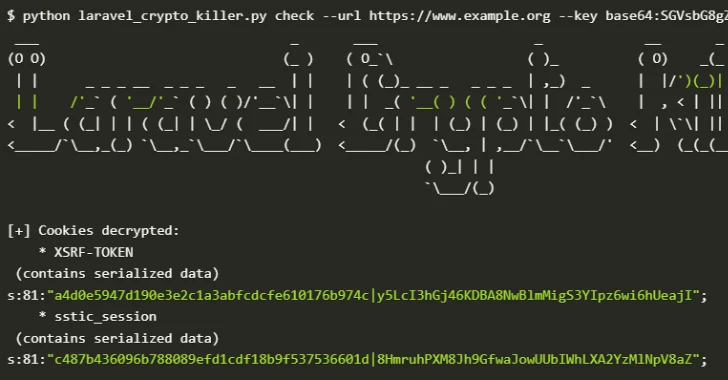
Over 600 Laravel Apps Exposed to Remote Code Execution Due to Leaked APP_KEYs on GitHub Over 600 Laravel Apps Exposed to Remote Code Execution Due to Leaked APP_KEYs on GitHub The Hacker News
Addressing Third-Party Risks: A Key Security Challenge Addressing Third-Party Risks: A Key Security Challenge The Hacker News
Over 900 FreePBX Systems Infected in Web Shell Attacks Over 900 FreePBX Systems Infected in Web Shell Attacks The Hacker News
Microsoft Addresses 206 Security Vulnerabilities, Including Zero-Days Microsoft Addresses 206 Security Vulnerabilities, Including Zero-Days The Hacker News

Categories

  • Cyber Security News
  • How To?
  • Security Week News
  • The Hacker News

Recent Posts

  • 13 ClickFix Traps Discovered on Compromised WordPress Site
  • CrowdStrike Secures Major Acquisition of Zscaler
  • RevStealer Malware Masquerades as Claude AI App
  • Exploitation of SAP and Cisco Vulnerabilities Raises Concerns
  • Webworm Modifies SoftEther VPN to Conceal Remote Access

Pages

  • About Us – Contact
  • Disclaimer
  • Privacy Policy
  • Terms and Rules

Archives

  • November 2026
  • October 2026
  • September 2026
  • August 2026
  • July 2026
  • June 2026
  • May 2026
  • April 2026
  • March 2026
  • February 2026
  • January 2026
  • December 2025
  • November 2025
  • October 2025
  • September 2025
  • August 2025
  • July 2025
  • June 2025
  • May 2025

Recent Posts

  • 13 ClickFix Traps Discovered on Compromised WordPress Site
  • CrowdStrike Secures Major Acquisition of Zscaler
  • RevStealer Malware Masquerades as Claude AI App
  • Exploitation of SAP and Cisco Vulnerabilities Raises Concerns
  • Webworm Modifies SoftEther VPN to Conceal Remote Access

Pages

  • About Us – Contact
  • Disclaimer
  • Privacy Policy
  • Terms and Rules

Categories

  • Cyber Security News
  • How To?
  • Security Week News
  • The Hacker News

Copyright © 2026 Cyber Web Spider Blog – News.

Powered by PressBook Masonry Dark