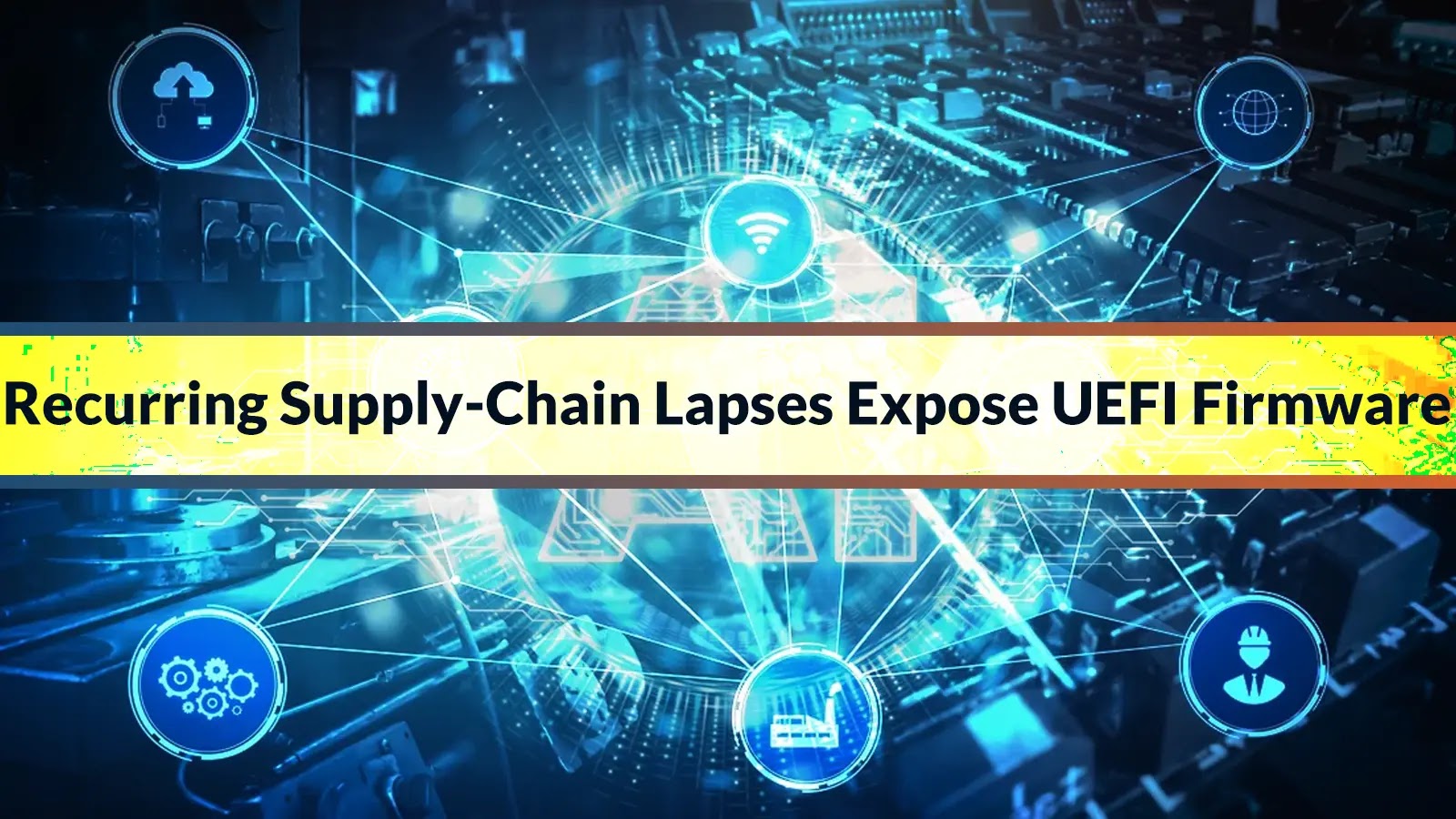
A disturbing sample of safety failures within the firmware provide chain continues to reveal thousands and thousands of units to pre-OS threats, probably undermining the inspiration of laptop safety.
Between 2022 and 2025, a sequence of vital safety incidents involving leaked cryptographic keys and mismanagement of signing certificates has created an setting the place attackers can probably bypass UEFI Safe Boot and different firmware safety mechanisms, gaining management of methods earlier than the working system even masses.
These recurring lapses embody expired certificates in Intel’s Platform Properties Evaluation Module (PPAM), main knowledge breaches exposing Boot Guard non-public keys from Lenovo, Supermicro, MSI, and most lately Clevo, and the widespread deployment of check keys in manufacturing environments.
The implications are significantly extreme as a result of firmware-level compromises can survive working system reinstallations and stay undetected by standard safety instruments, creating good persistence mechanisms for classy menace actors.
Binarly researchers recognized that these provide chain points will not be remoted incidents however symbolize systemic failures in cryptographic key administration throughout the UEFI ecosystem.
Their evaluation revealed that regardless of some enhancements following public disclosures, weak firmware continues to ship in new units, with some producers nonetheless utilizing compromised keys years after their publicity.
The interconnected nature of the firmware provide chain amplifies these safety dangers. When one vendor’s keys are compromised, the affect incessantly extends past their very own merchandise to have an effect on units from a number of producers.
This cross-contamination impact was significantly evident within the aftermath of the MSI breach in 2023, the place leaked keys affected units from a number of manufacturers.
The PKfail Epidemic: Check Keys in Manufacturing Environments
Maybe essentially the most widespread of those points was the “PKfail” vulnerability found in 2024, which affected roughly 10% of all firmware photographs analyzed by Binarly.
The vulnerability stemmed from the inclusion of check Platform Keys (PKs) in manufacturing firmware, together with keys clearly labeled with warnings comparable to “DO NOT TRUST – AMI Check PK.”
The severity of this concern is highlighted by an excerpt from one such certificates present in manufacturing firmware:-
Model 3 (0x2)
Serial Quantity:
55:fb:ef:87:81:23:00:84:47:17:0b:b3:cd:87:3a:f4
Signature Algorithm: sha256WithRSAEncryption
Issuer: CN=DO NOT TRUST – AMI Check PK
Validity
Not Earlier than: Nov 8 23:32:53 2017 GMT
Not After : Nov 8 23:32:52 2021 GMT
The untrusted AMI check Platform Key (Supply – Binarly)
The issue prolonged past AMI-based units, with comparable check keys found throughout a number of producers’ merchandise.
Binarly’s evaluation of firmware photographs throughout completely different years revealed a troubling development: the share of affected units was steadily rising till their public disclosure in July 2024, after which it skilled a pointy decline.
Share of units affected by PKfail over time (Supply – Binarly)
Whereas the ecosystem has made progress addressing these issues-with no PKfail-affected units detected in 2025 so far-other critical vulnerabilities proceed to emerge.
Most lately, Binarly researchers found a reminiscence corruption vulnerability in a Microsoft-signed UEFI module (CVE-2025-3052), demonstrating that the ecosystem stays weak to Carry Your Personal Susceptible Driver (BYOVD) assaults even on the firmware stage.
The vulnerability behind CVE-2025-3052 (Supply – Binarly)
The mix of those recurring provide chain lapses creates an ideal storm for safety: compromised keys permit attackers to signal malicious firmware that seems reputable, whereas reminiscence corruption vulnerabilities present pathways to execute code that may disable safety mechanisms like Safe Boot.
As demonstrated in Binarly’s proof of idea, an attacker exploiting these vulnerabilities can set up persistent bootkits that survive working system reinstallation and achieve privileged entry to the system.
How SOC Groups Save Time and Effort with ANY.RUN – Dwell webinar for SOC groups and managers