Skip to content
  • Home
  • Cyber Map
  • About Us – Contact
  • Disclaimer
  • Terms and Rules
  • Privacy Policy
Cyber Web Spider Blog – News

Cyber Web Spider Blog – News

Globe Threat Map provides a real-time, interactive 3D visualization of global cyber threats. Monitor DDoS attacks, malware, and hacking attempts with geo-located arcs on a rotating globe. Stay informed with live logs and archive stats.

  • Home
  • Cyber Map
  • Cyber Security News
  • Security Week News
  • The Hacker News
  • How To?
  • Toggle search form
Hackers Can Compromise Chromium Browsers in Windows by Loading Arbitrary Extensions

Hackers Can Compromise Chromium Browsers in Windows by Loading Arbitrary Extensions

Posted on September 24, 2025September 24, 2025 By CWS

Chromium-based browsers, together with Chrome, Edge, and Courageous, handle put in extensions through JSON choice information saved below %AppDatapercentGoogleUser DataDefaultPreferences (for domain-joined machines) or Safe Preferences (for standalone methods). 

Synacktiv analysis signifies that by straight altering these information, attackers could make the browser load any extensions with out the person’s consent or involvement from the Chrome Internet Retailer.

A profitable compromise includes three technical conditions: pre-calculating the extension ID, producing legitimate Message Authentication Codes (MACs) for each the extension entry and the developer_mode flag, and bypassing enterprise coverage controls. 

Extension IDs are deterministically derived from the extension’s public key or set up path through a SHA-256 hash truncated to 32 hex characters and mapped to a customized alphabet (a–p). 

Chromium’s integrity checks use an HMAC seeded with a static worth extracted from assets.pak particularly useful resource file 146 to signal important JSON keys. 

Attackers reverse this HMAC algorithm to compute legitimate MACs for extensions.settings. and extensions.developer_mode, enabling silent registration of their backdoor extension.

Developer mode within the browser extension

Bypassing Chrome Extension GPO Controls

Enterprise environments generally deploy GPOs to whitelist or blacklist extensions via insurance policies like ExtensionInstallAllowlist and ExtensionInstallBlocklist. 

Three superior evasion strategies undermine these controls:

Synacktiv acknowledged that by reusing the RSA public key of a corporate-approved extension (e.g., Adobe Acrobat Reader for Chrome), an attacker generates an identical extension ID. 

They then inject a malicious unpacked extension below that ID, bypassing hash-based allowlists.

When an unpacked extension and a store-installed extension share the identical ID, Chromium prioritizes the unpacked model. This collision permits attackers to override trusted plugins stealthily.

Extension Stomping

Home windows applies insurance policies in LSDOU order. Though Chrome insurance policies reside below HKCUSoftwarePoliciesGoogleChrome, a neighborhood administrator can delete or modify the registry entries, eradicating allowlists or blocklists to sidestep coverage enforcement completely.

Leveraging these strategies, menace actors can deploy extensions that intercept community visitors, scrape session cookies, execute background service staff, and inject content material scripts into focused net pages. 

A proof-of-concept toolkit from Synacktiv demonstrates distant SMB-based deployment alongside a customized C2 server, enabling JavaScript execution throughout the browser course of and undermining protections akin to App-Certain Encryption.

Securing towards this vector requires monitoring for unauthorized adjustments to choice information, validating registry coverage integrity, and detecting anomalous extension registrations. 

With out such detection mechanisms, “phantom extensions” supply a stealthy, persistent path to enterprise-wide knowledge exfiltration and lateral motion.

Comply with us on Google Information, LinkedIn, and X for each day cybersecurity updates. Contact us to characteristic your tales.


Cyber Security News Tags:Arbitrary, Browsers, Chromium, Compromise, Extensions, Hackers, Loading, Windows

Post navigation

Previous Post: GeoServer Flaw Exploited in US Federal Agency Hack
Next Post: Two Critical Flaws Uncovered in Wondershare RepairIt Exposing User Data and AI Models

Related Posts

Threat Actors Weaponize LNK Files With New REMCOS Variant That Bypasses AV Engines Threat Actors Weaponize LNK Files With New REMCOS Variant That Bypasses AV Engines Cyber Security News
CISA Warns of Linux Sudo Vulnerability Actively Exploited in Attacks CISA Warns of Linux Sudo Vulnerability Actively Exploited in Attacks Cyber Security News
Phishing Alert: Fake Party Invites Install Remote Access Software Phishing Alert: Fake Party Invites Install Remote Access Software Cyber Security News
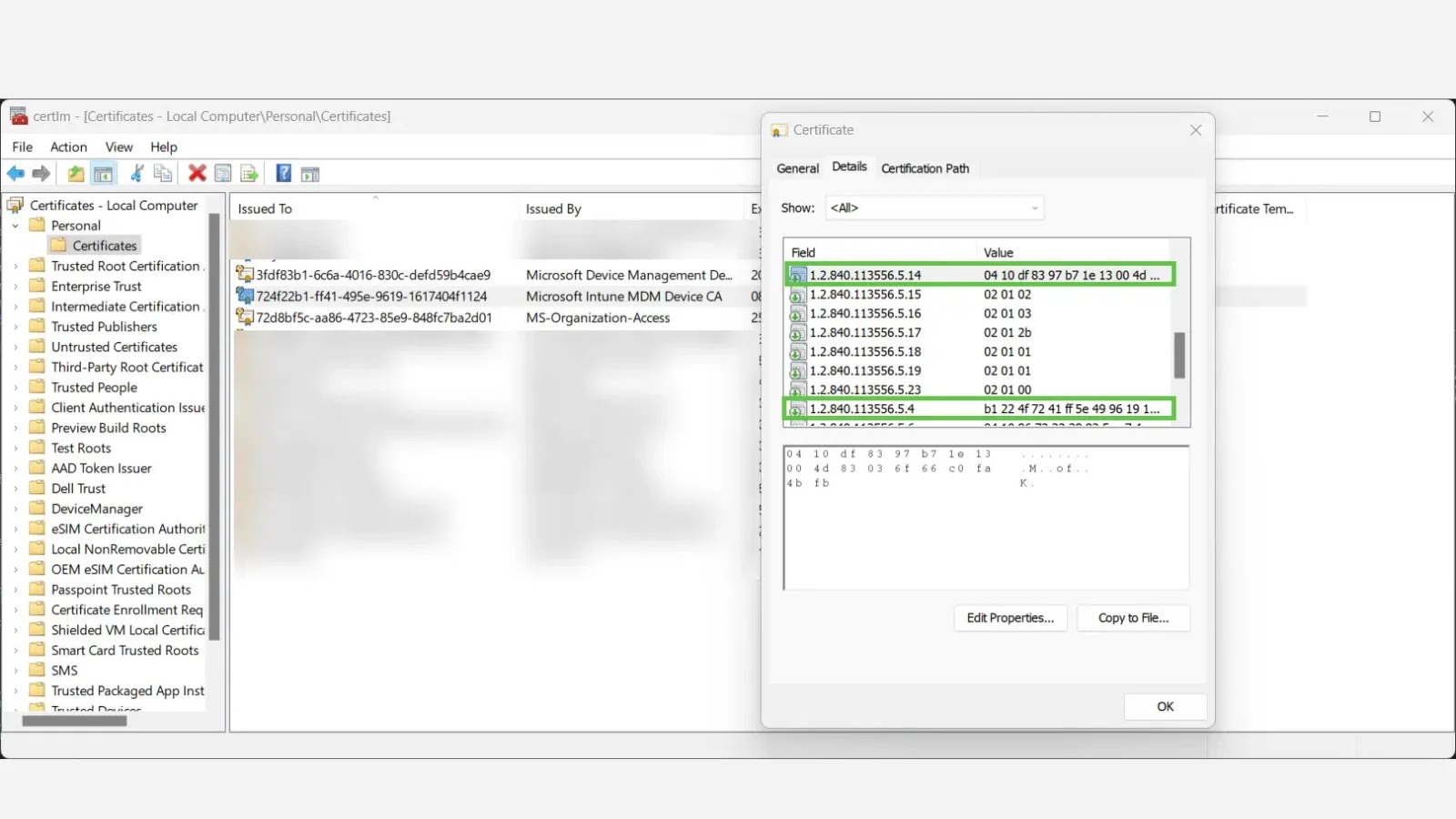
Microsoft Intune MDM and Entra ID Leveraged to Elevate your Trust in Device Identity Microsoft Intune MDM and Entra ID Leveraged to Elevate your Trust in Device Identity Cyber Security News
New Report Warns of Threat Actors Actively Adopting AI Platforms to Attack Manufacturing Companies New Report Warns of Threat Actors Actively Adopting AI Platforms to Attack Manufacturing Companies Cyber Security News
Threat Actors Compromise Xubuntu Website To Deliver Malicious Windows Executable Threat Actors Compromise Xubuntu Website To Deliver Malicious Windows Executable Cyber Security News

Categories

  • Cyber Security News
  • How To?
  • Security Week News
  • The Hacker News

Recent Posts

  • Critical F5 BIG-IP Vulnerability Now Actively Exploited
  • China-Linked Cyber Threats Target Southeast Asian Government
  • AI-Powered VoidLink Malware Framework Poses New Cyber Threat
  • Top Log Monitoring Tools to Watch in 2026
  • Top Spam Filter Tools for 2026: A Comprehensive Guide

Pages

  • About Us – Contact
  • Disclaimer
  • Privacy Policy
  • Terms and Rules

Archives

  • March 2026
  • February 2026
  • January 2026
  • December 2025
  • November 2025
  • October 2025
  • September 2025
  • August 2025
  • July 2025
  • June 2025
  • May 2025

Recent Posts

  • Critical F5 BIG-IP Vulnerability Now Actively Exploited
  • China-Linked Cyber Threats Target Southeast Asian Government
  • AI-Powered VoidLink Malware Framework Poses New Cyber Threat
  • Top Log Monitoring Tools to Watch in 2026
  • Top Spam Filter Tools for 2026: A Comprehensive Guide

Pages

  • About Us – Contact
  • Disclaimer
  • Privacy Policy
  • Terms and Rules

Categories

  • Cyber Security News
  • How To?
  • Security Week News
  • The Hacker News

Copyright © 2026 Cyber Web Spider Blog – News.

Powered by PressBook Masonry Dark