Skip to content
  • Home
  • Cyber Map
  • About Us – Contact
  • Disclaimer
  • Terms and Rules
  • Privacy Policy
Cyber Web Spider Blog – News

Cyber Web Spider Blog – News

Globe Threat Map provides a real-time, interactive 3D visualization of global cyber threats. Monitor DDoS attacks, malware, and hacking attempts with geo-located arcs on a rotating globe. Stay informed with live logs and archive stats.

  • Home
  • Cyber Map
  • Cyber Security News
  • Security Week News
  • The Hacker News
  • How To?
  • Toggle search form
STX RAT Emerges as a Stealthy Cyber Threat

STX RAT Emerges as a Stealthy Cyber Threat

Posted on April 9, 2026 By CWS

The cybersecurity landscape in 2026 faces a significant challenge with the emergence of STX RAT, a new remote access trojan. This malicious software combines concealed remote desktop capabilities and credential-stealing features to infiltrate and compromise target systems discreetly.

Understanding the Mechanics of STX RAT

Named after the Start of Text (STX) magic byte x02, which it appends to all messages sent to its command-and-control (C2) server, STX RAT showcases the meticulous design behind its operations. Initially detected in late February 2026, the malware was discovered in a financial sector organization. Attackers attempted to introduce it via a browser-downloaded VBScript file.

This VBScript initiated a chain reaction, dropping a JScript file that acquired a TAR archive and called upon a PowerShell loader to execute the final payload in memory. By March, Malwarebytes had identified an additional campaign distributing STX RAT through compromised FileZilla installers, indicating the operators were utilizing multiple delivery methods concurrently.

Technical Sophistication and Evasion Techniques

Research conducted by eSentire’s Threat Response Unit (TRU) revealed STX RAT’s technical complexity. The malware employs extensive anti-analysis strategies, such as artifact checks for VirtualBox, VMware, and QEMU environments. Upon detecting these, it executes a “jitter exit,” pausing randomly before terminating, which complicates automated sandbox analysis.

In addition to virtual machine detection, STX RAT leverages an AMSI-ghosting technique to subvert security tools by patching a core Windows RPC function. The malware remains invisible in the Alt+Tab switcher and Taskbar. Once activated, it communicates with a C2 server, transmitting critical system details including hostname, OS version, and antivirus status.

Exploiting Hidden Remote Desktop Features

The most concerning aspect of STX RAT is its Hidden Virtual Network Computing (HVNC) module, enabling attackers to control a victim’s computer without detection. Unlike traditional remote desktop software, HVNC operates a separate session in the background, ensuring all malicious activities are unseen by the user.

Through commands like start_hvnc, key_press, and mouse_input, attackers can interact with the hidden session to execute various tasks. This architecture, combined with the credential-stealing module, allows attackers to maintain a persistent presence on compromised systems.

Security teams are advised to block the known C2 IP address 95.216.51.236 and associated Tor onion address to mitigate this threat. Deploying YARA detection rules from eSentire’s TRU and disabling unnecessary VBScript and JScript can reduce the attack surface. Continuous monitoring for suspicious activities is essential to detect and prevent early infections.


Cyber Security News Tags:cyber attack, Cybersecurity, financial sector, hidden remote desktop, InfoStealer, Malware, network security, remote access trojan, security threat, STX RAT

Post navigation

Previous Post: UAT-10362: LucidRook Malware Targets Taiwanese NGOs
Next Post: GitLab Urges Update to Fix Critical Security Flaws

Related Posts

Critical DNN Platform Vulnerability Let Attackers Execute Malicious Scripts Critical DNN Platform Vulnerability Let Attackers Execute Malicious Scripts Cyber Security News
Microsoft Teams Set to Introduce Highly Anticipated Multitasking Functionality Microsoft Teams Set to Introduce Highly Anticipated Multitasking Functionality Cyber Security News
Threat Actors Attacking Windows Systems With New Multi-Stage Malware Framework PS1Bot Threat Actors Attacking Windows Systems With New Multi-Stage Malware Framework PS1Bot Cyber Security News
Akira Ransomware Uses SonicWall VPN Exploit to Exfiltrate Sensitive Data Akira Ransomware Uses SonicWall VPN Exploit to Exfiltrate Sensitive Data Cyber Security News
NAKIVO v11.1 Introduces Stronger Protection for Virtual Environments NAKIVO v11.1 Introduces Stronger Protection for Virtual Environments Cyber Security News
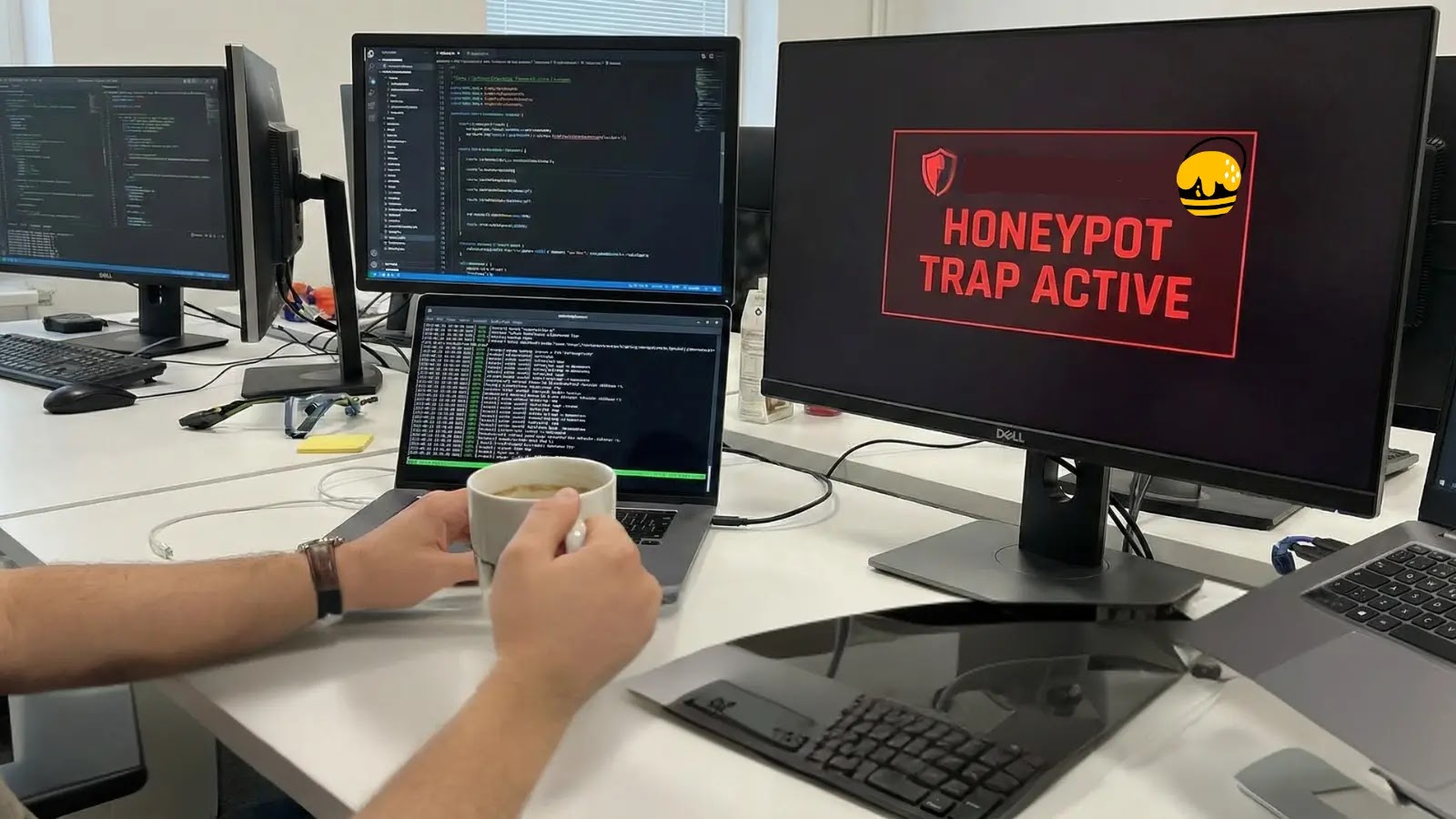
Hackers Trapped in Resecurity’s Honeypot During Targeted Attack on Employee Network Hackers Trapped in Resecurity’s Honeypot During Targeted Attack on Employee Network Cyber Security News

Categories

  • Cyber Security News
  • How To?
  • Security Week News
  • The Hacker News

Recent Posts

  • GitLab Urges Update to Fix Critical Security Flaws
  • STX RAT Emerges as a Stealthy Cyber Threat
  • UAT-10362: LucidRook Malware Targets Taiwanese NGOs
  • New MacOS Malware Targets Crypto Wallets with ClickFix
  • Palo Alto Networks & SonicWall Fix Critical Security Bugs

Pages

  • About Us – Contact
  • Disclaimer
  • Privacy Policy
  • Terms and Rules

Archives

  • April 2026
  • March 2026
  • February 2026
  • January 2026
  • December 2025
  • November 2025
  • October 2025
  • September 2025
  • August 2025
  • July 2025
  • June 2025
  • May 2025

Recent Posts

  • GitLab Urges Update to Fix Critical Security Flaws
  • STX RAT Emerges as a Stealthy Cyber Threat
  • UAT-10362: LucidRook Malware Targets Taiwanese NGOs
  • New MacOS Malware Targets Crypto Wallets with ClickFix
  • Palo Alto Networks & SonicWall Fix Critical Security Bugs

Pages

  • About Us – Contact
  • Disclaimer
  • Privacy Policy
  • Terms and Rules

Categories

  • Cyber Security News
  • How To?
  • Security Week News
  • The Hacker News

Copyright © 2026 Cyber Web Spider Blog – News.

Powered by PressBook Masonry Dark