Skip to content
  • Home
  • Cyber Map
  • About Us – Contact
  • Disclaimer
  • Terms and Rules
  • Privacy Policy
Cyber Web Spider Blog – News

Cyber Web Spider Blog – News

Globe Threat Map provides a real-time, interactive 3D visualization of global cyber threats. Monitor DDoS attacks, malware, and hacking attempts with geo-located arcs on a rotating globe. Stay informed with live logs and archive stats.

  • Home
  • Cyber Map
  • Cyber Security News
  • Security Week News
  • The Hacker News
  • How To?
  • Toggle search form
OpenClaw Faces Ongoing Security Challenges with New Open Source Tool

OpenClaw Faces Ongoing Security Challenges with New Open Source Tool

Posted on February 19, 2026 By CWS

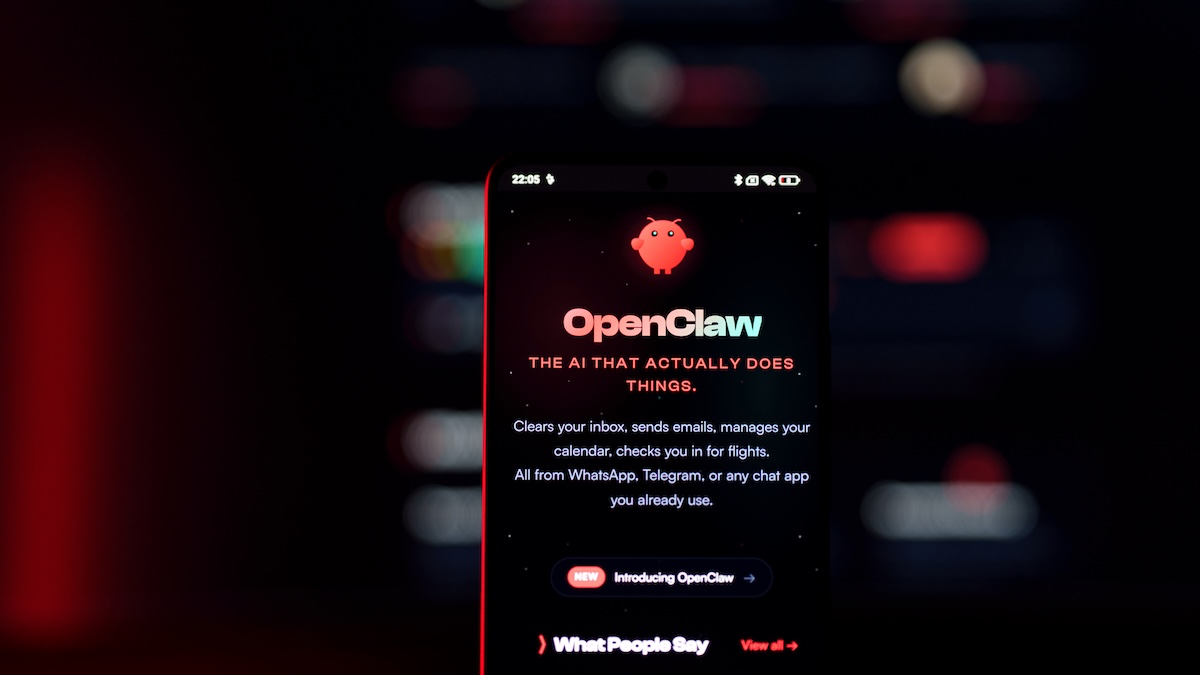
OpenClaw, a widely-used autonomous personal assistant, has been in the spotlight due to persistent security issues. Initially known as Clawdbot, and later Moltbot, the product has undergone several transformations. On February 14, 2026, Peter Steinberger, the developer behind OpenClaw, announced his decision to join OpenAI, as OpenClaw transitions into the OpenClaw Foundation with backing from OpenAI. Despite these changes, security concerns continue to plague the platform.

Security Vulnerabilities and Patches

OpenClaw has made efforts to address its security vulnerabilities. On January 25, the platform fixed CVE-2026-25157 in version 2026.1.25. Shortly thereafter, a one-click remote code execution flaw (CVE-2026-25253) was identified and addressed in version 2026.1.29. Despite these updates, Depthfirst and Snyk discovered that the patch was incomplete, leading to another fix in version 2026.1.30. This latest version also resolved additional issues, such as CVE-2026-25593 and CVE-2026-25475.

While these updates reflect a commitment to security improvement, the presence of older, vulnerable versions in use poses ongoing risks. Users running versions prior to 2026.1.30 remain exposed to various threats, underscoring the need for regular updates and vigilant security practices.

Common Misconfigurations and User Awareness

Beyond patched vulnerabilities, OpenClaw suffers from common AI agent misconfigurations. Many users may not be aware of these potential security gaps or lack the technical skills to mitigate them. In a January LinkedIn article, security expert Jamieson O’Reilly highlighted these issues, emphasizing the importance of awareness and proper configuration to ensure security.

The widespread use of outdated versions and misconfigurations suggests a gap in user knowledge and the adoption of security best practices. Ensuring users are informed and equipped to secure their systems remains a critical challenge.

Introducing SecureClaw: A New Security Tool

In response to these challenges, Alex Polyakov, founder and CTO of Adversa AI, introduced SecureClaw, an open-source tool designed to enhance OpenClaw’s security. Available on GitHub, SecureClaw conducts comprehensive audits and hardening checks, addressing a wide range of documented threats. The tool aligns with frameworks like OWASP, MITRE ATLAS, and CoSAI, providing users with actionable insights and defenses.

While SecureClaw does not claim to solve all security issues, such as prompt injection, it offers a multi-layered defense strategy, significantly increasing security for OpenClaw deployments. This proactive approach aims to equip users with the resources necessary to safeguard their systems.

Overall, OpenClaw’s combination of utility and vulnerability necessitates ongoing dialogue and action to improve security practices. As the platform evolves, efforts like SecureClaw represent a step forward in addressing these pervasive challenges.


Security Week News Tags:AI, AI security, ClawHavoc, CVE, Cybersecurity, InfoStealer, Open Source, OpenAI, OpenClaw, SecureClaw, Security, Vulnerabilities

Post navigation

Previous Post: Android Malware Poses Threat to Mobile Banking Users
Next Post: Critical Flaw in API Keys Plugin Enables Account Takeovers

Related Posts

Ox Security Bags M Series B to Tackle Appsec Alert Fatigue  Ox Security Bags $60M Series B to Tackle Appsec Alert Fatigue  Security Week News
Cyberattack Foiled at Poland’s Nuclear Research Facility Cyberattack Foiled at Poland’s Nuclear Research Facility Security Week News
Robo-Advisor Betterment Discloses Data Breach Robo-Advisor Betterment Discloses Data Breach Security Week News
Chrome Sandbox Escape Earns Researcher 0,000 Chrome Sandbox Escape Earns Researcher $250,000 Security Week News
Google Pays 0,000 in Rewards for Two Chrome Vulnerabilities Google Pays $100,000 in Rewards for Two Chrome Vulnerabilities Security Week News
NHS Investigating Oracle EBS Hack Claims as Hackers Name Over 40 Alleged Victims NHS Investigating Oracle EBS Hack Claims as Hackers Name Over 40 Alleged Victims Security Week News

Categories

  • Cyber Security News
  • How To?
  • Security Week News
  • The Hacker News

Recent Posts

  • Fortinet Addresses Critical FortiClient EMS Vulnerability
  • 36 Malicious npm Packages Exploit Databases for Persistent Access
  • Node.js Developers Face Advanced Social Engineering Threat
  • Hackers Exploit Code Leak to Spread Malware via GitHub
  • Fortinet Issues Patch for Critical FortiClient EMS Vulnerability

Pages

  • About Us – Contact
  • Disclaimer
  • Privacy Policy
  • Terms and Rules

Archives

  • April 2026
  • March 2026
  • February 2026
  • January 2026
  • December 2025
  • November 2025
  • October 2025
  • September 2025
  • August 2025
  • July 2025
  • June 2025
  • May 2025

Recent Posts

  • Fortinet Addresses Critical FortiClient EMS Vulnerability
  • 36 Malicious npm Packages Exploit Databases for Persistent Access
  • Node.js Developers Face Advanced Social Engineering Threat
  • Hackers Exploit Code Leak to Spread Malware via GitHub
  • Fortinet Issues Patch for Critical FortiClient EMS Vulnerability

Pages

  • About Us – Contact
  • Disclaimer
  • Privacy Policy
  • Terms and Rules

Categories

  • Cyber Security News
  • How To?
  • Security Week News
  • The Hacker News

Copyright © 2026 Cyber Web Spider Blog – News.

Powered by PressBook Masonry Dark