Skip to content
  • Home
  • Cyber Map
  • About Us – Contact
  • Disclaimer
  • Terms and Rules
  • Privacy Policy
Cyber Web Spider Blog – News

Cyber Web Spider Blog – News

Globe Threat Map provides a real-time, interactive 3D visualization of global cyber threats. Monitor DDoS attacks, malware, and hacking attempts with geo-located arcs on a rotating globe. Stay informed with live logs and archive stats.

  • Home
  • Cyber Map
  • Cyber Security News
  • Security Week News
  • The Hacker News
  • How To?
  • Toggle search form
Langflow Vulnerability Exploited Within Hours of Revelation

Langflow Vulnerability Exploited Within Hours of Revelation

Posted on March 20, 2026 By CWS

A critical security flaw in Langflow has rapidly become a target for exploitation, occurring within 20 hours of its public exposure. This highlights the quick pace at which cybercriminals leverage newly discovered vulnerabilities.

The flaw, identified as CVE-2026-33017 and scoring 9.3 on the CVSS scale, is due to a lack of authentication and code injection issues, potentially leading to remote code execution. Langflow’s advisory notes that the POST /api/v1/build_public_tmp/{flow_id}/flow endpoint permits the creation of public flows without authentication.

Details of the Langflow Security Flaw

The vulnerability manifests when an attacker provides a data parameter allowing control over flow data, which contains arbitrary Python code executed without sandboxing. This affects all versions up to 1.8.1 of the open-source AI platform, with a fix implemented in version 1.9.0.dev8.

Security researcher Aviral Srivastava, who reported the flaw on February 26, 2026, draws a distinction from CVE-2025-3248, another serious Langflow vulnerability. The root cause of CVE-2026-33017 involves an exec() call, similar to CVE-2025-3248, and the flaw arises from its unauthenticated endpoint design.

The Immediate Impact of the Exploit

Exploitation allows attackers to execute arbitrary code with server-level privileges through a single HTTP request. This can lead to unauthorized access to environment variables, data manipulation, and potential backdoor creation.

Srivastava emphasizes the ease of exploiting this vulnerability using a weaponized curl command, requiring just one HTTP POST request with malicious Python code. Cloud security firm Sysdig observed the first exploitation attempts within 20 hours of the advisory’s release on March 17, 2026.

Future Outlook and Security Measures

The rapid exploitation of CVE-2026-33017 reflects a broader trend of shrinking time-to-exploit windows, with Rapid7’s 2026 report indicating a drop in median time from vulnerability publication to exploitation.

Organizations are urged to promptly update to the latest patched version, review environment variables, rotate keys and passwords, and implement network restrictions for Langflow instances. These steps are essential to mitigate risks and protect valuable data from breaches.

The continued targeting of vulnerabilities like CVE-2025-3248 and CVE-2026-33017 underscores the need for robust security measures in AI and open-source tools, as they become increasingly attractive to threat actors.


The Hacker News Tags:AI security, CISA, CVE-2026-33017, Cybersecurity, data breach, Exploit, Langflow, Malware, open-source tools, patch deployment, remote code execution, security flaw, Sysdig, Threat Actors, Vulnerability

Post navigation

Previous Post: Windows 11 Update Causes Sign-In Issues for Key Apps
Next Post: Navia Data Breach Affects Millions

Related Posts

AI-Powered Slopoly Malware Boosts Hive0163’s Ransomware Tactics AI-Powered Slopoly Malware Boosts Hive0163’s Ransomware Tactics The Hacker News
New AI-Targeted Cloaking Attack Tricks AI Crawlers Into Citing Fake Info as Verified Facts New AI-Targeted Cloaking Attack Tricks AI Crawlers Into Citing Fake Info as Verified Facts The Hacker News
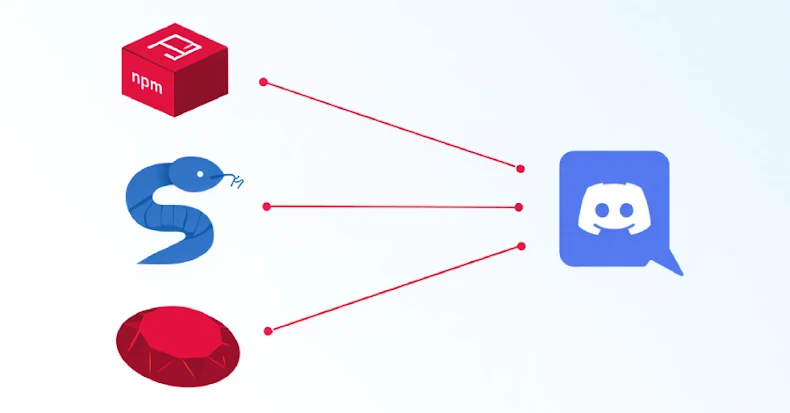
npm, PyPI, and RubyGems Packages Found Sending Developer Data to Discord Channels npm, PyPI, and RubyGems Packages Found Sending Developer Data to Discord Channels The Hacker News
Beware the Hidden Risk in Your Entra Environment Beware the Hidden Risk in Your Entra Environment The Hacker News
New ClickFix Variant Exploits Network Drives New ClickFix Variant Exploits Network Drives The Hacker News
Stealthy DEAD#VAX Malware Uses AsyncRAT via IPFS VHDs Stealthy DEAD#VAX Malware Uses AsyncRAT via IPFS VHDs The Hacker News

Categories

  • Cyber Security News
  • How To?
  • Security Week News
  • The Hacker News

Recent Posts

  • Magento Sites Breached by Major Cyberattack
  • Navia Data Breach Affects Millions
  • Langflow Vulnerability Exploited Within Hours of Revelation
  • Windows 11 Update Causes Sign-In Issues for Key Apps
  • Enhanced Android Security, Cybercrime Operations, UK Cyber Rules

Pages

  • About Us – Contact
  • Disclaimer
  • Privacy Policy
  • Terms and Rules

Archives

  • March 2026
  • February 2026
  • January 2026
  • December 2025
  • November 2025
  • October 2025
  • September 2025
  • August 2025
  • July 2025
  • June 2025
  • May 2025

Recent Posts

  • Magento Sites Breached by Major Cyberattack
  • Navia Data Breach Affects Millions
  • Langflow Vulnerability Exploited Within Hours of Revelation
  • Windows 11 Update Causes Sign-In Issues for Key Apps
  • Enhanced Android Security, Cybercrime Operations, UK Cyber Rules

Pages

  • About Us – Contact
  • Disclaimer
  • Privacy Policy
  • Terms and Rules

Categories

  • Cyber Security News
  • How To?
  • Security Week News
  • The Hacker News

Copyright © 2026 Cyber Web Spider Blog – News.

Powered by PressBook Masonry Dark