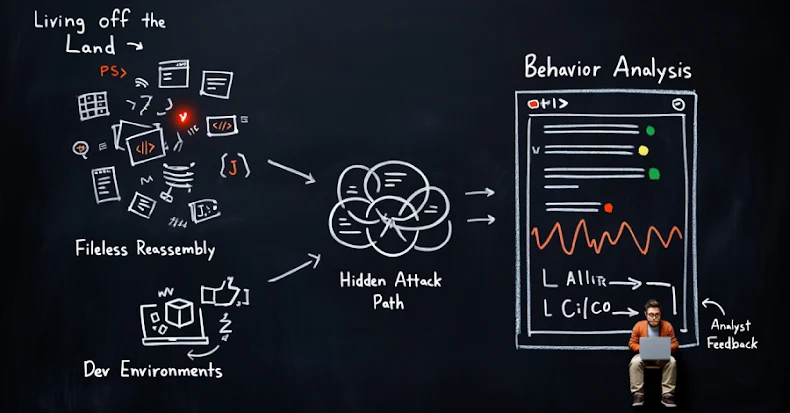
The prominence of developer workstations as crucial enterprise tools has been underscored by recent cyber incidents. In March 2026, a sophisticated attack by the TeamPCP threat group highlighted this vulnerability. By targeting LiteLLM, a widely-used AI development library, they transformed developer environments into credential harvesting grounds, leveraging malware that exploited plaintext secrets.
The attack, executed on LiteLLM versions 1.82.7 and 1.82.8 on PyPI, was straightforward yet impactful. By planting infostealer malware, attackers captured sensitive data like SSH keys and cloud credentials as developers installed or updated the package. The rapid removal of these packages by PyPI did little to minimize the damage, with 1,705 packages unknowingly pulling the compromised versions as dependencies, affecting organizations globally.
The Allure of Developer Machines
Developer workstations are attractive targets due to their dense storage of plaintext credentials. The Shai-Hulud campaigns previously revealed this vulnerability, where compromised systems were found to have a significant number of secrets. These systems, often CI/CD runners, store credentials in various locations, easily exploitable through compromised dependencies and malicious plugins.
Attackers utilize sophisticated methods to discover credentials in .env files, shell profiles, and other common storage locations. The systematic nature of these attacks mirrors the approach used by security teams to identify vulnerabilities, with a focus on extracting valuable credential data.
Mitigating Credential Risks
To counteract such threats, organizations must implement continuous protection measures across all developer endpoints. GitGuardian suggests extending secrets security to these machines, emphasizing the need for regular scanning of both code repositories and local environments where secrets might reside.
Using tools like ggshield, developers can scan local repositories and filesystems to identify and rectify exposed credentials. Additionally, implementing pre-commit hooks can prevent new leaks, establishing a proactive defense mechanism against potential breaches.
Future Proofing Against Attacks
Effective credential management involves more than just detection. Moving credentials to centralized vaults ensures better control and monitoring, with automated policies for rotation and access. Moreover, reducing the prevalence of static secrets by adopting ephemeral credentials can significantly lower the risk of credential theft.
Techniques such as using honeytokens can provide early warnings of attacks, allowing for quicker response times. As developer machines become integral to critical infrastructure, treating them with the same security rigor as production systems is vital for mitigating future supply chain attacks.
The LiteLLM incident serves as a stark reminder of the evolving threat landscape. By adopting comprehensive security strategies, organizations can safeguard against similar threats and protect their critical developer environments from exploitation.