Skip to content
  • Home
  • Cyber Map
  • About Us – Contact
  • Disclaimer
  • Terms and Rules
  • Privacy Policy
Cyber Web Spider Blog – News

Cyber Web Spider Blog – News

Globe Threat Map provides a real-time, interactive 3D visualization of global cyber threats. Monitor DDoS attacks, malware, and hacking attempts with geo-located arcs on a rotating globe. Stay informed with live logs and archive stats.

  • Home
  • Cyber Map
  • Cyber Security News
  • Security Week News
  • The Hacker News
  • How To?
  • Toggle search form
Microsoft 365 Device Code Phishing Targets Over 340 Organizations

Microsoft 365 Device Code Phishing Targets Over 340 Organizations

Posted on March 25, 2026 By CWS

Cybersecurity experts are highlighting a sophisticated device code phishing operation targeting Microsoft 365 users across more than 340 organizations in countries like the U.S., Canada, Australia, New Zealand, and Germany. The campaign, identified by Huntress since February 19, 2026, is rapidly expanding, using Cloudflare Workers for redirects and Railway’s platform-as-a-service for credential theft.

Widespread Targeting of Key Sectors

This phishing effort has primarily focused on industries such as construction, non-profits, real estate, manufacturing, financial services, healthcare, legal, and government. It employs various deceptive strategies, including construction bid lures, fake landing pages, DocuSign impersonation, voicemail notifications, and manipulation of Microsoft Forms.

The attack exploits the OAuth device authorization flow, granting attackers persistent access tokens. This method is particularly dangerous as it allows unauthorized access even after password resets, leveraging legitimate Microsoft infrastructure to avoid detection.

Technical Details and Attack Progression

The phishing attack begins with an email containing a malicious URL, wrapped using legitimate security vendor redirect services to bypass spam filters. Victims are directed through a series of redirects involving compromised sites and Cloudflare Workers before reaching the final malicious destination.

Upon arrival, victims are prompted to enter a device code on the official Microsoft device code authentication page. The code is automatically rendered on the page, simplifying the attacker’s task of deceiving users into providing their credentials and authentication codes.

Emergence of EvilTokens Platform

Huntress has linked the attack to a new phishing-as-a-service platform called EvilTokens, which recently emerged on Telegram. This service not only facilitates phishing campaigns but also provides tools to bypass spam filters and conceal phishing links using open redirect vulnerabilities.

Palo Alto Networks Unit 42 has also reported similar campaigns, identifying sophisticated anti-analysis techniques that complicate detection, such as disabling right-click, blocking developer tools, and manipulating browser functionalities.

The rising threat of device code phishing underscores the need for organizations to scrutinize sign-in logs, revoke compromised tokens, and block malicious IPs to mitigate risks.

For more insights into cybersecurity threats, follow us on Google News, Twitter, and LinkedIn. Stay informed and protect your digital assets.

The Hacker News Tags:cloud services, credential harvesting, Cybersecurity, device code, EvilTokens, Microsoft 365, OAuth abuse, PhaaS, phishing campaign, Railway

Post navigation

Previous Post: Firefox 149.0 Introduces Free VPN with 50GB Limit
Next Post: Onit Security Secures $11M for Advanced Cyber Solutions

Related Posts

GootLoader Is Back, Using a New Font Trick to Hide Malware on WordPress Sites GootLoader Is Back, Using a New Font Trick to Hide Malware on WordPress Sites The Hacker News
LOTUSLITE Backdoor Targets U.S. Policy Entities Using Venezuela-Themed Spear Phishing LOTUSLITE Backdoor Targets U.S. Policy Entities Using Venezuela-Themed Spear Phishing The Hacker News
Researchers Expose TA585’s MonsterV2 Malware Capabilities and Attack Chain Researchers Expose TA585’s MonsterV2 Malware Capabilities and Attack Chain The Hacker News
Hard-Coded ‘b’ Password in Sitecore XP Sparks Major RCE Risk in Enterprise Deployments Hard-Coded ‘b’ Password in Sitecore XP Sparks Major RCE Risk in Enterprise Deployments The Hacker News
Google Adds Multi-Layered Defenses to Secure GenAI from Prompt Injection Attacks Google Adds Multi-Layered Defenses to Secure GenAI from Prompt Injection Attacks The Hacker News
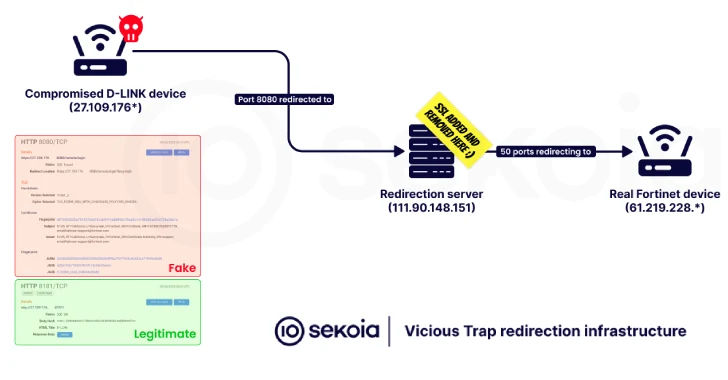
ViciousTrap Uses Cisco Flaw to Build Global Honeypot from 5,300 Compromised Devices ViciousTrap Uses Cisco Flaw to Build Global Honeypot from 5,300 Compromised Devices The Hacker News

Categories

  • Cyber Security News
  • How To?
  • Security Week News
  • The Hacker News

Recent Posts

  • AI Advances Cyber Threats, But Identity Remains Key
  • AI Security Innovations Shine at 2026 Cyber Awards
  • Onit Security Secures $11M for Advanced Cyber Solutions
  • Microsoft 365 Device Code Phishing Targets Over 340 Organizations
  • Firefox 149.0 Introduces Free VPN with 50GB Limit

Pages

  • About Us – Contact
  • Disclaimer
  • Privacy Policy
  • Terms and Rules

Archives

  • March 2026
  • February 2026
  • January 2026
  • December 2025
  • November 2025
  • October 2025
  • September 2025
  • August 2025
  • July 2025
  • June 2025
  • May 2025

Recent Posts

  • AI Advances Cyber Threats, But Identity Remains Key
  • AI Security Innovations Shine at 2026 Cyber Awards
  • Onit Security Secures $11M for Advanced Cyber Solutions
  • Microsoft 365 Device Code Phishing Targets Over 340 Organizations
  • Firefox 149.0 Introduces Free VPN with 50GB Limit

Pages

  • About Us – Contact
  • Disclaimer
  • Privacy Policy
  • Terms and Rules

Categories

  • Cyber Security News
  • How To?
  • Security Week News
  • The Hacker News

Copyright © 2026 Cyber Web Spider Blog – News.

Powered by PressBook Masonry Dark