Skip to content
  • Home
  • Cyber Map
  • About Us – Contact
  • Disclaimer
  • Terms and Rules
  • Privacy Policy
Cyber Web Spider Blog – News

Cyber Web Spider Blog – News

Globe Threat Map provides a real-time, interactive 3D visualization of global cyber threats. Monitor DDoS attacks, malware, and hacking attempts with geo-located arcs on a rotating globe. Stay informed with live logs and archive stats.

  • Home
  • Cyber Map
  • Cyber Security News
  • Security Week News
  • The Hacker News
  • How To?
  • Toggle search form
DeepLoad Malware Exploits ClickFix for Credential Theft

DeepLoad Malware Exploits ClickFix for Credential Theft

Posted on March 30, 2026 By CWS

The cybersecurity landscape has been shaken by the emergence of a new malware campaign utilizing the ClickFix technique to distribute a novel threat known as DeepLoad. According to researchers from ReliaQuest, Thassanai McCabe and Andrew Currie, this malware employs AI-driven obfuscation and process injection to bypass static defenses, initiating credential theft immediately upon deployment.

Malware Distribution via ClickFix Tactics

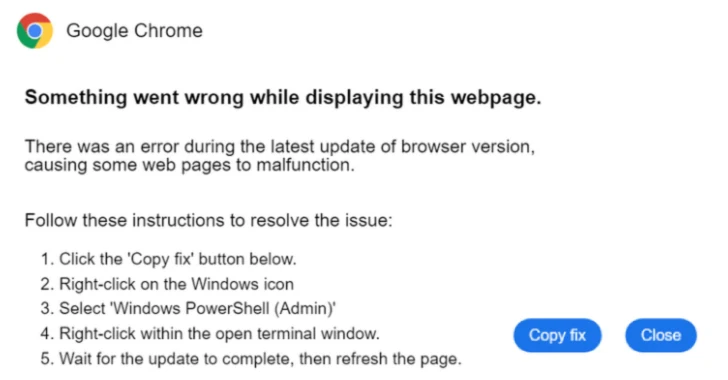
The attack begins with a ClickFix ploy that deceives users into executing PowerShell commands. This is cleverly disguised as a solution to a fictitious problem, prompting users to paste commands into the Windows Run dialog. Subsequently, a legitimate Windows tool, ‘mshta.exe’, is exploited to download and execute an obfuscated PowerShell loader.

The loader masks its true purpose through irrelevant variable assignments, likely developed using AI tools to evade detection by security systems. The malicious actors behind DeepLoad have designed it to seamlessly integrate with normal Windows operations, utilizing ‘LockAppHost.exe’, a legitimate process, to conceal its payload.

Advanced Evasion Techniques

DeepLoad employs several sophisticated methods to remain undetected. It disables PowerShell command history and directly calls core Windows functions, avoiding typical PowerShell monitoring. Additionally, it dynamically generates a secondary component using PowerShell’s Add-Type feature, compiling a temporary DLL with a randomized name.

Another stealth tactic involves asynchronous procedure call (APC) injection, allowing the malware to execute within trusted Windows processes without leaving a decoded payload on the disk. This method involves launching a target process in a suspended state, injecting shellcode, and resuming execution.

Credential Theft and Persistence

The primary objective of DeepLoad is to extract browser passwords from infected systems. It also deploys a malicious browser extension to intercept credentials entered on login pages, maintaining persistence unless manually removed. Moreover, the malware can detect and infect removable media, disguising itself as popular software installers to propagate.

DeepLoad’s persistence is further enhanced through Windows Management Instrumentation (WMI), enabling reinfection of clean systems without user or attacker intervention. This approach not only disrupts typical detection rules but also sets up a WMI event subscription to silently reinitiate attacks.

The revelation of DeepLoad coincides with reports from G DATA on a separate malware loader, Kiss Loader, which utilizes phishing emails and Internet Shortcut files to distribute its payload. While the prevalence of Kiss Loader remains uncertain, its developer claims origins in Malawi.

As these threats continue to evolve, it is crucial for organizations and individuals to remain vigilant and adopt robust cybersecurity measures to counteract such sophisticated malware campaigns.
The Hacker News Tags:AI obfuscation, browser security, ClickFix, credential theft, Cybersecurity, DeepLoad, Malware, phishing tactics, PowerShell, WMI persistence

Post navigation

Previous Post: Server Leak Uncovers TheGentlemen Ransomware Toolkit
Next Post: North Korean IT Operative’s Elaborate Job Scam Exposed

Related Posts

OpenClaw Security Flaw Allows AI Agent Hijacking OpenClaw Security Flaw Allows AI Agent Hijacking The Hacker News
Guide to Managing AI Usage in Enterprises Guide to Managing AI Usage in Enterprises The Hacker News
AI Agents Run on Secret Accounts — Learn How to Secure Them in This Webinar AI Agents Run on Secret Accounts — Learn How to Secure Them in This Webinar The Hacker News
Ghost Identities, Poisoned Accounts, & AI Agent Havoc Ghost Identities, Poisoned Accounts, & AI Agent Havoc The Hacker News
Grafana Patches CVSS 10.0 SCIM Flaw Enabling Impersonation and Privilege Escalation Grafana Patches CVSS 10.0 SCIM Flaw Enabling Impersonation and Privilege Escalation The Hacker News
Taiwan NSB Alerts Public on Data Risks from TikTok, Weibo, and RedNote Over China Ties Taiwan NSB Alerts Public on Data Risks from TikTok, Weibo, and RedNote Over China Ties The Hacker News

Categories

  • Cyber Security News
  • How To?
  • Security Week News
  • The Hacker News

Recent Posts

  • Rundll32 and WebDAV: New ClickFix Variant Evades Detection
  • OpenAI Resolves ChatGPT Data Breach and Codex Vulnerability
  • Top AWS Monitoring Tools for Optimal Cloud Performance
  • North Korean IT Operative’s Elaborate Job Scam Exposed
  • DeepLoad Malware Exploits ClickFix for Credential Theft

Pages

  • About Us – Contact
  • Disclaimer
  • Privacy Policy
  • Terms and Rules

Archives

  • March 2026
  • February 2026
  • January 2026
  • December 2025
  • November 2025
  • October 2025
  • September 2025
  • August 2025
  • July 2025
  • June 2025
  • May 2025

Recent Posts

  • Rundll32 and WebDAV: New ClickFix Variant Evades Detection
  • OpenAI Resolves ChatGPT Data Breach and Codex Vulnerability
  • Top AWS Monitoring Tools for Optimal Cloud Performance
  • North Korean IT Operative’s Elaborate Job Scam Exposed
  • DeepLoad Malware Exploits ClickFix for Credential Theft

Pages

  • About Us – Contact
  • Disclaimer
  • Privacy Policy
  • Terms and Rules

Categories

  • Cyber Security News
  • How To?
  • Security Week News
  • The Hacker News

Copyright © 2026 Cyber Web Spider Blog – News.

Powered by PressBook Masonry Dark