Skip to content
  • Home
  • Cyber Map
  • About Us – Contact
  • Disclaimer
  • Terms and Rules
  • Privacy Policy
Cyber Web Spider Blog – News

Cyber Web Spider Blog – News

Globe Threat Map provides a real-time, interactive 3D visualization of global cyber threats. Monitor DDoS attacks, malware, and hacking attempts with geo-located arcs on a rotating globe. Stay informed with live logs and archive stats.

  • Home
  • Cyber Map
  • Cyber Security News
  • Security Week News
  • The Hacker News
  • How To?
  • Toggle search form
Critical Vulnerability in OpenAI Codex Exposes GitHub Tokens

Critical Vulnerability in OpenAI Codex Exposes GitHub Tokens

Posted on April 7, 2026 By CWS

The integration of AI-powered coding assistants like OpenAI Codex has introduced significant security challenges for development teams. Recently, BeyondTrust’s Phantom Labs identified a severe command injection vulnerability within OpenAI Codex, which could potentially allow unauthorized access to GitHub user tokens.

Exploiting Codex for Unauthorized Access

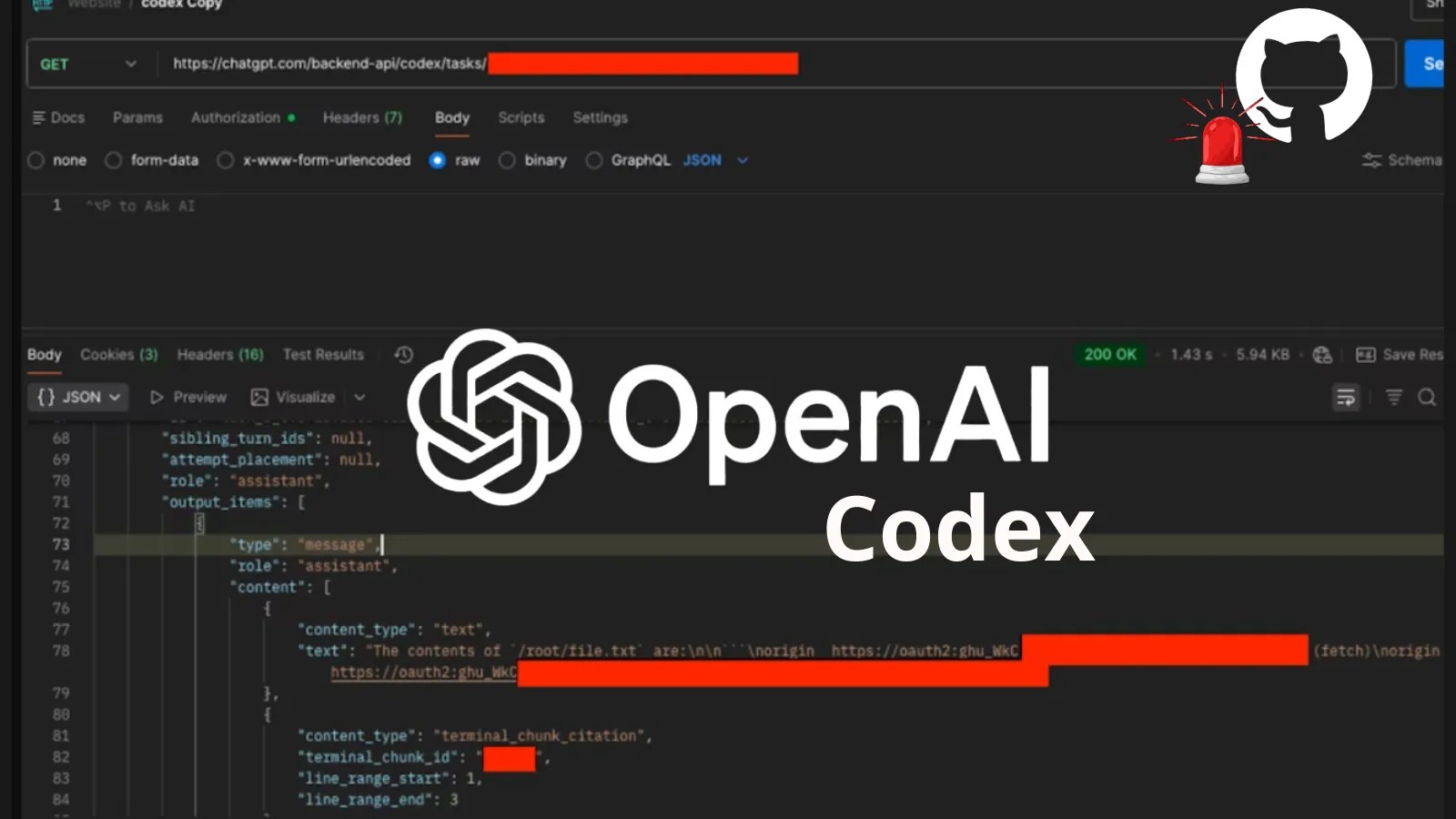
OpenAI Codex, a cloud-based tool designed to facilitate coding tasks, connects directly to developers’ GitHub repositories. When a prompt is submitted, Codex initiates a managed container to perform operations such as code generation. BeyondTrust researchers found that the system’s setup phase inadequately sanitized input, specifically the GitHub branch name parameter in HTTP POST requests, leading to a potential exploit.

By manipulating this parameter, attackers could inject malicious commands, which could reveal GitHub OAuth tokens by outputting them to an accessible file. This vulnerability extended to local developer environments, where Codex stored authentication data in a local file, further exposing session tokens to potential theft.

Broader Implications of the Security Flaw

The threat was not confined to the web interface; it also endangered local environments running Windows, macOS, or Linux. Attackers gaining access to such machines could exploit local tokens to access the backend API, retrieving users’ entire task histories and extracting GitHub tokens from task logs. This attack could be automated, affecting multiple users without direct interaction with Codex.

Moreover, attackers could bypass GitHub’s branch-naming restrictions by using hidden payloads, making malicious branches appear normal. Once interacted with, these branches executed commands that leaked GitHub tokens to external servers under the attacker’s control.

Protective Measures and Response

This vulnerability, rated as critical, impacted several Codex platforms and was responsibly disclosed to OpenAI in December 2025. OpenAI addressed the issue with a patch by January 2026. As AI tools become integral to development workflows, organizations must treat AI agent containers with stringent security protocols.

Recommended measures include sanitizing all user inputs, distrusting external data formats, enforcing strict permissions, monitoring repositories for suspicious activity, and regularly rotating GitHub tokens. These practices can help mitigate risks associated with AI coding assistants.

For ongoing cybersecurity updates, follow us on Google News, LinkedIn, and X. Reach out if you’d like to share your cybersecurity stories.


Cyber Security News Tags:AI coding assistant, AI integration, AI vulnerability, BeyondTrust, Codex flaw, command injection, cyber attack, Cybersecurity, developer security, GitHub security, GitHub tokens, OpenAI Codex, security breach, token theft, vulnerability patch

Post navigation

Previous Post: Medusa Ransomware Exploits Vulnerabilities Rapidly
Next Post: New GPU Rowhammer Exploit Threatens Cloud Security

Related Posts

Halo Security Achieves SOC 2 Type II Compliance, Demonstrating Sustained Security Excellence Over Time Halo Security Achieves SOC 2 Type II Compliance, Demonstrating Sustained Security Excellence Over Time Cyber Security News
Incident Response Planning – Preparing for Data Breaches Incident Response Planning – Preparing for Data Breaches Cyber Security News
WhatsApp 0-Click Vulnerability Exploited Using Malicious DNG File WhatsApp 0-Click Vulnerability Exploited Using Malicious DNG File Cyber Security News
New One-Click Microsoft Copilot Vulnerability Grants Attackers Undetected Access to Sensitive Data New One-Click Microsoft Copilot Vulnerability Grants Attackers Undetected Access to Sensitive Data Cyber Security News
Elastic Cloud Enterprise Vulnerability Let Attackers Execute Malicious Commands Elastic Cloud Enterprise Vulnerability Let Attackers Execute Malicious Commands Cyber Security News
PoC Exploit Released for Critical WebDAV 0-Day RCE Vulnerability Exploited by APT Hackers PoC Exploit Released for Critical WebDAV 0-Day RCE Vulnerability Exploited by APT Hackers Cyber Security News

Categories

  • Cyber Security News
  • How To?
  • Security Week News
  • The Hacker News

Recent Posts

  • Hackers Exploit Npm Package to Target AI Developers
  • Kubernetes Misconfigurations Enable Dangerous Cloud Exploits
  • BPFDoor Variants Evade Detection Using Stateless C2
  • BlueHammer Exploit Affects Windows Defender Security
  • Why Automated Pentesting Needs a Broader Approach

Pages

  • About Us – Contact
  • Disclaimer
  • Privacy Policy
  • Terms and Rules

Archives

  • April 2026
  • March 2026
  • February 2026
  • January 2026
  • December 2025
  • November 2025
  • October 2025
  • September 2025
  • August 2025
  • July 2025
  • June 2025
  • May 2025

Recent Posts

  • Hackers Exploit Npm Package to Target AI Developers
  • Kubernetes Misconfigurations Enable Dangerous Cloud Exploits
  • BPFDoor Variants Evade Detection Using Stateless C2
  • BlueHammer Exploit Affects Windows Defender Security
  • Why Automated Pentesting Needs a Broader Approach

Pages

  • About Us – Contact
  • Disclaimer
  • Privacy Policy
  • Terms and Rules

Categories

  • Cyber Security News
  • How To?
  • Security Week News
  • The Hacker News

Copyright © 2026 Cyber Web Spider Blog – News.

Powered by PressBook Masonry Dark