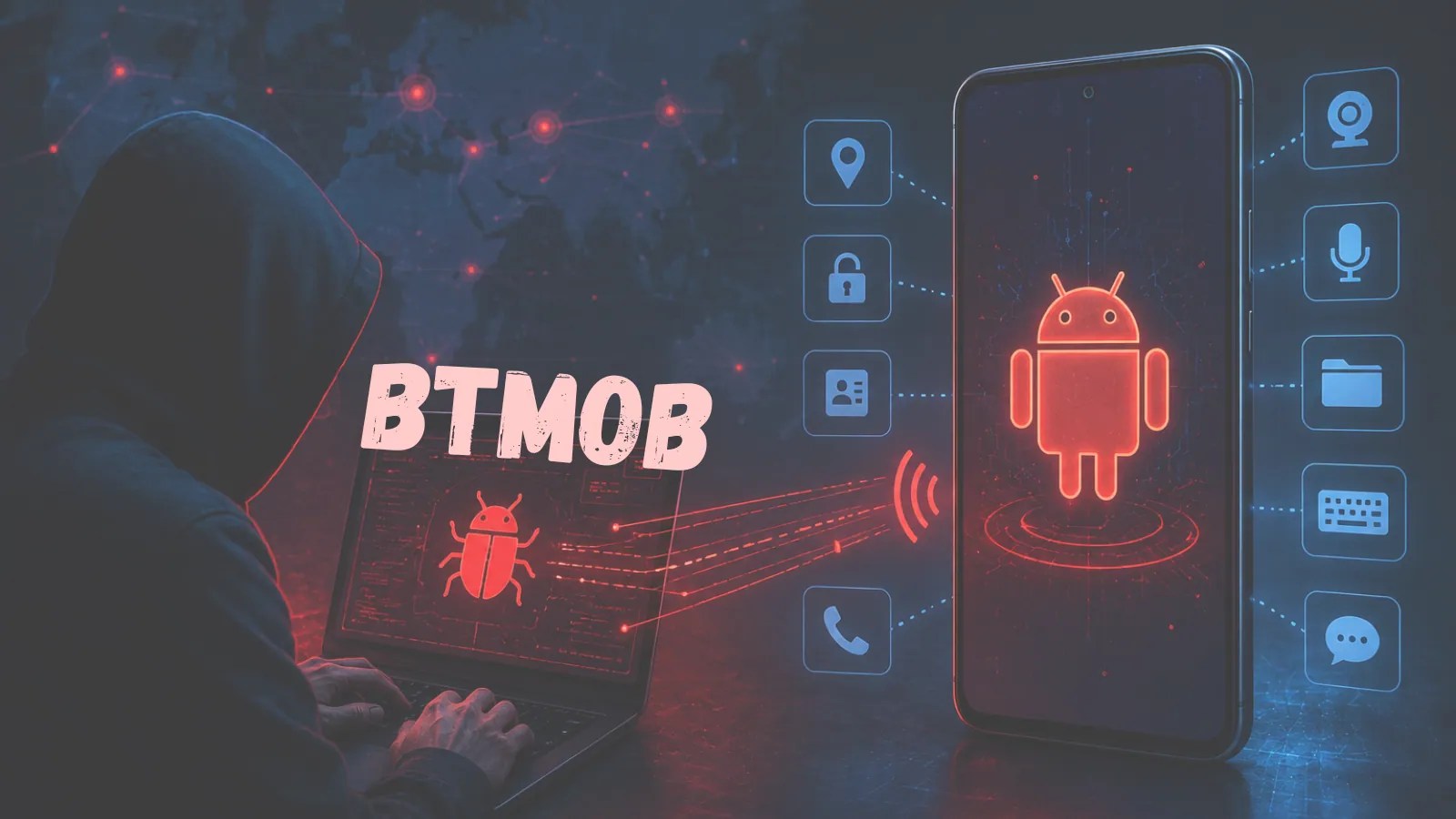
The emergence of BTMOB malware poses a critical threat to Android users by granting attackers extensive remote control over compromised devices. This sophisticated malware combines a potent remote access trojan (RAT) with a user-friendly campaign toolkit, enabling even inexperienced cybercriminals to launch attacks.
Rapid Evolution and Distribution
First identified in 2025, BTMOB has quickly adapted through a malware-as-a-service (MaaS) model. This threat has been actively distributed via global phishing campaigns, increasing its reach and effectiveness. Originating from the SpySolr family, BTMOB has been thoroughly documented since its inception early in 2025.
Unlike traditional banking trojans, BTMOB extends its capabilities beyond financial data theft, offering complete surveillance and control over the infected device. This makes it a formidable threat to both individual users and enterprises alike.
Features and Impact
BTMOB’s ability to extract sensitive information, capture screenshots, and record activity makes it comparable to desktop-grade RATs. Its commercial availability as a MaaS product, featuring an APK builder, allows buyers to create customized malicious payloads tailored to specific regions without needing coding skills.
Promoted via a dedicated webpage and social media platforms, BTMOB’s accessibility has led to lifetime licenses being sold for approximately $5,000. This low entry cost is offset by the significant potential for fraud and data theft.
Infiltration and Exploitation Tactics
BTMOB primarily utilizes social engineering and phishing to deceive users into downloading malicious applications from fake app stores. These phishing sites mimic well-known brands such as streaming services and cryptocurrency platforms, tricking users into installing harmful APKs.
Upon installation, BTMOB requests extensive permissions and exploits Android’s Accessibility Services to gain further control. This enables unauthorized actions like screen interaction, credential harvesting, and file exfiltration without the user’s consent.
Operators exploit these capabilities to conduct overlay attacks on banking apps, stealing credentials and one-time codes. Additionally, BTMOB can download extra modules to enhance its functions based on campaign objectives.
Mitigation Strategies
To combat BTMOB and similar threats, organizations should enforce strict app installation policies, limiting downloads to official stores and preventing sideloading. Educating users on the dangers of unsolicited links and suspicious apps is crucial.
Implementing mobile security solutions that detect behavioral anomalies and misuse of Accessibility Services can help identify and block BTMOB-like threats. Treating mobile devices as critical assets, akin to laptops, is essential for maintaining robust security measures.
Given BTMOB’s constant evolution, defenders must stay updated with the latest indicators of compromise and employ anomaly-based detection to swiftly identify new variants.