
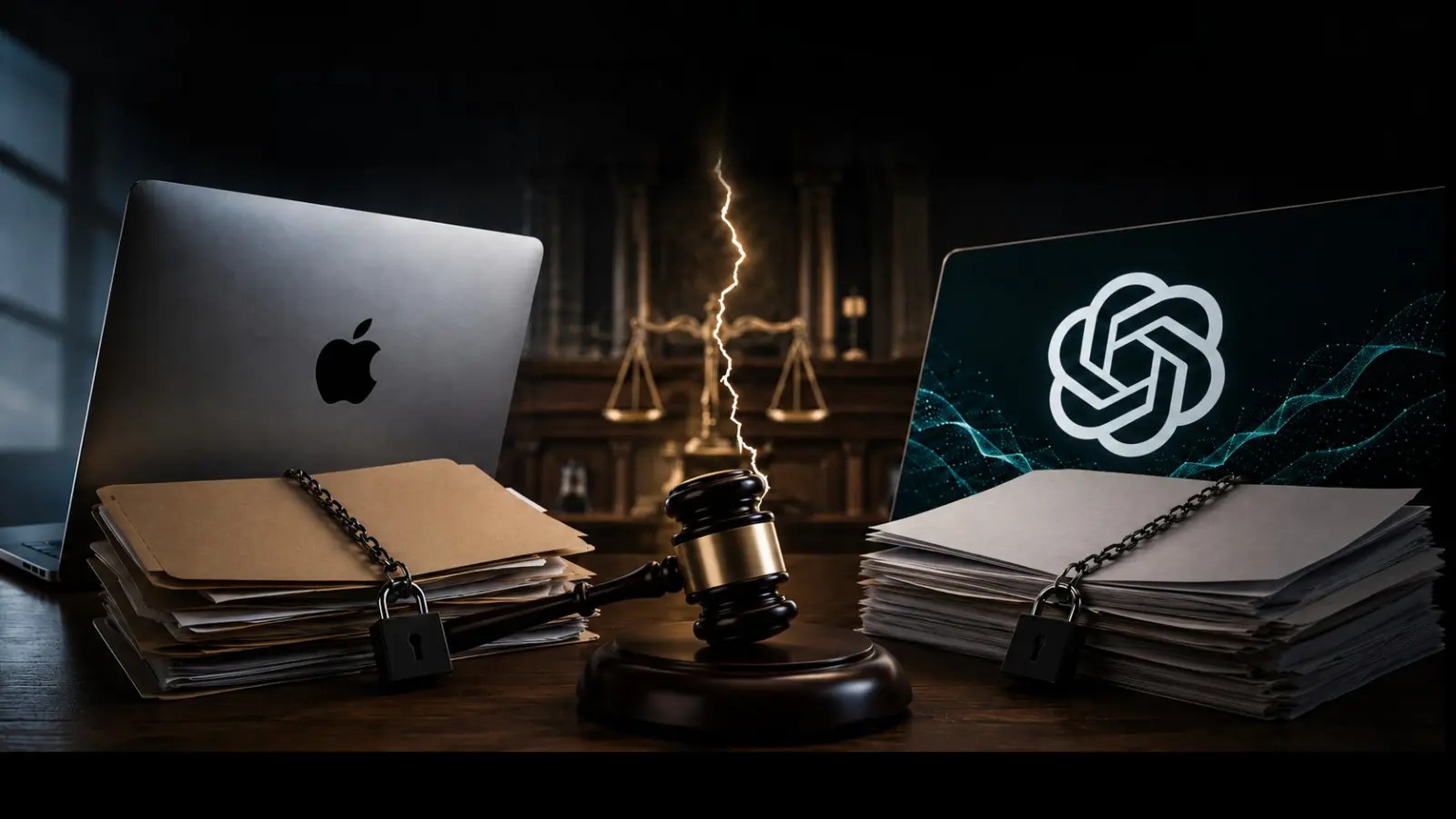
Apple has initiated a legal battle against OpenAI, claiming the AI company engaged in a systematic effort to unlawfully acquire its confidential information. The lawsuit, filed on July 10, 2026, in the U.S. District Court for the Northern District of California, accuses OpenAI of stealing trade secrets related to hardware designs and manufacturing processes through former Apple employees.
Details of the Legal Complaint
In its 41-page complaint, Apple names OpenAI, its hardware division io Products, and key individuals including Tang Yew Tan and Chang Liu as defendants. Apple alleges that this scheme involved employees at various levels, as OpenAI aimed to develop its own consumer hardware products.
Tang Yew Tan, a former Apple Vice President, is accused of leveraging insider knowledge to extract sensitive information during job interviews with Apple employees transitioning to OpenAI. He allegedly requested them to bring proprietary hardware for demonstration purposes, which raised concerns among some candidates.
Alleged Misconduct by Former Employees
Additional allegations involve Chang Liu, who reportedly retained an Apple-issued laptop post-employment and used an authentication flaw to continue accessing Apple’s network. He allegedly downloaded confidential documents and joked about the breach with colleagues instead of reporting it.
Apple also claims OpenAI misled a manufacturing partner into using Apple’s proprietary techniques and approached suppliers with insider terminology to gather more information on Apple products.
Industry Implications and Legal Actions
The lawsuit highlights the escalating competition between Apple and OpenAI, particularly as OpenAI ventures into consumer hardware. Apple seeks to address what it perceives as a recurring pattern of trade secret theft rather than an isolated incident.
Through this legal action, Apple aims to halt these practices and protect its intellectual property. The case underscores the significant legal and industry implications as tech companies vie for technological supremacy.
As the lawsuit unfolds, the tech industry will closely monitor its outcomes, which could set precedents for handling intellectual property disputes in the future.





.webp?ssl=1 "Rising Cyber Threats Target Education Sector Globally")