
Skip to content
  • Home
  • Cyber Map
  • About Us – Contact
  • Disclaimer
  • Terms and Rules
  • Privacy Policy
Cyber Web Spider Blog – News

Cyber Web Spider Blog – News

Globe Threat Map provides a real-time, interactive 3D visualization of global cyber threats. Monitor DDoS attacks, malware, and hacking attempts with geo-located arcs on a rotating globe. Stay informed with live logs and archive stats.

  • Home
  • Cyber Map
  • Cyber Security News
  • Security Week News
  • The Hacker News
  • How To?
  • Toggle search form
Xalgorix AI Tool Revolutionizes Penetration Testing

Xalgorix AI Tool Revolutionizes Penetration Testing

Posted on July 10, 2026 By CWS

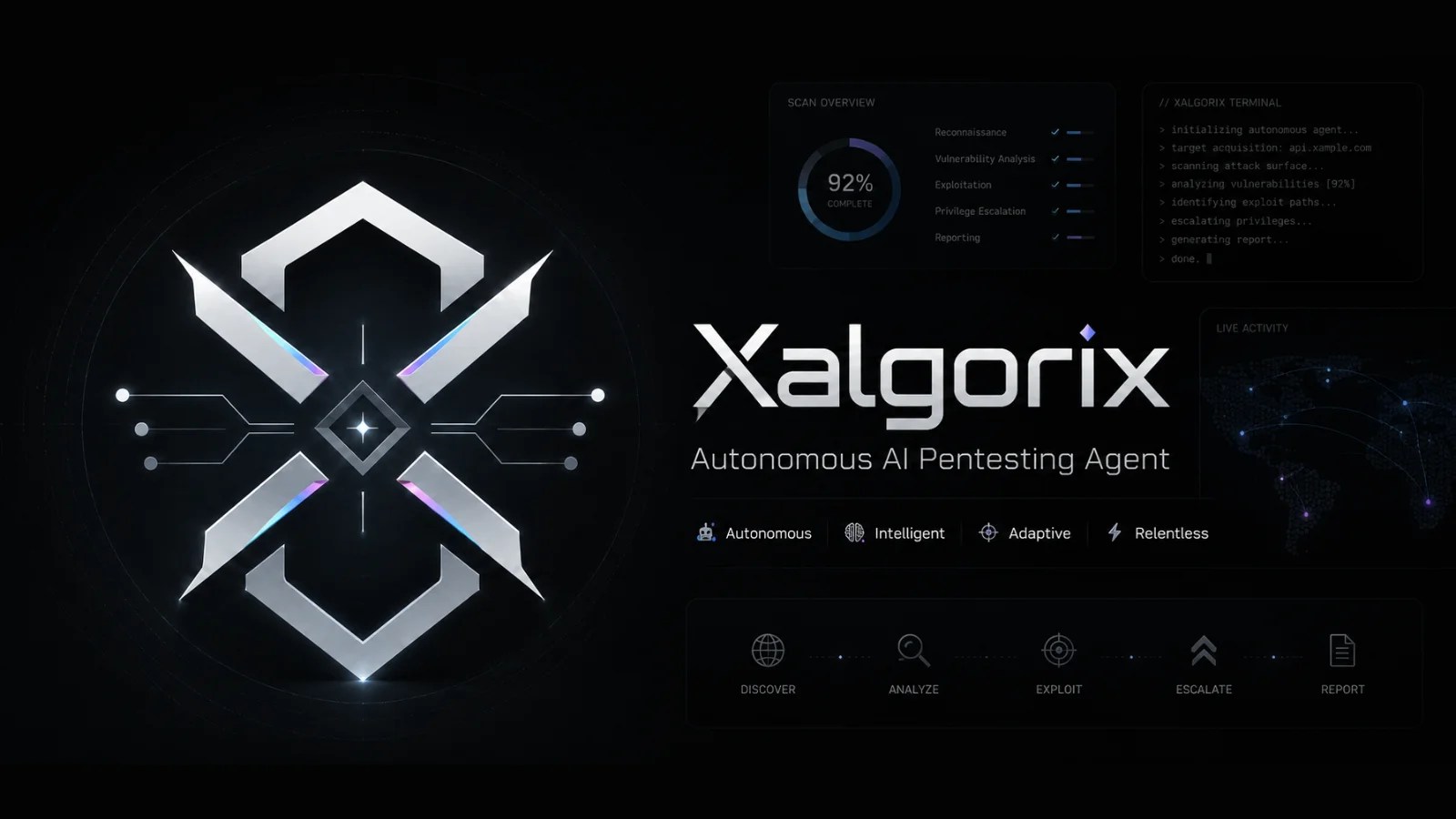
Xalgorix offers a breakthrough in penetration testing by introducing an innovative AI-driven platform designed to enhance security assessments. This open-source, self-hosted tool utilizes an autonomous LLM agent alongside an independent exploit verifier, ensuring that vulnerability reports are based on proven findings rather than assumptions.

Innovative Verification Approach

Unlike traditional vulnerability scanners that often leave security teams sorting through potential threats, Xalgorix employs a unique verification mechanism. By re-exploiting each identified vulnerability before inclusion in the final report, the tool provides concrete proof-of-concept evidence, eliminating the need for extensive manual triage.

This approach allows Xalgorix to accurately detect complex security issues, including authentication flaws, business logic errors, and chained exploits that typically elude signature-based scanners such as Nuclei or OWASP ZAP.

The Comprehensive 22-Phase Methodology

Central to Xalgorix’s effectiveness is its 22-phase testing strategy, replicating the thoroughness of skilled human penetration testers. This methodology ranges from initial reconnaissance to detailed report generation, allowing security teams to tailor their assessments according to specific needs.

The phases cover a wide array of testing areas: from reconnaissance and directory analysis, through injection and API testing, to advanced exploit verification and zero-day discovery. Phase 20 is particularly notable for confirming findings before they are reported, ensuring that the results are reliable and actionable.

Advanced Features and Flexibility

Developed using Go and TypeScript, Xalgorix is available as a standalone binary or Docker image, integrating a powerful suite of security tools like nmap, nuclei, and sqlmap. Its support for custom LLM models ensures that data remains secure within the user’s infrastructure.

Beyond standard web application testing, Xalgorix facilitates comprehensive attack surface analysis and source-code auditing, presenting findings in detailed PDF reports with CVSS scores and remediation guidance. The platform’s seamless integration with communication tools like Discord and Telegram enhances continuous monitoring capabilities.

As an open-source project hosted on GitHub, Xalgorix has garnered significant interest from the cybersecurity community. Its distinct focus on private operations and independent verification sets it apart from both open-source and commercial penetration testing solutions.

The tool’s capabilities were highlighted in a recent Hacker News feature, showcasing its potential to redefine AI-driven security assessments.


Cyber Security News Tags:22-phase methodology, AI penetration testing, Cybersecurity, exploit verification, LLM agent, Open Source, security tool, self-hosted platform, vulnerability verification, Xalgorix

Post navigation

Previous Post: Cyberattacks on Pakistani Police by China, India Hackers
Next Post: Lumen Technologies Reinvents Exposure Management Strategy

Related Posts

Search Engines are Indexing ChatGPT Conversations! Search Engines are Indexing ChatGPT Conversations! Cyber Security News
SecSuite: Comprehensive AI-Driven Security Platform Unveiled SecSuite: Comprehensive AI-Driven Security Platform Unveiled Cyber Security News
New nightMARE Python Library to Analyze Malware and Extract Intelligence Indicators New nightMARE Python Library to Analyze Malware and Extract Intelligence Indicators Cyber Security News
Wing FTP Server Vulnerability Actively Exploited Wing FTP Server Vulnerability Actively Exploited Cyber Security News
Windows RPC Flaw Risks System Access, Unpatched Windows RPC Flaw Risks System Access, Unpatched Cyber Security News
Critical Squid Proxy Vulnerability Exposed with AI Assistance Critical Squid Proxy Vulnerability Exposed with AI Assistance Cyber Security News

Categories

  • Cyber Security News
  • How To?
  • Security Week News
  • The Hacker News

Recent Posts

  • Critical GNU Guix Vulnerabilities Permit Remote Attacks
  • DHS Database Breach and Adobe’s Security Enhancements
  • WhatsApp-to-Host Attack via OpenClaw Flaws Detailed
  • Windows Shortcuts Exploit PowerShell for Remote Attacks
  • Okta Alerts on Vishing Threat to Microsoft 365 Users

Pages

  • About Us – Contact
  • Disclaimer
  • Privacy Policy
  • Terms and Rules

Archives

  • July 2026
  • June 2026
  • May 2026
  • April 2026
  • March 2026
  • February 2026
  • January 2026
  • December 2025
  • November 2025
  • October 2025
  • September 2025
  • August 2025
  • July 2025
  • June 2025
  • May 2025

Recent Posts

  • Critical GNU Guix Vulnerabilities Permit Remote Attacks
  • DHS Database Breach and Adobe’s Security Enhancements
  • WhatsApp-to-Host Attack via OpenClaw Flaws Detailed
  • Windows Shortcuts Exploit PowerShell for Remote Attacks
  • Okta Alerts on Vishing Threat to Microsoft 365 Users

Pages

  • About Us – Contact
  • Disclaimer
  • Privacy Policy
  • Terms and Rules

Categories

  • Cyber Security News
  • How To?
  • Security Week News
  • The Hacker News

Copyright © 2026 Cyber Web Spider Blog – News.

Powered by PressBook Masonry Dark