In today’s digital landscape, identity fragmentation is a critical issue affecting cybersecurity. Despite being at the heart of many major breaches, organizations struggle to determine the total effective privilege of any identity, posing significant risks. According to the 2026 Verizon Data Breach Investigations Report, credential abuse is involved in 39% of breaches, highlighting a pressing need for robust identity management strategies.
The Hidden Threat of Identity Chains
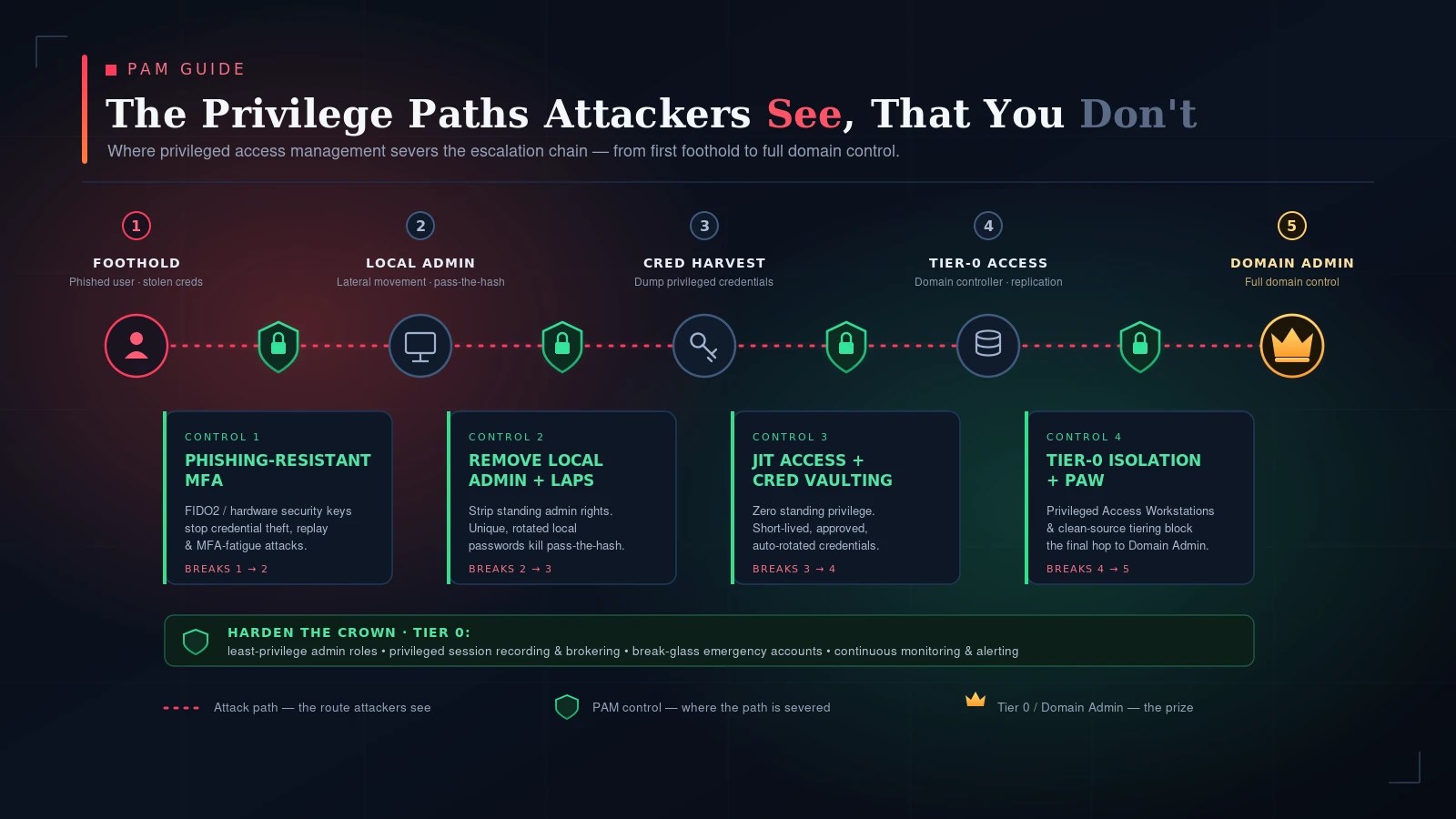
While individual over-permissioned accounts are concerning, the true danger lies in interconnected identity chains. These chains can escalate privileges and facilitate breaches, often unnoticed by traditional security tools. A marketing contractor’s compromised VPN credentials, for example, might lead to a full-scale breach through a series of seemingly unrelated steps.
Such paths, termed ‘Paths to Privilege,’ highlight the inadequacy of current security measures that view systems in isolation. Each security team, from directory to cloud, operates within its silo, missing the broader picture of interconnected risks.
The Rise of Non-Human Identities
The rapid growth of non-human identities, including service accounts and AI agents, exacerbates identity fragmentation. As these entities proliferate, often with extensive privileges, they pose a significant challenge to security governance. Research indicates that these identities now outnumber human users by substantial margins, making effective oversight increasingly difficult.
AI agents, in particular, introduce new complexities. They inherit permissions from their creators and, without proper governance, become powerful vectors for potential breaches.
Unified Platform Approach to Identity Security
To address these challenges, solutions like the Pathfinder Platform by BeyondTrust integrate multiple security functions into a cohesive system. This platform consolidates Privileged Access Management (PAM), Identity Threat Detection and Response (ITDR), and Cloud Infrastructure Entitlement Management (CIEM), among others, into a single framework.
By centralizing identity and access management, Pathfinder offers a comprehensive view of privilege paths, enabling organizations to detect and mitigate risks effectively. Its integration capabilities extend beyond internal tools, enhancing its utility as a central defense mechanism.
Conclusion: Navigating Future Security Challenges
As non-human identities and AI agents continue to grow, the need for integrated identity security solutions becomes even more critical. Organizations must prioritize a unified approach to prevent breaches and comply with global security regulations. Consolidation in identity security is not just a strategic advantage but a necessity in the face of evolving threats.
For security leaders, the path forward involves embracing comprehensive solutions like Pathfinder to ensure robust identity management and safeguard against complex attack vectors. Engaging with experts can facilitate this transition, paving the way for a secure digital future.