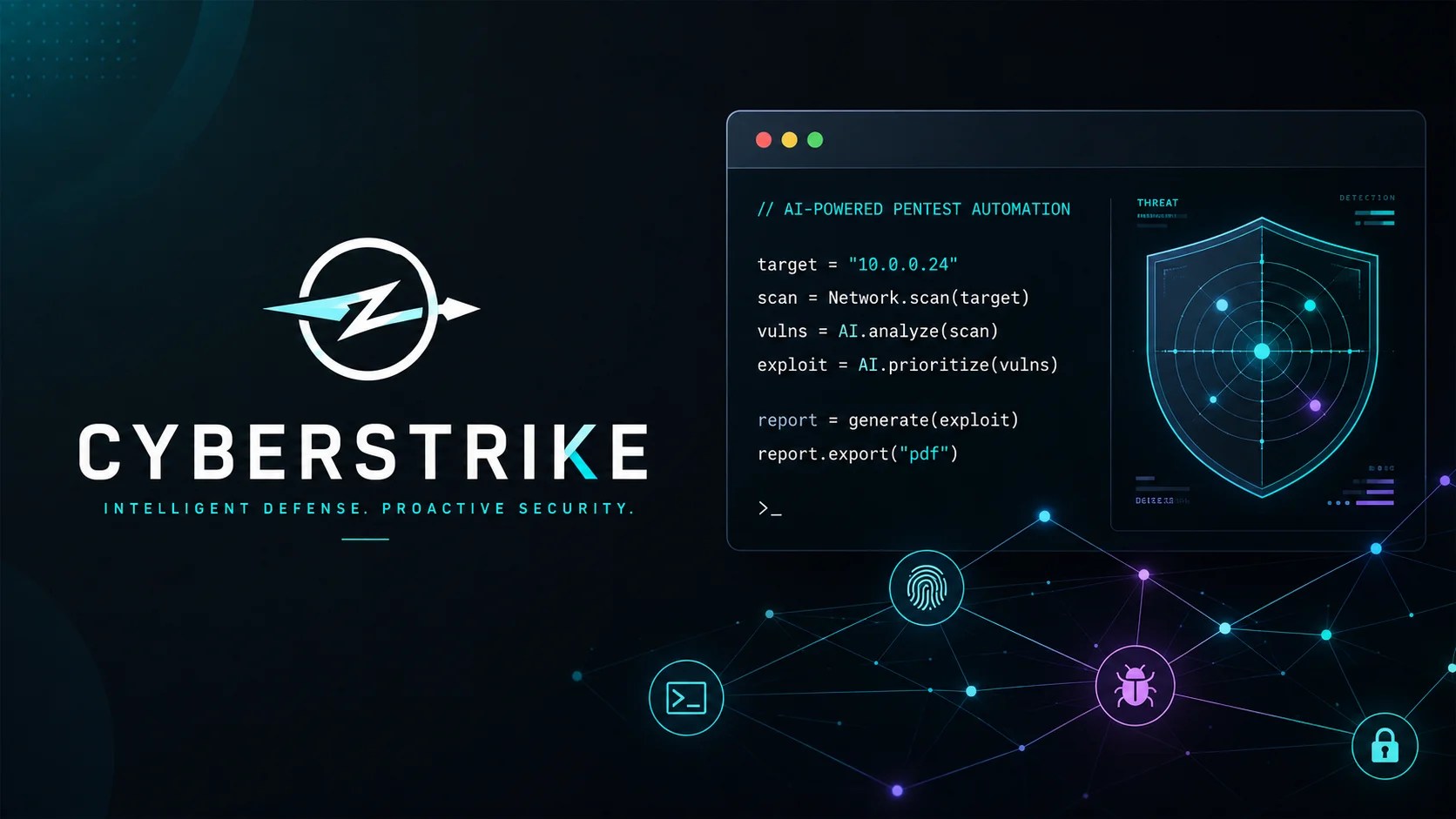
An innovative open-source initiative, CyberStrike, is redefining offensive security with its AI agent designed specifically for automated penetration testing. This tool transforms existing Claude, GPT, or LLM subscriptions into efficient autonomous red-team operators.
Revolutionary Approach to Security Testing
Unlike typical chatbot applications, CyberStrike functions as a terminal-based tool that autonomously manages reconnaissance, vulnerability discovery, exploitation, and reporting. This functionality is particularly beneficial for penetration testers, bug bounty hunters, and security teams aiming to scale their operations without constant human intervention.
To initiate the setup, users execute a simple command: npm i -g @cyberstrike-io/cyberstrike@latest && cyberstrike. This command launches a terminal interface that requests an LLM provider and an API key upon the first execution.
Intelligent Security Layer
The core innovation of CyberStrike lies in its intelligence layer, which incorporates OWASP testing methodologies, vulnerability patterns, and attack-chain reasoning into model interactions. This layer equips the AI with required security knowledge through schema normalization, context guarding, provider auto-detection, and smart tool orchestration.
The platform is compatible with over 150 AI providers and 5,300 models, including major players like Anthropic, OpenAI, Google, and Amazon Bedrock. It also supports offline options such as Ollama and LM Studio, catering to air-gapped environments.
Extensive Features and Capabilities
CyberStrike includes more than 13 domain-specific agents tailored for various testing scenarios. These agents cover web applications, mobile testing, cloud security, and internal network assessments, each adhering to industry-standard methodologies.
Supporting these agents are over 7,600 Ed25519-signed security skill files, addressing attack techniques ranging from JWT abuse to GraphQL exploitation. Additionally, the platform’s HackBrowser, a built-in Chromium browser, captures live HTTP traffic during testing.
Key features like the Bolt component enable remote execution of security tools, coordinating multiple toolkits and attack surfaces via Ed25519 key pairing. CyberStrike also offers integration with a comprehensive MCP ecosystem, enhancing capabilities with 176 additional tools.
Released under the AGPL-3.0 license, CyberStrike is available for personal and open-source use, with commercial licenses for enterprise deployment. The installation is streamlined across various platforms, including macOS, Windows, and Linux.
This platform is strictly intended for authorized security testing, aligning with its ethical use policy and code of conduct. Community contributions are welcomed to enhance its agents, skills, and MCP servers.