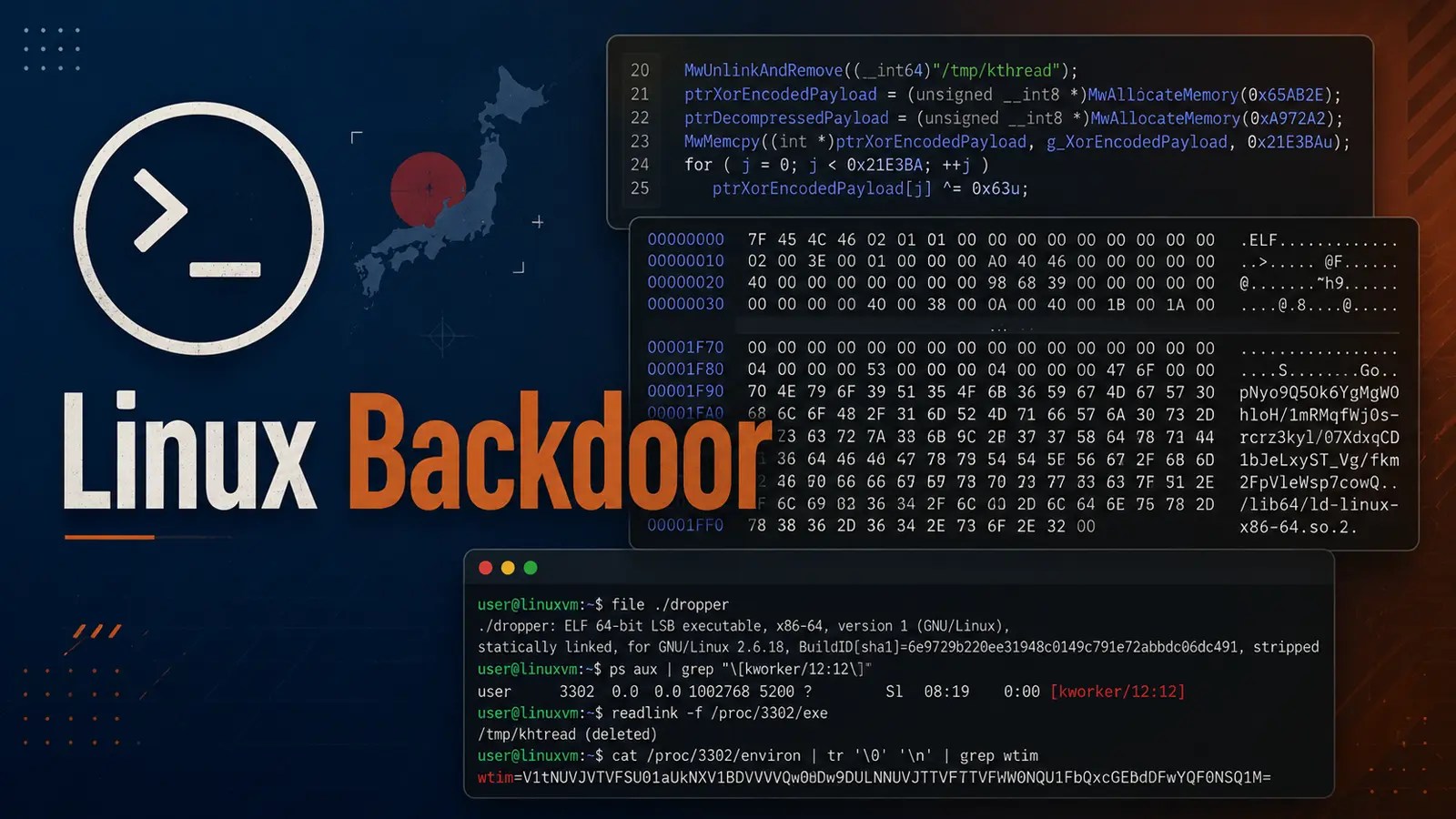
BlackTech, a well-known cyber threat group, has been identified deploying a new Linux backdoor, dubbed BlueShell, against organizations in Japan. This development underscores how traditional remote-access tools can be modified for cyber espionage activities.
How BlueShell Operates
The BlueShell malware allows attackers to execute commands, transfer files, and navigate network traffic after infiltrating a system. This poses significant risks to the affected organizations’ internal networks and sensitive information.
The attack sequence begins once the attackers gain initial access, leveraging SSH to move laterally within the victim’s environment. A loader is then employed to activate the backdoor, a technique that aligns with BlackTech’s history of seeking stealthy network infiltration, as evidenced by previous router intrusions targeting corporate infrastructures.
Technical Insights into BlueShell
According to IIJ Security Diary analysts, the malware is a Linux variant of BlueShell seen in recent attacks in May 2026. Written in Go, it is derived from an open-source remote-access tool but includes features to complicate detection and analysis.
The loader decodes and decompresses the backdoor, camouflaging it as a standard Linux kernel process. Subsequently, it removes traces of the backdoor from the filesystem, posing challenges for routine disk inspections. This method necessitates rapid system preservation and forensic analysis by cybersecurity teams.
Proxy-Based Command and Control
A standout feature of this BlueShell variant is its ability to communicate with its command-and-control server via the victim’s proxy server. This capability, absent in pre-2023 versions, has been increasingly observed in samples from 2024 onwards.
By leveraging a trusted internal proxy, malicious network traffic can mimic legitimate business activities. Security teams are advised to scrutinize unusual proxy usage, encrypted sessions, and emerging connections from Linux servers. Moreover, careful examination of SOCKS5 proxy abuse patterns is recommended.
The malware further verifies the command server’s digital certificate before continuing communications, adding a security layer. While the commands are renamed to hinder analysis, researchers have managed to deduce their functions from the Go binary data.
Implications and Defensive Measures
The recent activities emphasize the persistent threat posed by BlackTech’s operations in Japan. Organizations should consider unexpected SSH movements as urgent alerts and maintain thorough logs of endpoint, authentication, and proxy activity to trace attacker paths, even post-cleanup.
To counter such intrusions effectively, rapid containment and evidence preservation are critical. Regular reviews of proxy and SSH behaviors can enhance detection and response strategies, potentially limiting the extent of an attack before it escalates.