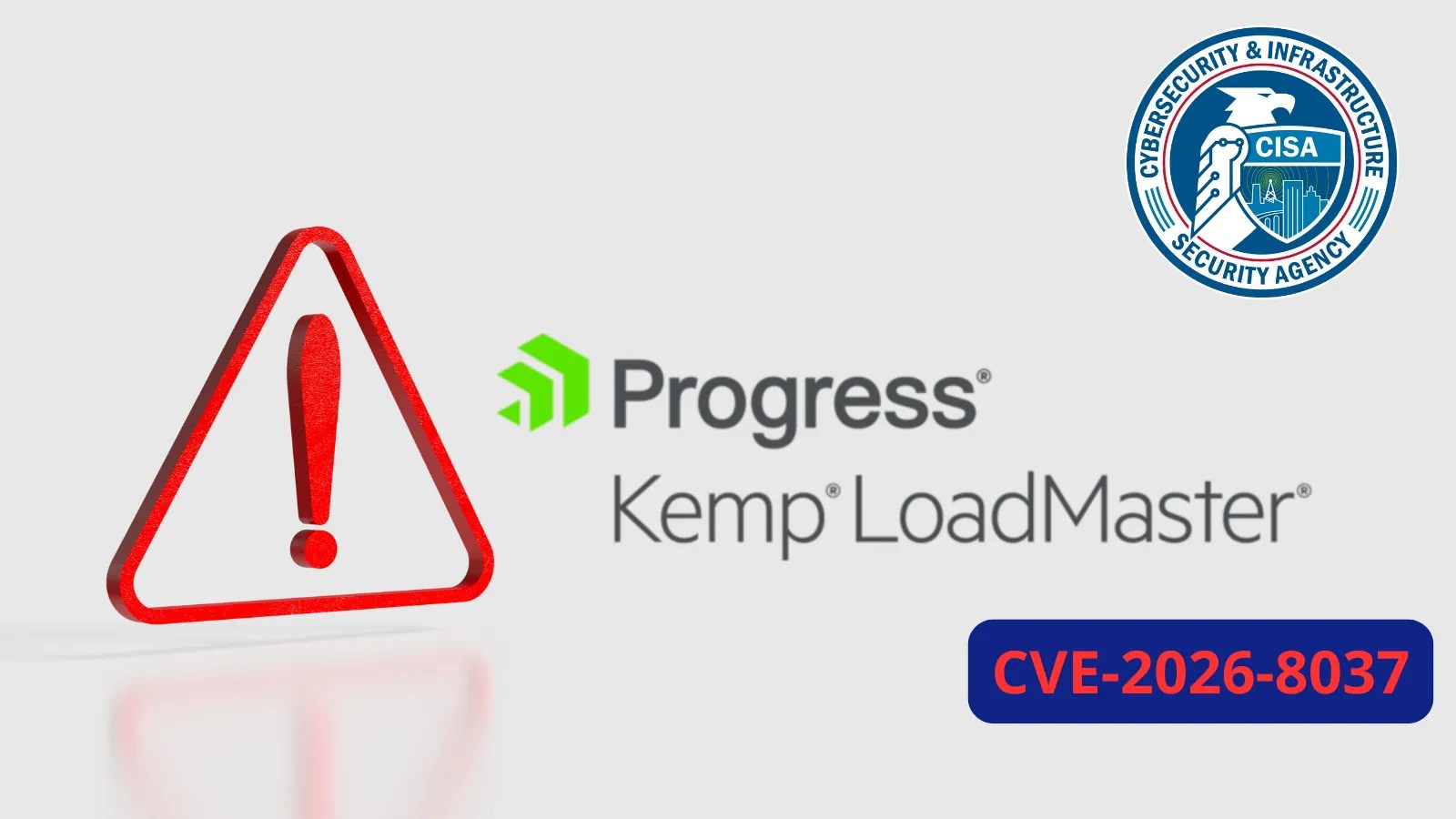
The Cybersecurity and Infrastructure Security Agency (CISA) has identified a critical vulnerability affecting Progress LoadMaster and Progress ADC devices. Known as CVE-2026-8037, this flaw has now been added to CISA’s Known Exploited Vulnerabilities catalog due to observed attempts to target exposed systems.
Understanding the Vulnerability
This critical flaw involves a command injection vulnerability that could allow unauthorized users to execute arbitrary commands on compromised LoadMaster appliances. With a CVSS severity score of 9.6, it is classified as a critical risk. The vulnerability affects the application delivery controller and load balancer functions of LoadMaster, which are pivotal for managing and securing network traffic in many organizations.
The flaw arises from inadequate input sanitization across multiple command endpoints, permitting attackers to inject operating system commands through specially crafted data. Notably, exploitation of this vulnerability does not require authentication, exposing internet-facing devices to increased risk.
Exploitation and Response
Discovered by security researchers on June 4, 2026, the vulnerability saw a functional proof-of-concept exploit released by June 29, 2026. Subsequent reports from eSentire’s Threat Response Unit indicated attempts to exploit the flaw, although no confirmed post-compromise activities were initially observed.
Attackers have reportedly launched hundreds of exploitation attempts from various IP addresses globally, actively scanning for vulnerable LoadMaster deployments to achieve remote code execution. This prompted CISA to add the vulnerability to its catalog on August 7, 2026, with a remediation deadline set for August 10, 2026, for U.S. federal civilian agencies.
Mitigation Steps and Recommendations
While there is no confirmation of this vulnerability being exploited in ransomware attacks, CISA emphasizes the importance of addressing such security flaws. Organizations utilizing Progress LoadMaster should consult vendor guidance and implement available security patches promptly. Identifying and securing all LoadMaster devices, verifying software versions, and ensuring management interfaces or APIs are not publicly accessible are crucial steps.
In situations where immediate patching is not feasible, administrators are advised to restrict network access, disable unnecessary external services, and monitor logs for any suspicious activity. Conducting thorough incident triage can help identify potential compromises pre- and post-remediation.
CISA further advises compliance with Binding Operational Directive 26-04 for risk-based patch management, urging stakeholders to evaluate each asset’s internet exposure and discontinue using affected products if effective mitigations cannot be implemented.
By implementing these measures, organizations can enhance their defense mechanisms against potential exploitation of this critical vulnerability.