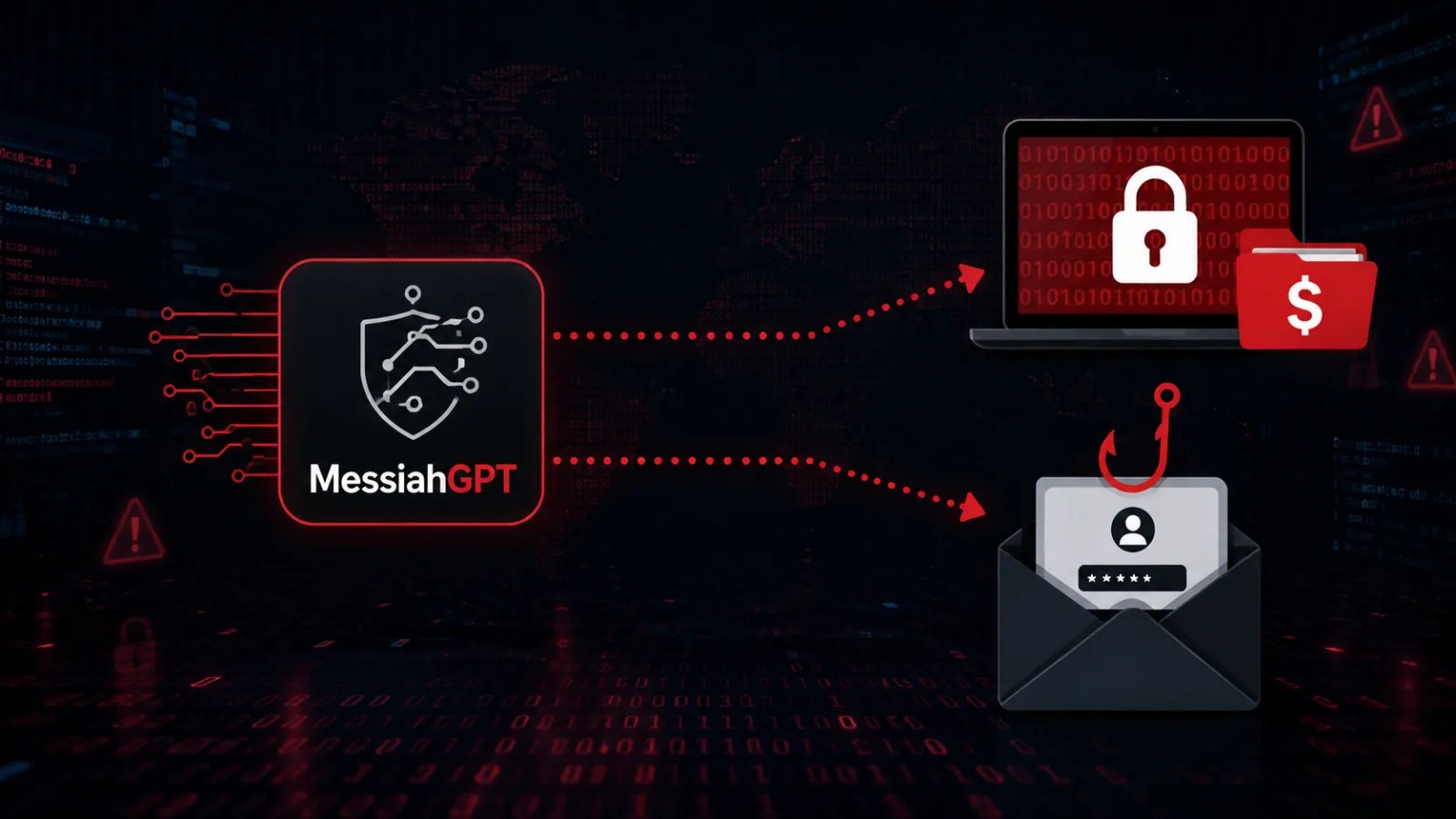
A new artificial intelligence service, MessiahGPT, is being promoted on the dark web platform BreachForums as an unrestricted tool for generating ransomware, phishing kits, stealers, and more. Marketed as a platform without the usual safety nets of mainstream AI models, MessiahGPT is raising alarms in the cybersecurity community.
Underground AI Market Expansion
According to Trellix, a cybersecurity firm, MessiahGPT represents a growing trend where offensive AI capabilities are offered as affordable subscription services. The model is designed without reinforcement learning from human feedback or AI controls, making it appealing to those looking to create harmful digital content.
MessiahGPT is connected to a live website, messiahgpt[.]de, and has an active Telegram community, targeting users interested in developing malware and committing fraud. The model utilizes a Mixture-of-Experts architecture, allegedly trained on a variety of unrestricted sources, including dark-web archives and leaked documents.
Potential for Cybercriminal Activity
While Trellix notes that the technical claims of MessiahGPT cannot be independently verified, they confirm that the platform is actively promoted in cybercriminal circles. The service’s low-cost entry, with initial free queries and cryptocurrency-based subscriptions starting at $8 monthly, makes it accessible to novice attackers.
This accessibility allows users to experiment with phishing techniques and malicious scripts before committing to a subscription. The adaptability of AI-assisted services like MessiahGPT means attackers can easily modify phishing emails and malicious code, complicating detection efforts that rely on known patterns and signatures.
Enhancing Cyber Defenses
Security experts advise focusing on behavioral detection rather than relying on unique signatures to identify AI-generated threats. Email security measures should assess sender reputation and link behaviors, while endpoint defenses need to monitor for unusual activities, such as privilege changes and unexpected file modifications.
Network security should include DNS logging and web filtering to block access to known criminal infrastructure. Analysts are encouraged to watch for suspicious AI-domain inquiries and encrypted traffic, using detection rules that focus on malicious behaviors like credential theft or command-and-control patterns.
MessiahGPT exemplifies the sophistication of the cybercrime AI ecosystem. Despite the risks, organizations that implement strong identity controls, robust authentication, and comprehensive incident response plans will be better equipped to handle the evolving threat landscape.
Strengthen your Security Operations Center by integrating advanced tools for accelerated threat detection and rapid response.